Staircase painting in Cambridge, from newel to top step
Staircase painting is one of the fiddliest jobs in a house and one of the most noticed, because the stairs are often the first thing you see from the front door. Our decorators paint the whole staircase or only the parts you want changed: spindles, handrails, newel posts, strings, treads and risers. Graham looks at it first and tells you what each part needs.
We stain and varnish stairs too. If you're torn between paint and natural wood, the comparison further down should help, and our woodwork staining and varnishing page goes into the staining side.
What each part of the staircase needs
Spindles and balusters
Spindles take the longest. Each has four faces, and turned spindles have beads and hollows that hold old paint and dust. They're sanded, filled where split, primed if bare, then painted by brush from the top down so any runs are caught as we go. A hallway with forty spindles is a very different job from one with a dozen, which is why we count them at the visit.
Handrails and newel posts
The handrail is gripped every day, so it needs the toughest finish on the stair. Many people keep a varnished or stained handrail above painted spindles, which stops paint wearing through where hands slide. If it is painted, we use a hard-wearing woodwork paint and leave it as long as possible to harden.
Treads and risers
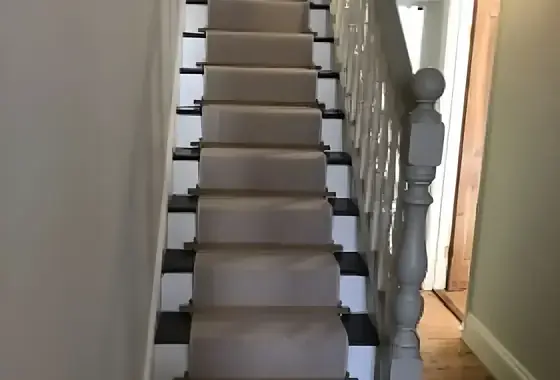
Risers get kicked rather than walked on, and painting them white or a dark colour with a carpet runner up the middle is a popular look. Fully painted treads need a floor-grade paint, and high gloss on a step can be slippery, so a lower sheen is the usual advice. If a new runner is planned, paint first and let the carpet fitter come afterwards.
Painted or varnished stairs?
Paint covers mismatched timber, old filler and repairs, and it lets you tie the staircase into the hallway colours. It suits softwood stairs that were never meant to be on show. Varnish or stain keeps the grain visible, which is worth doing on a good pine, oak or mahogany handrail.
Going from varnish to paint is straightforward: the surface is keyed, primed and painted. Going back the other way means stripping every spindle.
The two can be combined. Painted spindles and risers, with a varnished handrail and the treads under a runner, is a mix many period hallways use, and it puts the hard-wearing finish where the wear is.
Keeping the stairs usable while we paint
Nobody can stay off their stairs for days. The usual trade approach is to paint alternate treads, so there is always a dry step to use, then come back for the rest once the first set has dried. Spindles and handrails can be done one side at a time in the same way.
We agree the plan with you at the visit, including when children, pets or lodgers need to get past. Signs go up while paint is wet, and dust sheets on the steps are fixed so they can't slip underfoot.
One customer who had a hallway and stairwell decorated wrote on Checkatrade that “despite this being a hallway and stairwell and lots of interruptions as people had to get past, there were no complaints or remarks”. They added: “The hall, doors, window frames, and banister rails were painted to a beautiful finished result.” There are more like it on our reviews page.
Old paint, lead and preparation on period staircases
Many Cambridge staircases are Victorian or Edwardian, and the spindles can carry a century of paint. Paint applied before the 1960s may contain lead. It should be tested before anyone sands it, and if lead is found it must never be dry sanded or burnt off; it is prepared with wet, low-dust methods and the area is cleaned thoroughly afterwards.
Where the paint is sound, preparation means cleaning grime off the handrail, filling dents and splits, and sanding with Mirka dust-free sanders so the dust doesn't settle all through the house. Bare timber is primed, knots sealed and the stair undercoated before the finish coats. Loose spindles or a wobbly newel are a job for our carpenter before any paint goes on.
What changes the cost of painting stairs
- How many spindles there are, and whether they're square or turned
- Which parts you want painted: spindles only, or treads, risers and strings as well
- The condition of the old paint, and any testing or stripping it needs
- Colour changes that need extra coats to cover
- Whether the stair is part of a bigger hall, stairs and landing job
- Repairs to spindles or the newel by our carpenter
How it's priced
Graham prices all of this in a written quotation after seeing the staircase, so you know exactly what's included before work starts.
Arranging a visit for your staircase
Get in touch by phone, WhatsApp or the form, and Graham will call round at a time that suits you. Mention anything that matters to you, such as keeping the original handrail, matching an existing stain, or fitting the work around a new carpet. The quotation usually arrives by email.
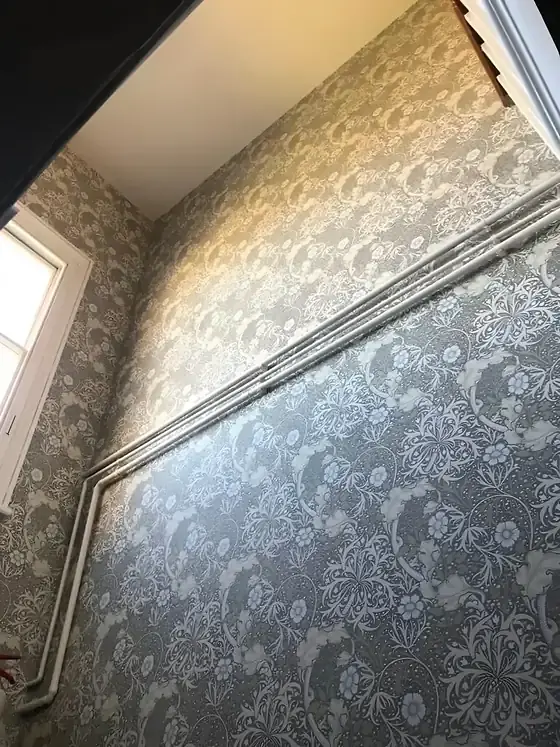
Stairs are often painted as part of a wider job, and the tall walls above a stairwell need their own access. If you'd like the whole area done, see our page on hallway, stairs and landing decorating, or the William Morris hall, stairs and landing we decorated over three levels in central Cambridge. The doors on the landing can be painted at the same time.
When the last coat is dry, Graham walks the stairs with you, and you don't pay until you're happy with the finished work.