Internal door painting in Cambridge
Internal door painting is often what makes a freshly decorated house look finished. Our decorators paint doors, frames and architraves in homes across Cambridge, by brush or with our Graco Ultra cordless airless handheld sprayer. Graham visits first to see how many doors there are, what they're made of and what state the old finish is in.
Doors take more handling than any other woodwork in the house: hands on the edges, knocks from the hoover, grease around the handle. A good repaint deals with that wear as well as changing the colour. It's part of our wider woodwork painting and staining service.
Brush, roller or door spraying
Doors painted in place are usually done by brush, or by brush with a small roller on the flat areas. It's quick to set up, needs very little masking, and gives a fine finish when the paint is laid off along the grain of each section.
Door spraying comes into its own when there are a lot of doors at once, such as a whole house or a set of flats being refreshed. The doors are normally lifted off their hinges, numbered, and sprayed in a masked area, which puts an even coat into every moulding. Flush doors and modern moulded doors look especially crisp sprayed.
Frames and architraves stay fixed to the wall, so they're generally brushed even when the doors themselves are sprayed. Graham will suggest the method that suits your doors.
Panelled, glazed, fire and oak doors
Panelled and moulded doors
Panels go first, then the muntins, rails and stiles, so wet edges are picked up before they dry. Mouldings collect runs from past paint jobs, and those are sanded out before the new coats.
Glazed doors
Glass is cut in by hand or masked, with the glazing beads painted and a fine line of paint taken onto the glass to seal the joint. Loose beads are refixed first.
Fire doors
Fire doors can be painted, but the intumescent strips and smoke seals in the edge or frame must not be painted over, because paint can stop them working in a fire. We mask them and leave closers and signs as they were.
Oak and veneered doors
Painting an oak or veneered door is hard to undo. If you like the timber, oil or varnish may suit it better, and we'll talk that through at the visit.
Sticking doors and paint build-up
Doors that have been painted many times often start to catch on the frame, because every coat adds thickness to the edges and rebates. Painting over that makes it worse. We sand back the build-up where it's causing trouble, and if a door has dropped on its hinges or swollen, our carpenter can ease or rehang it before we paint.
Top and bottom edges should be sealed as well as the faces. They're out of sight, but bare edges let moisture in from bathrooms and kitchens, which is one reason doors swell.
Handles, hinges and latches are removed or masked. Paint on hinges is a sure sign of a rushed job, and it looks worse every time the door opens.
Colour choices and white that stays white
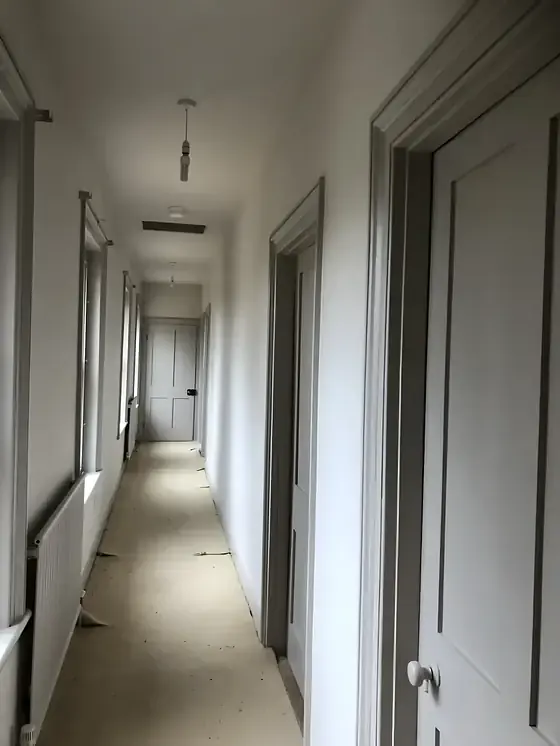
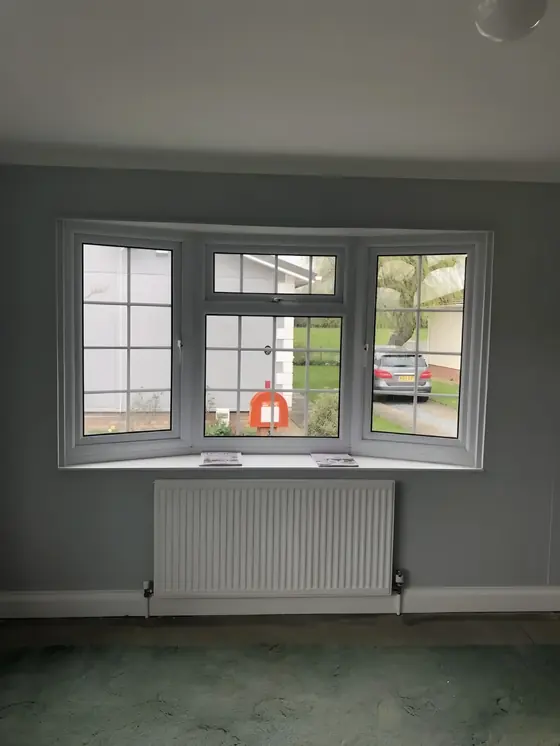
White is still the most common choice, but doors don't have to be white. Painting them in the wall colour or a shade deeper makes a hallway full of doors feel calmer. In a Farrow & Ball redecoration in Cambridge, the bare pine door and window frames were primed with Zinsser and finished in two coats of Elephant's Breath eggshell, a soft grey-brown, to sit with Skimming Stone walls.
Traditional oil-based white gloss tends to yellow over time, especially on doors that see little daylight. Water-based woodwork paints keep their colour far better, dry faster and smell less, which helps when you're living in the house while we work.
A common convention is to paint each door edge the colour of the room it opens into, so every room looks right with the door open. That's worth deciding before we start if the two sides are different colours.
Victorian four-panel doors and lead paint
Original four-panel doors in Victorian and Edwardian houses are worth keeping, but their lower layers of paint may contain lead if they date from before the 1960s. We'd recommend a test before sanding. If it's positive, the paint is wet-abraded or removed by low-dust methods rather than sanded dry, and that work is planned and priced on its own. Our page on period property decorating covers older houses more broadly.
What affects the cost of door painting
- The number of doors, and whether both sides are painted
- Panelled and glazed doors compared with plain flush doors
- Whether frames, architraves and door stops are included
- Spraying a batch of doors off their hinges, or brushing them in place
- Old finishes that need heavy sanding, priming or lead-safe preparation
- Repairs such as easing or rehanging by our carpenter
Set out in writing
All of it goes into Graham's written quotation, so you can see exactly which doors, sides and frames are covered.
From first visit to rehung doors
Call, WhatsApp or use the form, and Graham will come and look at the doors with you. He'll open and close a few, check the edges and hinges, and talk through colours. The quotation usually follows by email, and Belinda arranges the dates.
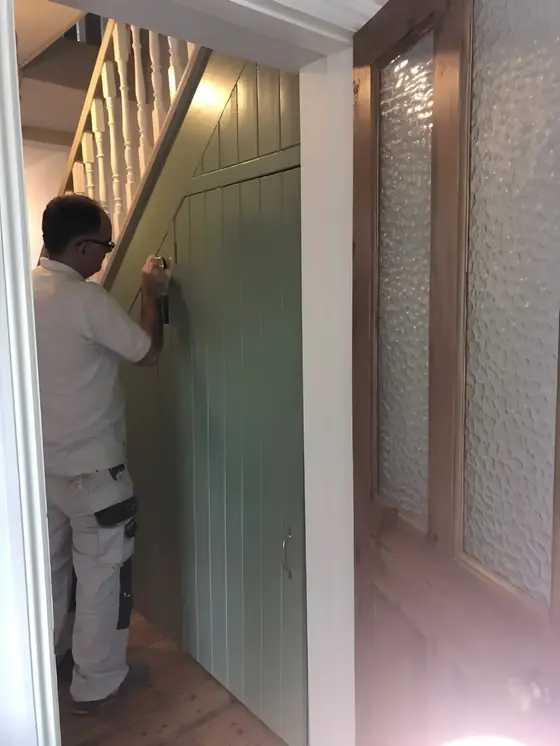
Doors are often done alongside skirting boards and architraves or the staircase, so mention it if you'd like them together. When everything is rehung and dry, we go round with you, and you only pay once you're happy with the finished work.