Twenty years of wear on stairs and doors
Handrails get greasy, treads lose their finish where feet land, and white gloss on doors and skirtings turns yellow. In houses from the early 2000s, much of this woodwork is on its original coat, and a careful refinish makes the whole interior look newer.
Natural timber such as oak handrails or doors can be cleaned, sanded evenly and given a fresh stain or clear varnish. We test the stain on a hidden spot, such as the underside of a tread, before going any further.
Painted woodwork in a modern finish
Many owners here swap shiny gloss for satin or eggshell, or paint skirtings in the wall colour for a calmer look. On a whole-house project we have used Tikkurila white satinwood. Our staining and varnishing page explains each finish.
If you have bare softwood, knots need sealing with a Zinsser primer so resin does not bleed through later.
What young children do to stairs and doors
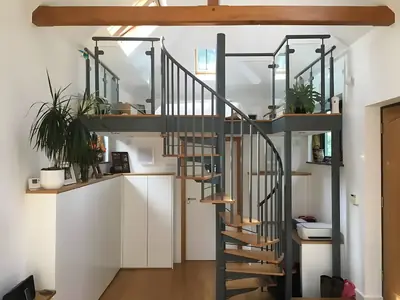
The 2021 Census counted 927 Cambourne children under five, 7.5% of residents, and the woodwork in a house with toddlers shows it. Stair gates leave screw holes in newel posts and skirtings, handrails and spindles collect fingerprints, and door edges take knocks from toys and ride-ons. When the gates come off, the holes are filled and sanded flush, and a stained or varnished newel or handrail is cleaned and sanded evenly so a fresh coat takes without pale patches. On painted spindles and skirtings, a satin finish is more forgiving to wipe clean than a flat one, which helps in a busy hallway.
Period joinery is thin on the ground. Across South Cambridgeshire, 6.1% of homes were built between 1919 and 1939; in Cambourne the figure is 0.9%, so deep moulded skirtings, picture rails and panelled doors of that era are rare and most woodwork is modern. That makes staircase painting and internal door painting in Cambourne mostly a matter of refreshing finishes rather than restoring old timber.
Figures from 2021 Census (ONS); Valuation Office Agency Council Tax stock by build period; Historic England's National Heritage List. Source: Office for National Statistics licensed under the Open Government Licence v.3.0. Contains public sector information licensed under the Open Government Licence v3.0. © Crown Copyright 2026. Contains Ordnance Survey data © Crown copyright and database right 2026. Released under OGL.
Cambourne at a glance
- 11 milesfrom our Landbeach base in a straight line, about 16 minutes by roadOSRM routing
- 3%of properties were built before 1919VOA Council Tax stock
- 1%date from 1919 to 1939VOA Council Tax stock
- 90%are houses rather than flatsCensus 2021
- 2listed buildingsHistoric England
- 59%of homes are owner-occupiedCensus 2021
Sources: Census 2021 for Cambourne parish (ONS); Council Tax: stock of properties, 2026; Historic England listed buildings; road distance by OSRM.
Listed buildings in Cambourne
- Great Common FarmhouseGrade II listed
- Mile Post Near Junction with Elsworth RoadGrade II listed
Sources: Historic England listed buildings.
Listed buildings: check before changing original woodwork
If you own Great Common Farmhouse, the parish's listed farmhouse, check with South Cambridgeshire District Council before stripping, staining or changing the finish on original joinery. The council says listed building consent is required for any work that affects the character of the building, and it publishes a listed buildings leaflet and a supplementary planning document with more detail.
Listed buildings advice (Greater Cambridge Shared Planning) · Listed buildings leaflet (PDF)
How we approach woodwork staining & varnishing
In a Cambourne family house we usually start upstairs with the bedroom doors, which come off their hinges where that helps and are laid flat to paint, then work down through the landing, spindles and handrail to the hall. Screw holes left by stair gates are filled and sanded flush, old gloss is keyed with Mirka dust-free sanders, and bare softwood is sealed with a Zinsser primer before satin or eggshell. A stain is always tested out of sight, such as under a tread, before it goes anywhere visible.
Where woodwork predates the 1960s, the lower layers of paint may contain lead: it is tested first, and if it is positive it is wet-abraded or removed by low-dust methods rather than sanded dry or burnt off.