An interior decorator in Cambridge who visits every job
If you're looking for interior decorating in Cambridge, the first person you'll meet from us is Graham. He comes to your home or office at a time that suits you, looks at the rooms, and talks through what you have in mind. Some people arrive with a full Farrow & Ball scheme already picked out. Others just know the hallway looks tired. Both are fine.
We can build on ideas you already have or suggest a direction if you'd like one. Every homeowner has their own style, whether it leans modern, traditional or somewhere in between, and our job is to help you get to the finish you're picturing, using materials that suit the room.
After the visit you get a detailed written quotation, usually by email, with every cost set out. We stick to it. If you ask for extra work, or something unexpected turns up once a wall is stripped, we explain the cost and agree it with you before carrying on. Belinda organises the project and keeps you informed along the way.
Our 12 decorators are all City & Guilds or NVQ qualified, we are Dulux Select Decorators, and Graham is an associate member of the Painting and Decorating Association. No job is too large or too small, from one bedroom to a whole house.
Rooms we paint and decorate
Most of our interior work is ordinary family rooms done well. Each one asks something slightly different of the paint and the preparation. We also decorate nurseries and children's rooms, and can paint the radiators while we're there.
Living rooms and bedrooms
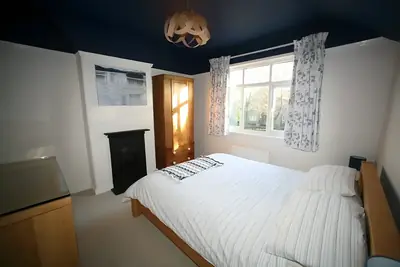
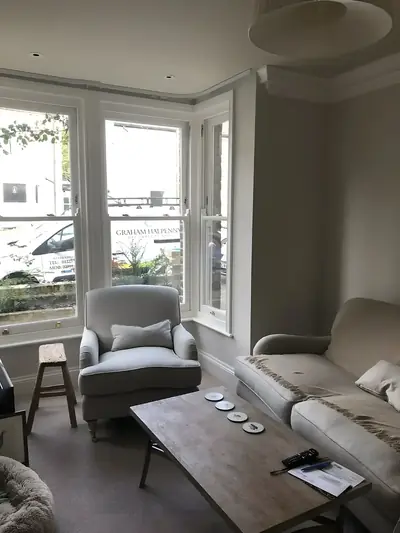
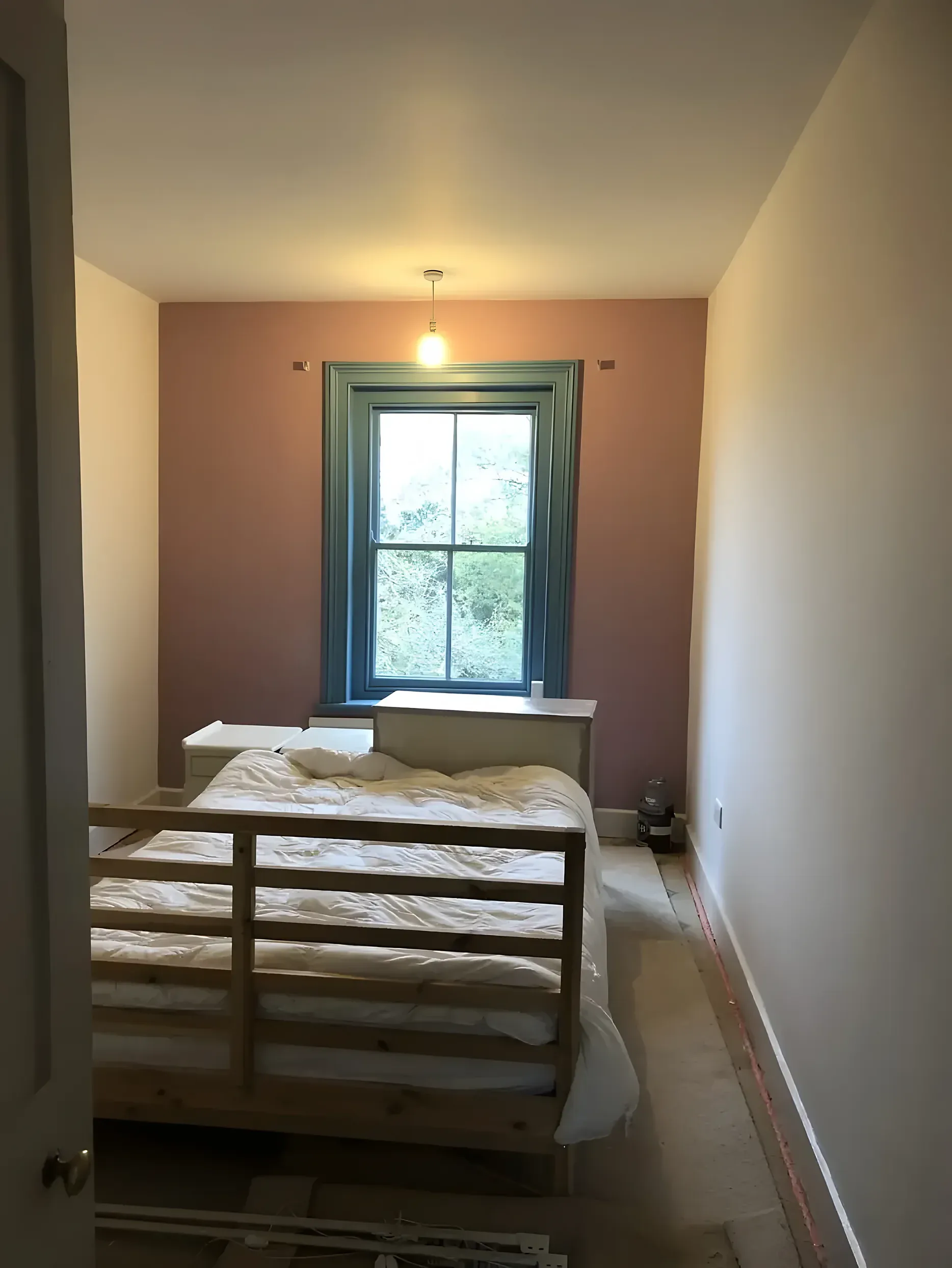
These are the rooms you look at most, so small faults show. We fill cracks, sand back old runs and line walls where the plaster is poor. In living rooms we often suggest a washable matt, such as Little Greene Intelligent Matt Emulsion, which is breathable and touches up well once cured. For bedrooms, a feature wall in a deeper shade can work, like the Cinder Rose wall we painted in a Cambridge bedroom alongside Skimming Stone.
Kitchens and bathrooms
In kitchens and bathrooms, steam, grease and regular wiping wear ordinary emulsion quickly. We clean and key the surfaces first, deal with any water stains using a Zinsser stain block, and choose a finish that can be wiped down without polishing up.
Halls, stairs and landings
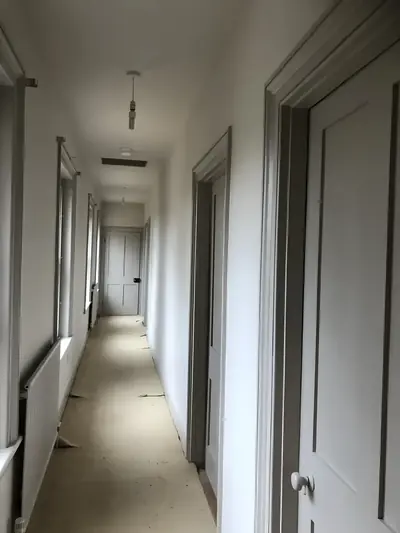
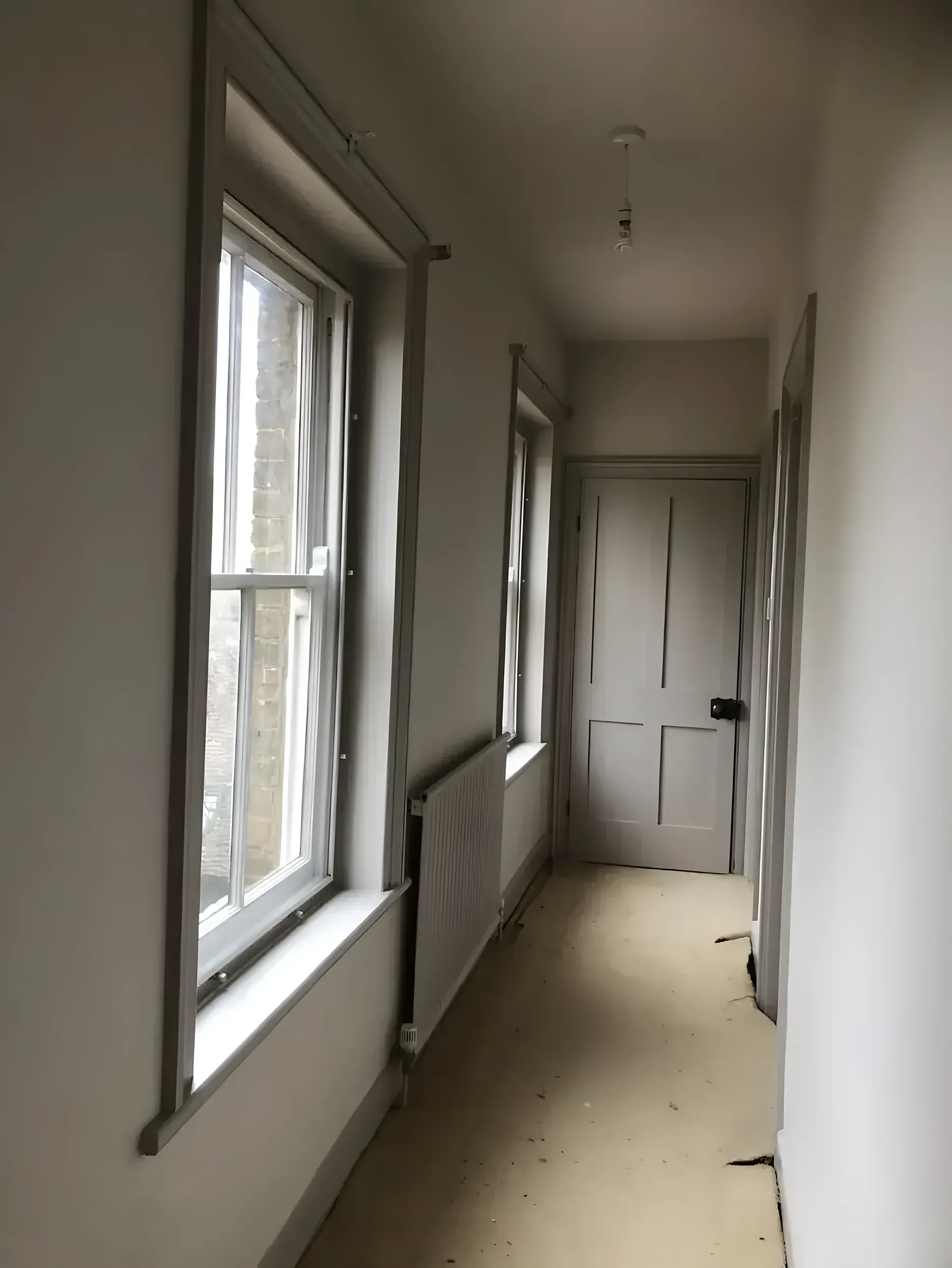
Hallways take knocks from bags, bikes and pushchairs, and stairwells are awkward to reach. We set up safe access over the stairs, protect the treads and banisters, and take particular care with spindles and handrails. We've decorated halls, stairs and landings across three floors in central Cambridge, and stained staircases for customers further out in Fordham.
Ceilings
A ceiling is usually the first thing we paint in a room. In an empty room or a tall space, spraying walls and ceilings can be quicker than rolling. We fill hairline and deeper cracks, and if there's dated Artex our plasterers can skim it smooth before we decorate. White is the usual choice, but not the only one: in Histon we painted a front-bedroom ceiling in two coats of Dulux Sapphire Salute, a deep navy.
Woodwork: gloss, eggshell and satin
Skirtings, door frames, picture rails and windows take more wear than walls, and the finish on them makes a big difference to how a room looks. We sand back, fill dents and splits, prime any bare timber, then undercoat and apply the top coats.
Gloss gives a hard, shiny surface that some people still prefer for a traditional look. Eggshell has a softer sheen and suits period rooms and painted panelling. Satin sits between the two. On a whole-house project we finished the woodwork in Tikkurila white satinwood, and on bare pine frames in another Cambridge home we primed with Zinsser, applied a Farrow & Ball mid-tones undercoat, then two coats of Elephant's Breath eggshell.
Stained or varnished timber is a separate job with its own preparation. Our staining and varnishing service covers banisters, doors and beams. For original sash windows that need more than paint, see our sash and case window restoration page.
Period properties and older plaster
Cambridge and the villages around it have plenty of Victorian terraces and older houses, and they need a different approach from a new build. Original lime or sand and stone plaster can be soft, uneven and patched over decades. Paint alone won't hide that.
In a Victorian house in Histon we decorated two bedrooms on their original sand and stone plaster. Andrew spent a lot of time on preparation: making good the ceilings, stripping the walls and lining them with lining paper where the surface needed it, then two coats of Khaki Mist emulsion. The picture rails, cupboard doors, skirtings and door frames were made good, primed, undercoated and finished in white, and the fireplace painted black. You can read more about decorating work in Histon on our area page.
We've also worked in listed buildings, including a studio flat in central Cambridge where the walls had years of nicotine staining. Stain-blocking first meant the new colour stayed clean rather than yellowing through.
Colour advice, and why we paint tester pots in several places
A colour on a chart and a colour on your wall in north light are two different things. Before committing to a scheme we paint tester pots in several places around the room so you can see each shade in morning and evening light, and next to your floor and furniture.
Our customers in Histon found halfway through that one chosen colour didn't look as they'd expected. Graham brought round a large colour chart and Andrew painted testers in different spots until they were happy. That kind of change is easier to make early, which is why we encourage it.
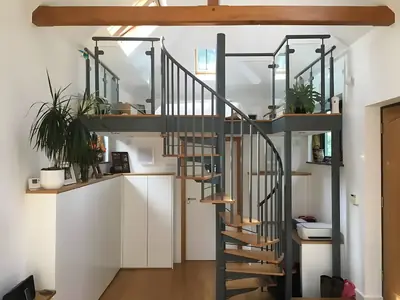
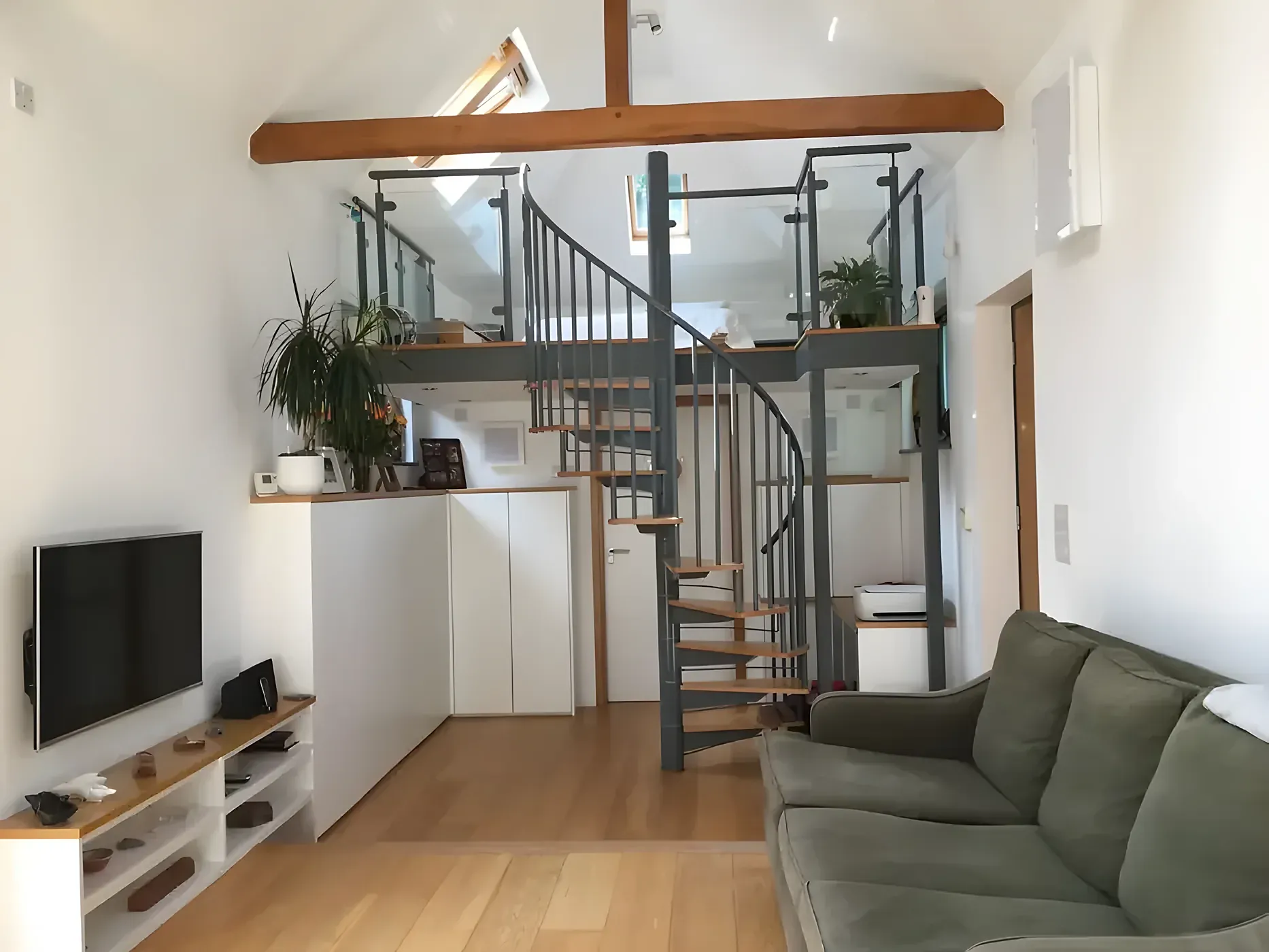
We use Dulux, Farrow & Ball, Little Greene, Tikkurila and Fired Earth paints, and you're welcome to supply your own if you prefer. Please choose good-quality materials, as cheaper paint usually needs more coats and doesn't last as long. A good example of a scheme coming together is the Old Telephone Exchange in Fulbourn, where white walls kept a small converted space light and Dulux Night Jewels picked out the trim.
Painting kitchen units, wardrobes and bookshelves
Fitted furniture is often sound but dated. Painting it costs far less than replacing it and causes much less upheaval. We paint kitchen units, built-in wardrobes and built-in bookshelves, cleaning and degreasing them, sanding to give the new paint something to grip, priming, and finishing with a durable coat.
Where a smooth, brush-free finish matters, Graham uses a Graco Ultra cordless airless handheld sprayer. Kitchens have their own page with more detail on painting kitchen cabinets. We can also oil timber worktops and beams with Osmo, as we did in Fulbourn.
Preparation, protection and a tidy finish
Most of the time on a decorating job goes into preparation, and that's where a lasting finish comes from. Typical steps include:
- Covering floors and furniture and moving items safely out of the way
- Stripping old wallpaper and washing down walls
- Filling cracks, holes and marks from shelves or pictures
- Stain-blocking nicotine, smoke and water marks with Zinsser
- Hanging lining paper where plaster is uneven
- Sanding with Mirka dust-free sanders, which keep dust out of the rest of the house
- Priming bare timber and new plaster before top coats
Tidy every day, and a walk-round at the end
We tidy up at the end of every working day, so you can still use your home in the evening. Reviews often mention this; one Cambridge customer said the team even cleaned up as they went each day. When the work is finished, we walk round it with you and put right anything you're not happy with.
You don't pay until you're happy with the finished work. If you want to get the house ready before we arrive, our guide on preparing for a decorator covers the basics. We work across Cambridge and nearby villages, including Waterbeach, a couple of miles from our base.