Airless spray painting for walls and ceilings in Cambridge
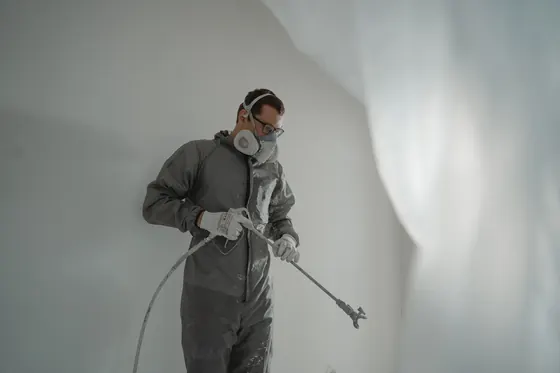
Spray painting walls and ceilings is something we offer alongside brush and roller work. Graham uses a Graco Ultra cordless airless handheld sprayer, and you can watch it in use on our videos page. The decorators who spray are the same qualified team who carry out the rest of our interior decorating, so the preparation is the same. Only the way the paint reaches the wall changes.
Spraying is often sold as quicker in every case. It isn't. It saves time when a room is empty and the surfaces are big, and loses time when there's furniture to protect or lots of edges to mask. Graham will tell you at the visit which method suits your rooms, and plenty of jobs end up as a mix: ceilings sprayed, walls rolled.
When a sprayer beats a roller
An airless unit atomises paint without compressed air, laying it down as an even fan with no roller stipple or lap marks. That pays off in a handful of situations:
- Empty rooms, where there's nothing to protect but the floor, glass and fittings
- New builds and extensions, where fresh plaster needs a mist coat and then finish coats
- High ceilings, stairwells and vaulted rooms, where rolling overhead from a platform is slow
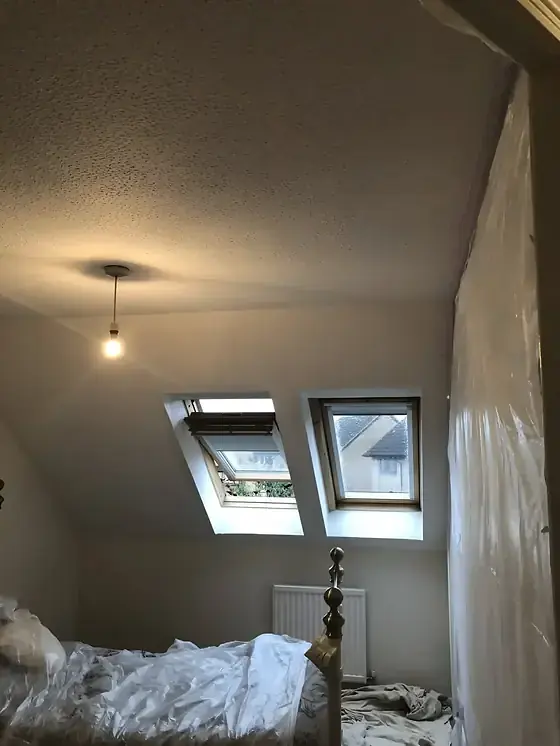
- Large plain areas such as open-plan spaces, loft conversions and empty flats between tenants
- Uneven or lightly textured surfaces, where spray reaches hollows a roller skips
Why a furnished room is often better by roller
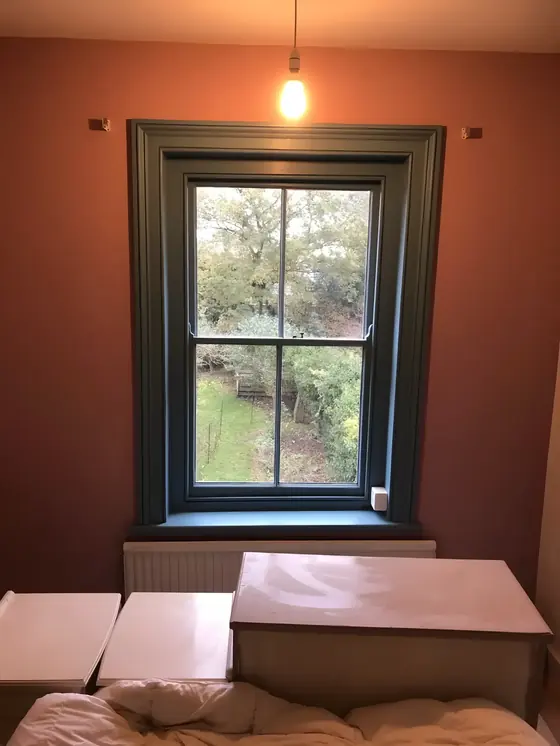
Spray doesn't only land where it's pointed. Fine overspray drifts across a room and settles on anything left uncovered, and it can travel into the next room through an open door. In a furnished living room, every sofa, shelf, curtain, light fitting and radiator has to be wrapped, which can take longer than rolling the walls. People and pets also have to stay out while spraying is going on.
There are other reasons to stay with a roller. Cutting in against coving, a deep feature colour or a ceiling line next to wallpaper is brush work either way. Later touch-ups done by roller on a sprayed wall can look slightly different in raking light, so keep the leftover paint and a note of the method. And on one small room, setting up and cleaning the sprayer can cancel out any saving.
Masking a room for spraying
Masking is most of the labour on a spray job, and the finish depends on it. Before the first coat we:
- Sheet the floor wall to wall, taped down at the skirting
- Mask windows, glass and frames with film and tape
- Cover sockets, switches and light fittings
- Wrap radiators, or mask round them if they're being painted separately
- Tape off skirtings, door frames and any coving in a different colour
- Seal doorways so overspray stays in the room
Ventilation and protection
The sprayer is a handheld unit, which suits domestic rooms and lets us work close to edges. Spraying calls for a suitable mask, and the room is aired as the paint dries.
Preparation and paint for sprayed walls
A sprayed coat hides nothing. Cracks are raked out and filled, dents and nail pops made good, and the surface sanded with our Mirka dust-free sanders first. Because sprayed paint lies so evenly, a poorly filled patch stands out once the light catches it.
Most emulsions can be sprayed, but some need thinning or a particular tip, so we check the paint maker's guidance for each product. On fresh skim, spraying puts the thinned first coat on quickly and evenly, which is why it suits the homes covered on our new build decorating page. A sprayer does use a little more paint than a roller, as some is lost to overspray, and the quotation allows for that.
Ceilings after skimming or Artex
Newly skimmed ceilings suit spraying well: smooth, large and tiring to roll. When our plasterer Lewis skimmed over dated Artex in a Cambridge home, the result was a flat ceiling ready for decorating.
A textured ceiling that hasn't been skimmed is different. According to HSE, Artex and similar textured finishes in buildings put up or refurbished before 2000 may contain asbestos. A sample needs testing before the ceiling is sanded, scraped or drilled, and asbestos removal belongs to a specialist contractor, not a decorator. Our Artex removal page explains the options.
What changes the cost of spraying walls and ceilings
The quotation is built from the rooms Graham sees. These move it most:
- Whether the rooms are empty or furnished
- The area of wall and ceiling, and the ceiling height
- How much masking the windows, doors and fittings need
- Filling, sanding and any new plaster needing a first sealing coat
- The number of coats, and any change from a light to a deep colour
- Spraying everything or combining spray and roller
Getting a quote for spraying
If you've got an empty house, a new extension or a stairwell nobody wants to roll, call or WhatsApp us. Graham will look at the rooms, tell you honestly whether spraying is worth it, and follow up with a written quotation, usually by email. If the rooms are only empty for a short window, such as before a move or between tenants, tell Belinda so she can plan the dates; landlords may also find our landlord decorating page useful.
We cover Cambridge and the towns around it, including Cambourne, where many homes are recent new builds. At the end the masking comes off, we walk round with you, and you don't pay until you're happy with the finished work.