Nursery decorating and children's rooms in Cambridge
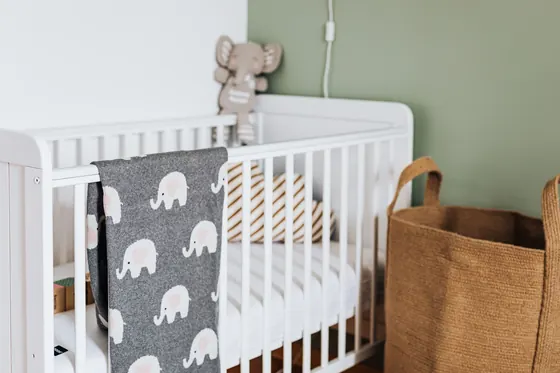
We decorate nurseries, children's bedrooms and playrooms across Cambridge. Our own qualified decorators do the painting, our wallpaper team hangs any murals or feature papers, and Graham visits beforehand to see the room and talk through colours, timing and the wear it will need to stand up to.
This page goes further than our general bedroom decorating page, and both sit within our interior decorating service. Simon Durkin from Potton wrote after one job: "Graham did an amazing job of my daughter's room. Attention to detail, workmanship and reliability were first rate."
Low-odour, low-VOC paint for nursery painting
Most paint smell comes from volatile organic compounds (VOCs) given off as paint dries. Water-based emulsions and water-based woodwork paints release far less than the solvent-based glosses many of us grew up with, so as a general practice we use water-based products in nurseries and children's rooms. Many tins now show the VOC content on the label.
For anything a baby might chew, such as a cot rail or a toy box, paint makers often state whether a product meets BS EN 71-3, the part of the toy safety standard that limits lead and other heavy metals. It's worth checking the tin, or asking us to, before a piece of nursery furniture is painted.
Low-odour doesn't mean no airing. Even water-based paint gives off moisture and some VOCs while it dries and hardens, so we keep a window open as we work when the weather allows, and the room should stay ventilated afterwards.
Timing the work and letting the room air
The best time for baby nursery decorating is well before the room is needed. That leaves time for the paint to dry, harden and lose its smell with the window open and the door closed to the rest of the house. How long that takes depends on the paint, the temperature and the airflow, so we won't promise a set number of days; the manufacturer's drying and curing guidance is the starting point, and Graham will talk the timing through with you.
If someone in the house is pregnant, NHS guidance advises against stripping old paintwork, which may contain lead, and suggests avoiding solvent-based paints and keeping rooms well ventilated while painting. That's one reason many parents-to-be hand the job over.
For an older child's room, the question is usually where they'll sleep while it's being done. We'll agree the order of work with you so bedtime isn't disrupted more than it has to be, and we tidy at the end of every day.
Washable walls and tough woodwork for kids' bedrooms
Kids' bedroom painting has to survive crayon, sticky fingers and scuffs at bed height. A washable matt keeps the soft look of a flat finish but can be wiped. Little Greene Intelligent Matt Emulsion is one we used on a whole-house renovation: it's washable and breathable and touches up well once cured. Silk and other sheen finishes wipe clean too, but they pick out every bump in the plaster.
Skirtings, door edges and window sills take knocks from toys and furniture, so they're finished in a hard-wearing water-based satin or eggshell. Water-based woodwork paint also stays whiter than old oil-based gloss, which tends to yellow in a room where the curtains are drawn for daytime naps.
Feature walls, murals and colour that can grow up
Children change their minds faster than paint wears out. Keeping three walls a soft neutral and putting the colour into one makes the room easy to update later. In a Cambridge bedroom we stripped, skimmed and redecorated, a single wall of Farrow & Ball Cinder Rose did that job against Skimming Stone. Painted stripes, arches and colour blocks are marked out and masked so the edges stay crisp.
Wallpaper murals are another route, from forests and skies to maps. They arrive as numbered panels that must line up exactly; our page on feature walls and murals explains how they're hung. Hand-painted picture murals are an artist's work rather than a decorator's, but we can prepare and paint the wall so it's ready for one.
Older houses and lead paint on woodwork
Plenty of Cambridge nurseries are in Victorian and Edwardian houses, with original skirtings, doors and window frames under many layers of paint. Paint on pre-1960s woodwork may contain lead. Left alone and in good condition it's not the main worry; the danger comes when it's rubbed down, and the dust is most harmful to babies, toddlers and people who are pregnant.
Old woodwork should be tested before any preparation starts. If lead is present it must not be sanded dry: the work is done wet or with dust-free extraction, the room sealed off and cleaned thoroughly, and the nursery left unused until that's finished. Sometimes sound old paint is better kept and painted over. Graham will point out anything that needs testing at the visit.
What affects the price of decorating a nursery
Every room is different, so the price comes from what Graham sees, and the written quotation sets it out. The main things that change it:
- The size of the room and whether the ceiling is included
- Wallpaper to strip and the state of the walls underneath
- Lead testing and lead-safe preparation on old woodwork
- Feature walls, painted shapes or a mural to hang
- Built-in wardrobes or shelves to paint
- Your choice of paint, and whether we supply it or you do
Booking a nursery or children's room
Call or WhatsApp us with your due date, or the date you'd like the room ready, and Belinda will arrange a visit. Leave plenty of margin: decorating early gives the room time to air and the furniture time to go in without a rush. Graham sends a written quotation, usually by email.
We cover Cambridge and the villages around it, such as Great Shelford and Girton. When the room is done we go round it with you, and you don't pay until you're happy with the finished work.