
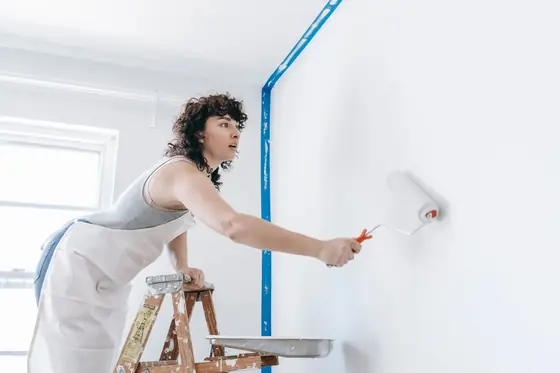
Painting larger Isleham houses room by room
Most of the village's 1,047 households own their home, 44% outright and 35% with a mortgage, so the bulk of interior work here is for people planning to stay. That changes the brief. Owners tend to ask for harder-wearing finishes in halls and on stairs, and for colours that work from one room to the next.
Stairwells are where a bigger house takes the most time. Safe access, careful cutting-in at ceiling height and protecting banisters all go into the quotation, as covered on our hallway, stairs and landing page.
New-build plaster and 1970s walls
Council Tax records date about 270 Isleham homes to 2009 or later. Fresh plaster in those houses wants a mist coat before full coats, and shrinkage cracks along plasterboard joints need filling once the house has settled, which our new-build decorating page explains.
The median home dates from 1973 to 1982. Walls of that era are often sound but carry several layers of old emulsion and filler, so we sand with Mirka dust-free sanders and spot-prime repairs before the finish goes on. Around 110 households rent privately, which brings the occasional end-of-tenancy refresh.
Isleham at a glance
- 21 milesby road from our Landbeach base, about 30 minutesOSRM routing
- 1,047householdsCensus 2021
- 79%of homes are owner-occupiedCensus 2021
- 10%of homes are privately rentedCensus 2021
- 17%of properties were built before 1919VOA Council Tax stock
- 2%are flatsCensus 2021
How we approach interior decorating
In a typical Isleham detached house we'd start upstairs and work down, leaving the stairs until last so they aren't marked by traffic. Cracks are raked out and filled, water marks sealed with Zinsser, and a washable emulsion such as Little Greene Intelligent Matt goes on halls and landings. Tester patches go on two walls so you see morning and evening light. The full method, products and FAQs are on our interior decorating page.