
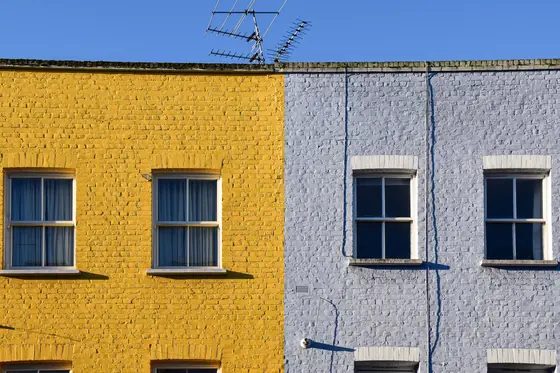
Exterior woodwork on Isleham houses
Painted timber outside fails from the bottom and the ends first. Window sills, the foot of door frames and the lowest section of bargeboards hold water, and once the paint cracks the wood swells and shrinks until the joints open. Graham's survey checks each piece, pressing for soft spots and noting flaking paint, open joints and loose putty.
Sound timber is scraped back, sanded, filled with an exterior-grade filler and primed where it's bare, then undercoated and finished in exterior gloss or satin. Rotten wood goes to our carpenter first. There's more on rooflines on our soffit and fascia page, and on frames at exterior window painting.
Brick, render and the conservation area
About 210 Isleham homes predate 1919, and the village has a designated conservation area and 34 listed buildings. On older walls we use breathable masonry paint, and before a change of colour on a house in the conservation area we'd suggest asking East Cambridgeshire District Council.
Algae on north-facing walls is jet-washed off with an anti-fungal wash and left to dry before painting. Newer houses, roughly 30% of the stock, usually need less masonry work and more attention to front doors, garage doors and timber trims.
Isleham at a glance
- 21 milesby road from our Landbeach base, about 30 minutesOSRM routing
- 96%are houses rather than flatsCensus 2021
- 58%of homes are detachedCensus 2021
- 17%of properties were built before 1919VOA Council Tax stock
- 1conservation arealocal council
- 12%were built 1945 to 1964VOA Council Tax stock
How we approach exterior painting
We'd plan the job for a dry spell, wash down first and give the timber time to dry out. Bare wood is primed the same day it's sanded so it doesn't take up moisture. Access is arranged so the whole roofline is done in one pass, then windows, doors and sills follow, with glass, brick and plants masked. The full method, products and FAQs are on our exterior painting page.