
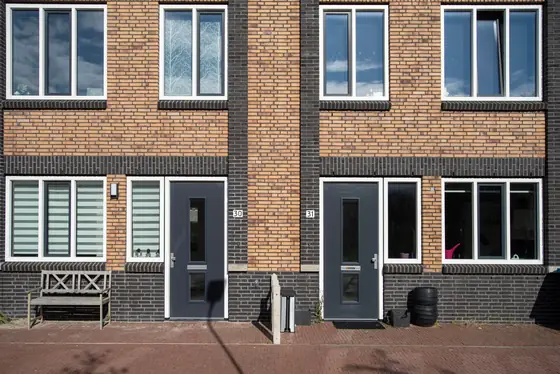
Respraying uPVC instead of replacing it
Most uPVC windows outlast the look people bought them for. The frames still seal and the glazing still works, but the white has gone dull or yellow, or the house has been repainted and the frames no longer suit it. Spraying changes the colour of the frames where they are, so the glass, seals and fittings stay put and nothing has to be refitted.
Graham comes out first to look at the frames, check their condition and talk through colours. He'll tell you at the visit if a frame isn't a good candidate, for example if it's cracked or the seals have failed, because a coating won't fix a window that needs replacing.
How the frames are prepared
Paint only lasts on uPVC if the surface underneath is clean and keyed. The frames are washed and degreased to remove the film that builds up on plastic outdoors, then lightly abraded so the coating has something to grip. Glass, seals, handles, brickwork and sills are masked off before any spraying starts.
We use coatings made for uPVC rather than ordinary exterior paint, which isn't designed to flex and bond with plastic in the same way.
Spraying on site
Spraying gives an even, brush-free finish on the flat faces and profiles of a window frame, which is hard to match by hand. The work is done in thin coats with drying time between them, and windows can usually be opened again once the coating has cured enough to handle.
Because the work happens outside, it depends on the weather. Dry, mild days give the best result, so spraying is easiest to book from spring to early autumn.
Front doors, French doors and conservatories
The same process works on uPVC front and back doors, French doors and conservatory frames. A front door is often the easiest place to start if you're testing a darker colour, and it can be matched to the rest of the exterior painting on the house.
If the house also has timber windows, we paint those by brush in the usual way, so a mixed set of frames can still end up the same colour. Period timber sashes are covered on our sash window page.
Choosing a colour
Greys, greens and off-blacks are the common choices, but any colour from the coating range can be used. Graham can show you samples at the visit, and it helps to look at them against your brick or render in daylight rather than indoors.
Getting a quote
The price depends on how many frames there are, their size and condition, and access, so we quote after seeing them. You'll get a written quotation that lists the windows and doors included. You don't pay until you're happy with the finished work. See our guide to decorating costs for what affects price.