The short answer
The cost of a painter and decorator in Cambridge depends almost entirely on the job: how much preparation the surfaces need, the size and height of the rooms, the number of coats, the paint you choose and how much woodwork, wallpaper or awkward access is involved. Two rooms the same size can differ hugely in price because one has sound plaster and the other has cracked ceilings and nicotine-stained walls.
That's why we don't publish prices or day rates. A number on a website would either be too low to be honest for most jobs or too high to be fair on simple ones. The reliable way to find out what your job costs is a visit and a written quotation, which we provide free.
What affects the price of decorating
When Graham visits to quote, these are the things he's looking at.
Preparation and the condition of the surfaces
Preparation is usually the biggest single factor. Filling cracks, stain-blocking water or nicotine marks, stripping old wallpaper, hanging lining paper over poor plaster or sanding back flaking paint all take time before any colour goes on. One of our customers, A and J in Cambridge, found that their older property needed more wall preparation than they had realised, which is common in period homes.
Room size and ceiling height
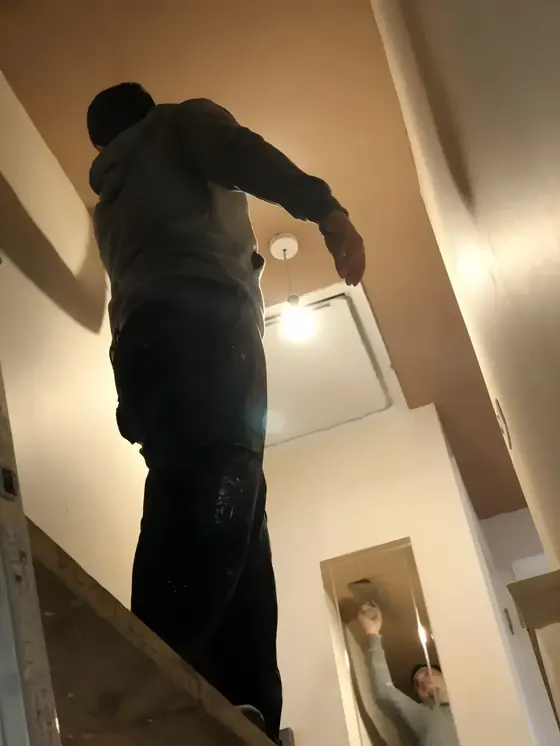
Bigger rooms take more paint and more time, and high ceilings, stairwells and landings need scaffold towers or platforms to work safely. A three-storey hall and landing, like the one where we hung William Morris paper, is a very different job from a box room.
Number of coats and colour changes
Going from a dark colour to a pale one, or painting freshly skimmed plaster that needs a mist coat first, adds coats. Strong colours sometimes need an extra coat to look even.
Paint brand
Premium paints such as Farrow & Ball or Little Greene cost more per tin than trade ranges, and some need more careful application. You're welcome to supply your own paint, which changes the materials side of the quotation.
Woodwork, wallpaper and period features
Doors, frames, skirtings and picture rails are slow, detailed work, and sash windows more so. Hanging patterned paper takes longer than plain paint because the pattern has to be matched. Cornicing, panelling and old plaster all need extra care.
Access and furniture
Exterior work at height, rooms that are full of furniture, or a house that is lived in throughout the job all affect how long the work takes. Empty rooms are quicker to protect and paint.
Day rate or a fixed quotation?
Some decorators charge by the day. That can look cheaper at first, but it leaves you carrying the risk: if the job takes longer than expected, you pay for every extra day. It also makes it hard to compare two decorators, because a lower day rate tells you nothing about how many days each will take.
A fixed written quotation works the other way round. The decorator has seen the job, priced the work and committed to a figure. You know what you're paying before anything starts, and you can plan around it. For almost all domestic work, we think that's fairer, and it's how we work.
A day rate can make sense for a short list of small, unpredictable tasks where nobody can say in advance how long each will take. Even then, ask for a written note of what's included in each day and an estimate of the number of days, so you have something to hold the work against. For a room, a staircase or a whole house, a written quotation after a visit gives you far more certainty.
How our written quotations work
Graham visits at a time that suits you and talks through the rooms, the finish you want, materials and timing. He then sends a detailed written quotation, usually by email, setting out the work and what each part costs. Thomas Horsten, a Cambridge landlord, had his quotation by email an hour after Graham's visit.
We stick to our quotations. If you ask for extra work part-way through, or something unforeseen turns up once wallpaper is off, we'll explain it and agree any extra charge with you before doing it. Gale Jameson described a “no-hassle amendment when more work was required”. And you don't pay until you're happy with the finished work.
If you're planning a mix of work, such as interior painting, hanging wallpaper and skimming a tired ceiling, it can all go on one quotation, which is usually simpler than booking several trades separately.
How to compare decorating quotes
Getting more than one quotation is sensible. To compare them fairly, check they describe the same job.
- Does each quote list the rooms and surfaces included: walls, ceilings, woodwork, doors, windows?
- Is the preparation described, or just the painting?
- How many coats, and which paint brand and finish?
- Are materials included, or extra?
- Is it a fixed price or an estimate that might change?
- Is the decorator qualified and insured? We're City & Guilds or NVQ qualified, Dulux Select Decorators and hold £5 million public liability insurance
- What do reviews say about tidiness, timekeeping and sticking to the price?
Ways to keep decorating costs down
Clearing rooms yourself before we arrive saves time. Grouping work together helps too: decorating several rooms in one visit is more efficient than one room at a time over several months. If a budget is tight, ask Graham which rooms or surfaces need attention most urgently. For exterior painting or sash windows, dealing with flaking paint early, before timber is exposed, keeps the preparation down when you do repaint.