Painter or decorator: the quick answer
A painter applies paint and other coatings to walls, ceilings, woodwork and exteriors. A decorator does all of that and more: hanging wallpaper and lining paper, choosing and advising on colours and finishes, and handling the preparation and detailing that pull a room together. In the UK the trades overlap so much that most people, and most firms, describe themselves as a painter and decorator.
So in practice the difference is about range. Someone who calls themselves only a painter may not hang wallpaper or take on specialist finishes, while a decorator usually will.
What a painter does
Painting is more skilled than it looks. A good painter knows which primer goes on bare pine, which paint will stick to old gloss and how to cut in a crisp line against a ceiling without tape. They prepare surfaces by filling, sanding and stain-blocking, then apply emulsion to walls and ceilings and gloss, satin or eggshell to woodwork.
Exterior painting is part of the job too. Masonry, render, soffits, fascias, windows and doors all need different products and careful timing around the weather, which is why painting the outside of a house is often priced and planned quite separately from interior work.
Spraying is another painter's skill. Our Graco Ultra cordless airless handheld sprayer lays down an even coat quickly on large flat areas, but it only pays off when the masking and protection around it are done properly. Knowing when to spray and when to brush comes from experience rather than equipment.
What a decorator adds
Decorating takes in everything that changes how a room looks and feels, not only the paint. The biggest addition is wallpaper. Hanging paper well is a skill in its own right: walls have to be prepared and sometimes lined, patterns matched across corners and around windows, and expensive heritage papers handled without damage. Our wallpaper specialist Simon hung William Morris paper through three storeys of a Cambridge hall, stairs and landing, and our wallpapering page shows more of that work.
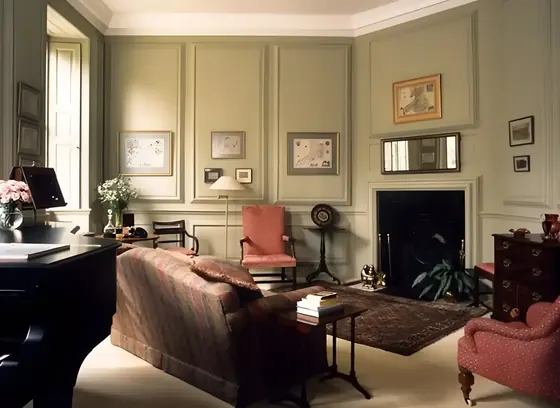
Decorators also tend to offer more advice. Choosing colours that suit the light in a room, deciding between eggshell and satin, or working out how a Farrow & Ball scheme flows from hall to sitting room are all part of the job. Staining and varnishing natural timber, oiling beams and worktops and painting kitchen units are other tasks you'd expect from a decorator rather than a painter alone.
Why most UK tradespeople do both
The usual training route in the UK covers both trades together. City & Guilds and NVQ qualifications are in painting and decorating, so a qualified tradesperson has learned paint application, wallpaper hanging and surface preparation as one skill set. Every decorator on our team holds one of those qualifications.
Customers also rarely want just one thing. A bedroom might need wallpaper stripping, a ceiling crack filled, walls painted and a feature wall papered. It's simpler to have one team who can do all of it.
How the difference shows up on a real job
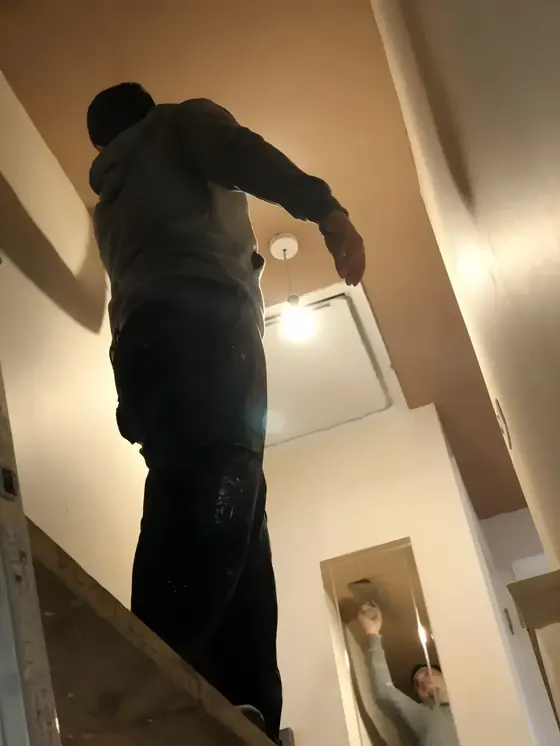
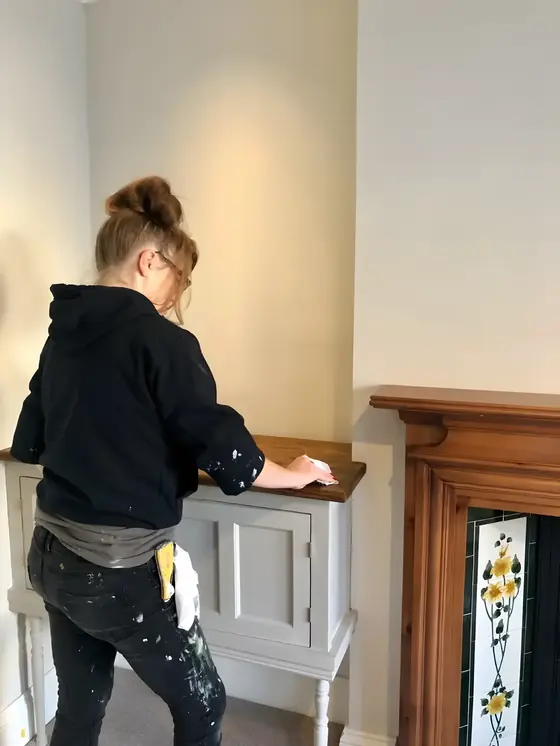
A bedroom we redecorated in Cambridge is a good example. Stripping the old wallpaper revealed tired lath-and-plaster walls. The affected walls were skimmed, then sanded with our dustless sander, and a mist coat went on to show up any imperfections before the finish coats.
Only then did the painting start: Farrow & Ball Skimming Stone on the ceilings and walls, a feature wall in Cinder Rose, skirtings and door frames in Skimming Stone eggshell and the window in Fired Earth Turkish Blue eggshell. A painter alone could have rolled on the emulsion. Getting from bare, damaged walls to that finished room took stripping, plastering, preparation, colour planning and careful woodwork, which is what decorating means in practice.
Work that sits beyond painting and decorating
Some jobs need another trade altogether, even if they're closely tied to decorating. Skimming over Artex or replastering a wall is a plasterer's job. Sanding and oiling floorboards needs a floor specialist and heavy machinery. Rotten window timber or new skirting boards are carpentry.
We handle this by working with specialists we know well: a master plasterer and our plasterer Lewis for plastering and skimming, Chris for floor sanding and restoration, plus a carpenter and a master builder. They're organised as part of your job, so you don't need to find and coordinate them yourself.
Which do you need?
A rough guide, based on the jobs we're asked about:
- Repainting walls and ceilings in the same or a similar colour: a painter or a decorator
- Exterior masonry, render, soffits and fascias: an experienced painter or decorator with the right access equipment
- Wallpaper, feature walls or murals: a decorator, ideally one who hangs paper regularly
- A full room makeover with colour advice, woodwork and paper: a decorator
- Offices, shops or student flats on a tight schedule: a decorating firm with enough people, such as our commercial painting team
- Cracked or Artex ceilings, bare floors or joinery: a decorator who works with the right specialists
How to check who you're hiring
Whatever the title, look at qualifications, insurance and what previous customers say. Ask whether the people doing the work are qualified, whether the firm carries public liability insurance and whether you'll get a written quotation. Schemes such as Dulux Select Decorators vet and test their members and take up references, and trade bodies such as the Painting and Decorating Association have their own membership standards. We're Dulux Select Decorators, Graham is an associate member of the PDA, and we hold £5 million public liability insurance.