The short version
To prepare your home for a decorator, choose your colours in good time, clear small and fragile items out of the rooms being decorated, put valuables away, make a plan for pets, and sort out parking and access. Leave the protection, masking, filling and sanding to us; that's part of the job. Larger furniture can usually be moved to the middle of the room and covered, and we'll agree who moves what at the quotation visit.
The rest of this guide goes through each step in more detail, along with what we do on our side.
At the quotation visit
When Graham comes to quote, walk him through every room and surface you want done, and mention anything else you're thinking about, even if it's only a possibility. It's much easier to plan a hall, stairs and landing together than to add the stairs later.
This is also the time to raise practical questions: when the house is empty and when it isn't, whether anyone works from home, and which rooms you need to keep using. Belinda then organises a start date that fits around you.
Landlords and people selling a property often have a fixed deadline, such as new tenants moving in or viewings booked for the weekend. Tell us at the visit. One Cambridge landlord, Thomas Horsten, needed a room in his flat ready for tenants' viewings; Graham quoted the same day and the room was stripped, made good and repainted the following day.
Choosing colours before we start
Changing a colour mid-job costs time, so it pays to decide early. Buy tester pots and paint generous patches, at least the size of a sheet of paper, in several places in the room: near the window, on the darkest wall and somewhere you'll see from the door. Look at them in the morning, in the afternoon and under lamps in the evening.
Colours can surprise you. In a Victorian house in Histon, one of the chosen colours didn't look as expected halfway through the job, so Graham brought a large colour chart and our decorator Andrew painted tester pots in different places so the customers could see them in different light. They ended up delighted with the result, navy ceiling and all.
If you're unsure, ask Graham for ideas. We use Farrow & Ball, Little Greene and Dulux colours regularly, and our interior decorating service includes colour advice.
What you do and what we do
Dividing the jobs clearly means nothing gets missed.
Before we arrive, please
Clear ornaments, photographs, books and anything breakable from shelves and surfaces. Take pictures and mirrors off the walls if you can, and empty wardrobes or cupboards that are being painted. If we're decorating a kitchen, clear the worktops; for kitchen unit painting, the cupboards being painted will need emptying too.
We take care of
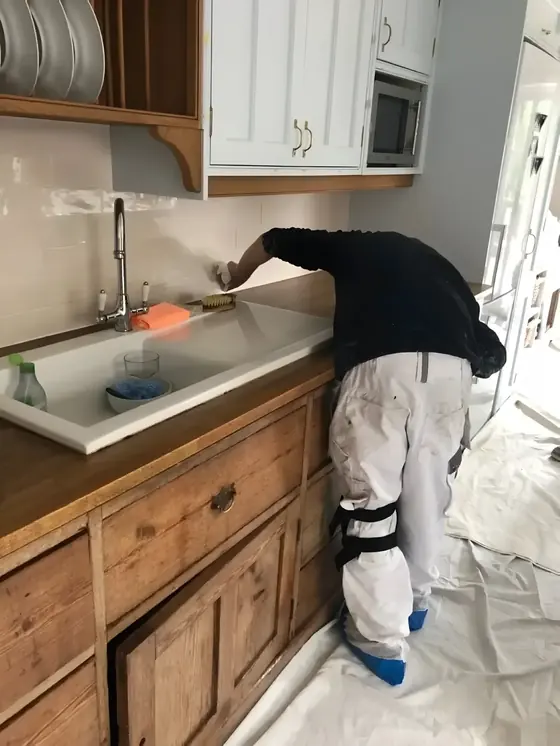
Dust sheets over floors and furniture, masking switches, sockets and fittings, and all the filling, sanding and stain-blocking. We sand with Mirka dust-free sanders, which keeps dust in the rest of the house to a minimum, and we tidy up at the end of every day.
Agreed at the visit
Heavy furniture such as wardrobes, pianos and full bookcases. Usually it's moved to the centre of the room and covered, but some jobs need the room empty, such as sanding and oiling a floor. We'll agree what's needed and who does it before the start date.
Valuables, pets and children
Put jewellery, cash, documents and anything of sentimental value away somewhere safe, out of the rooms being worked on. It isn't a question of trust; with dust sheets going down and furniture shifting, small things are easily knocked or lost under a sheet.
Pets and wet paint don't mix. Cats in particular are curious about open doors and fresh skirtings. If you can, keep pets in a room we're not working in, or arrange for them to be elsewhere on the days we're painting. The same goes for small children: freshly painted woodwork can stay soft for a while after it feels dry.
Access, parking and keys
Let us know where we can park, especially if your street has residents' permits or limited space, as our vans carry the equipment and materials for the job. If you'll be out during the day, agree how we'll get in, whether that's a key, a key safe or someone at home.
For exterior painting, we'll need a clear route around the house. Moving garden furniture, pots and bikes away from the walls before we start helps, and it's worth telling neighbours if we'll need to set up access equipment near a shared boundary. If you have a wallpaper delivery coming, check the batch numbers on the rolls match before we hang them.
A quick checklist
In the week before your decorators arrive:
- Colours chosen and tested in the room
- Paint or paper ordered, if you're supplying your own
- Shelves, surfaces and walls cleared of small items
- Valuables put away safely
- Cupboards and wardrobes being painted emptied
- A plan for pets and children
- Parking and keys arranged
- Garden items moved for any exterior work
While we're working
Belinda keeps you informed about timings, and the team leaves rooms tidy at the end of each day. When everything is finished, Graham walks round with you so you can check the work. If anything isn't right, tell him there and then, and we'll sort it. We don't expect you to pay until you're happy with the finished work.