A wallpaper hanger in Cambridge with a specialist on the team
We hang more wallpaper than most decorating firms, and we consider it our speciality. If you need a wallpaper hanger in Cambridge for a single wall, a bedroom or an entire house, our team includes Simon, a dedicated wallpaper specialist, along with decorators who hang paper week in, week out.
Wallpaper comes in a huge range of patterns, colours and textures, and it brings a depth to a room that paint can't. Plenty of people hold back from using it because it has a reputation for being tricky. They're right that it takes experience. Getting a heavy paper to lie flat, keeping the pattern lined up across a chimney breast, and finishing neatly around sockets and architraves is skilled work.
We'll help you choose a paper that suits the room, advise on colours and textures, and then hang it. We also keep disruption to a minimum and tidy up after ourselves.
It starts with a visit from Graham, who looks at the walls, the light in the room and the paper you have in mind. He'll tell you honestly if a wall needs work first, and how many rolls to allow for the pattern repeat. You then get a written quotation that sets out the preparation and hanging as separate items, so you can see where the time goes.
Feature walls and whole-house papering
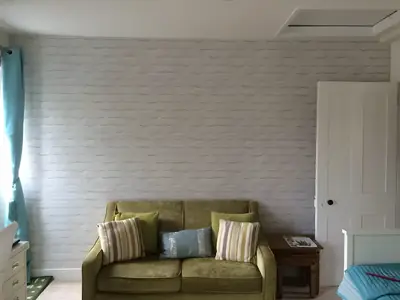
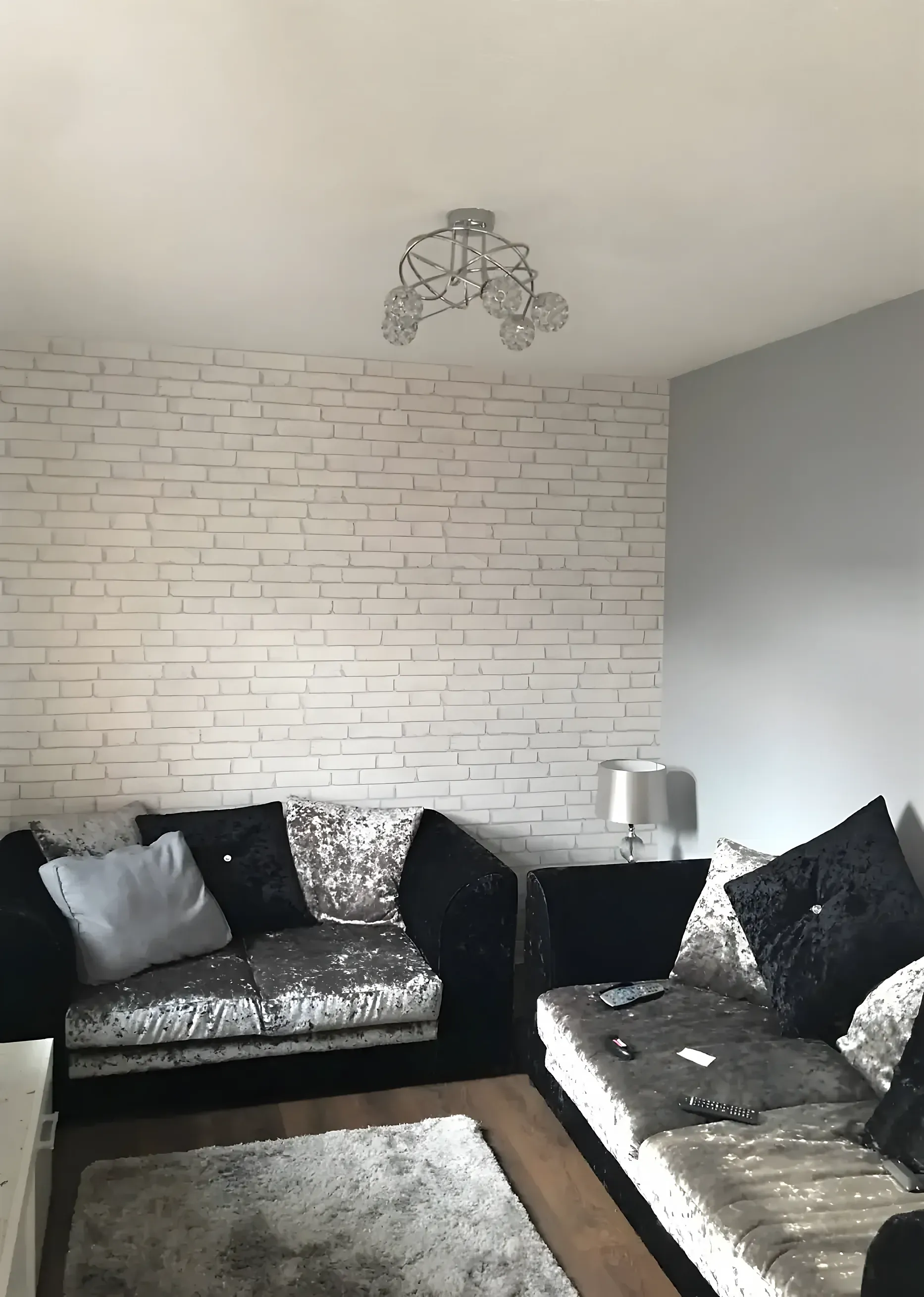
A single papered feature wall is a quick way to give a room a focal point. Behind a bed, across a chimney breast or along one side of a dining room are common choices. In a listed studio flat in central Cambridge, Simon hung a brick-effect feature wall after we had stain-blocked and repainted the rest of the room, which gave the small space some character without crowding it.
Choosing the wall matters as much as choosing the paper. The wall you see as you walk in usually works best, and a strong pattern often looks better on a wall without too many doors, windows or sockets breaking it up. We're happy to hold up samples in the room so you can judge the scale of the pattern before you order.
At the other end of the scale, we paper whole houses, working room by room so you aren't living in chaos. On an open-plan project in Cambridge we removed a stud wall, then decorated, wallpapered and laid the new floor in the combined space. Where papering is part of a wider redecoration, our interior decorating team handles the paintwork alongside it.
Different papers behave differently on the wall. Traditional papers are pasted on the table and left to soak, while many modern non-woven papers are hung by pasting the wall instead. Vinyls, flocks, grasscloths and hand-printed papers each have their own quirks, so we follow the manufacturer's instructions for each one rather than treating them all the same.
William Morris, heritage and designer papers
Designer and heritage papers are often expensive and sometimes hand-printed, so there's little margin for waste. Before cutting anything we check the batch numbers, plan where the pattern will fall on each wall, and work out where the least visible join will be.
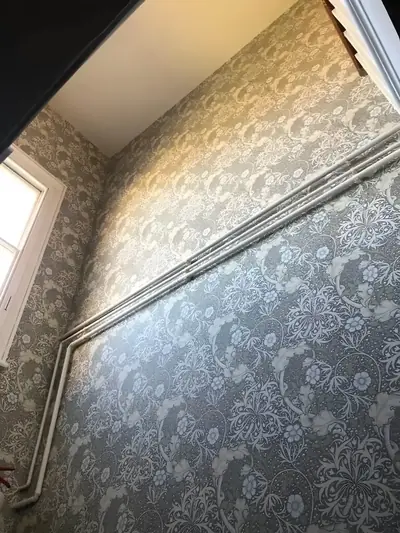
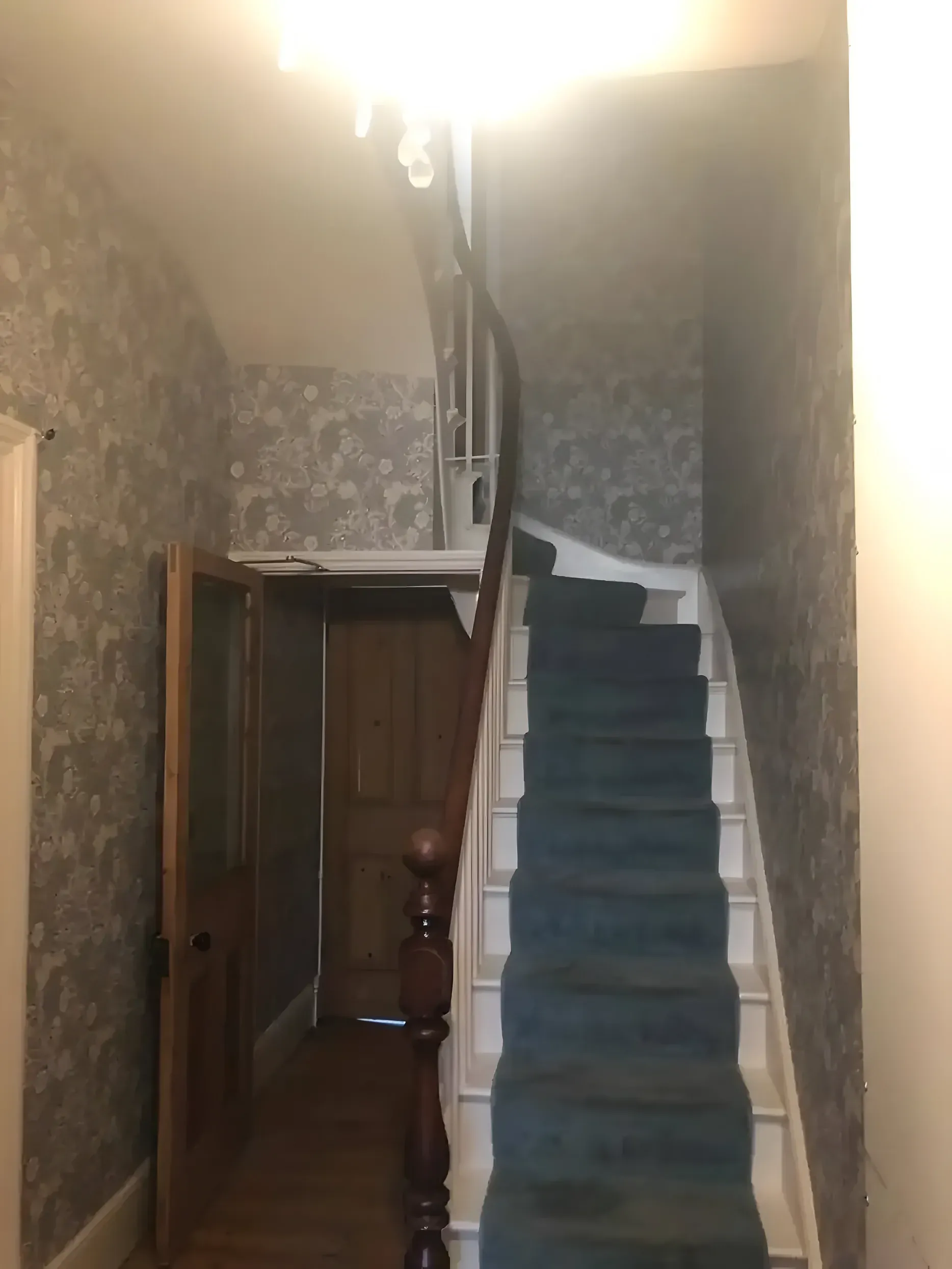
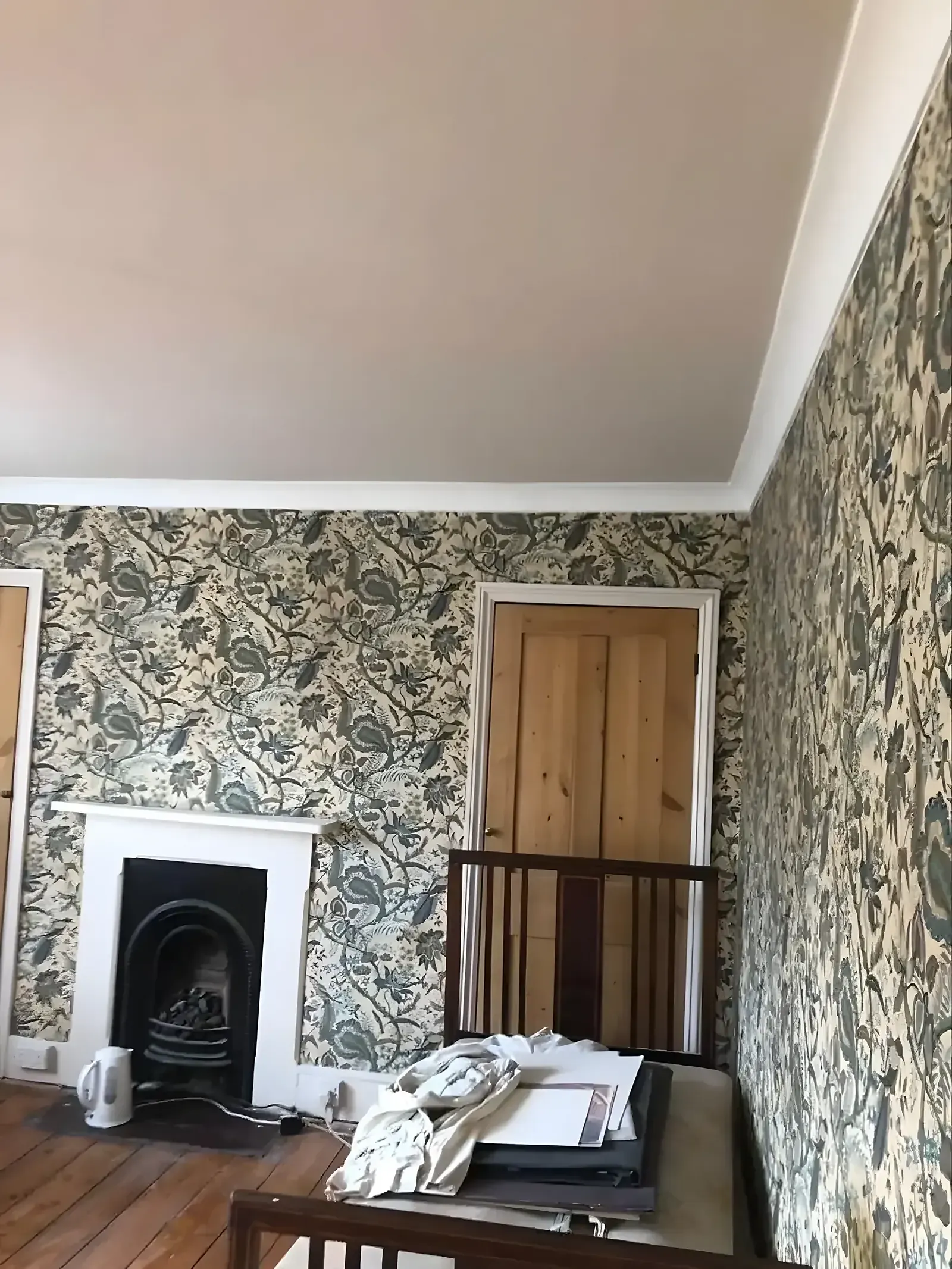
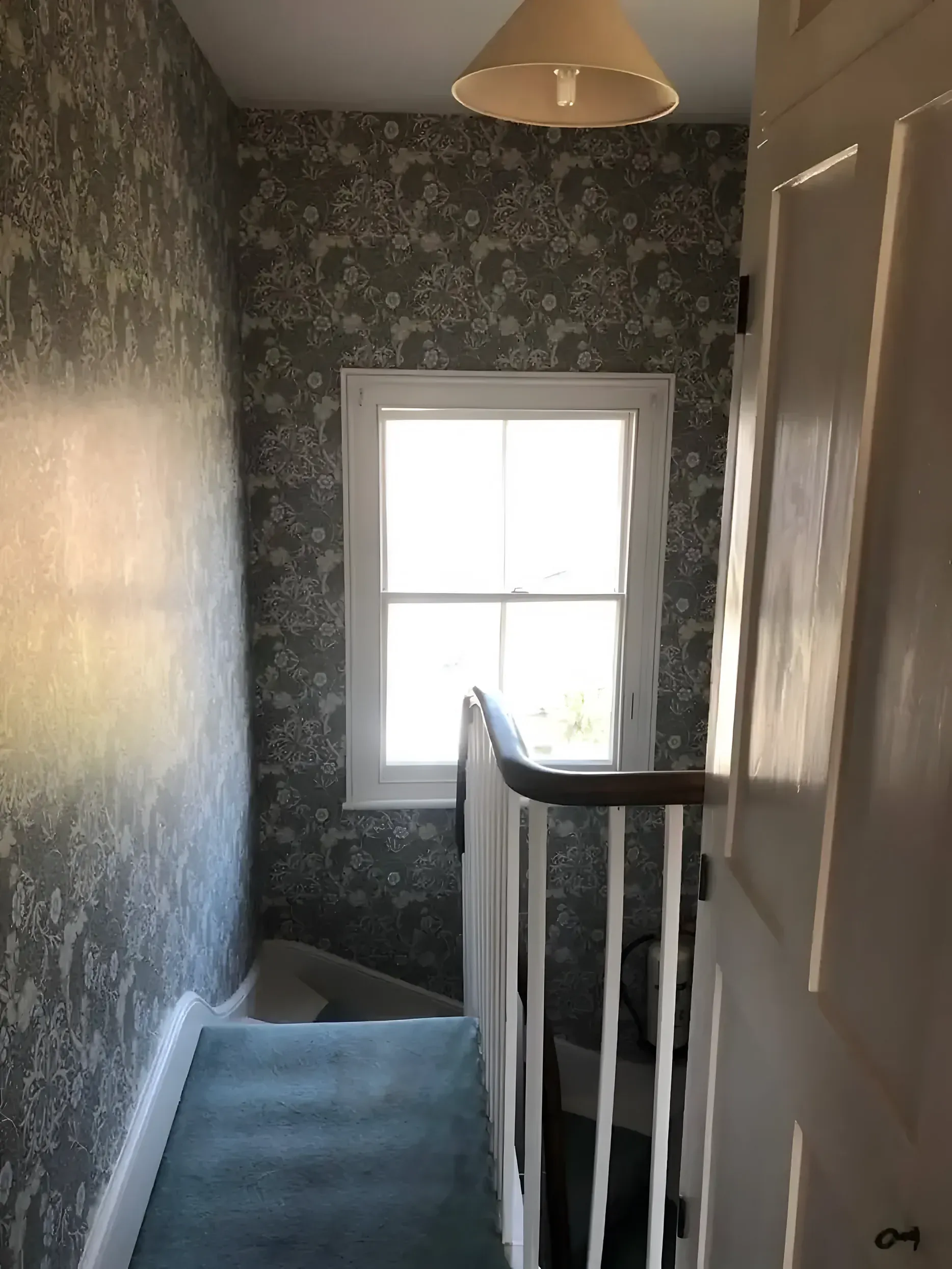
One of our favourite projects was a hall, stairs and landing in central Cambridge spread over three levels. Our master plasterer dealt with the ceilings first while the team stripped the old paper. In one room the customer wanted to keep an existing William Morris paper, so we protected it while the ceiling above was plastered. Our wallpaper specialist then hung a new William Morris design through the hall, stairs and landing on all three floors. The full story is in the William Morris staircase case study.
Doing the ceilings before the paper went up was deliberate. Plastering is a wet, messy job, and a newly hung heritage paper is the last thing you want splashed. Getting the order of work right on a project like this is a large part of what we plan during the first visit.
Staircases and tall walls
Stairwells are where wallpapering gets difficult. Drops can be very long, the walls are often out of plumb, and the pattern has to run continuously from the hall up past the half landing. A mistake at the bottom shows all the way to the top.
We set up safe access over the stairs before we start, so the hanger can work at height without leaning or stretching. Long drops are pasted and folded carefully so they can be carried and hung without creasing. Every length is checked with a plumb line rather than lined up against the previous one, because a small error repeated over three floors becomes a large one.
Murals and photo wallpaper
Photo wallpaper and murals come as a set of numbered panels that must line up to form one image. If the wall isn't prepared properly, or the first panel is slightly off, the picture won't meet at the joins. We prepare the surface so it's smooth and even, mark out the panel positions before pasting, and hang from a true vertical.
Before any paste goes on, we lay the panels out and check they are all there and in the right order, and that the colours match across the set. Any problem with the print is far easier to sort out with the supplier before hanging than after.
Mrs Lee had John hang her photo wallpaper and told us it looked really stunning. A mural like that tends to become the first thing people notice in a room, so it's worth getting the preparation right.
Stripping, lining and pattern matching
Good papering starts with the wall underneath. Our preparation usually includes:
- Stripping old wallpaper, including painted-over and multiple layers
- Washing off old paste so the new paper adheres properly
- Filling cracks and making good marks from shelves and fixings
- Repairing or skimming plaster that comes away during stripping
- Hanging lining paper on uneven or patched walls
- Sizing or priming the surface where the paper manufacturer recommends it
- Planning the pattern repeat so it matches at every join
When lining paper helps
Lining paper evens out walls that are cracked, patched or slightly uneven, and gives the finish paper a consistent surface to dry onto. We often use it in older houses, such as the Victorian bedrooms we decorated in Histon, where the original sand and stone plaster needed lining in places before painting.
When stripping reveals a problem
Removing old paper sometimes shows plaster in poor condition. In one Cambridge bedroom, stripping revealed tired lath and plaster walls, so our plasterer skimmed them before we decorated. Because our own plasterers work alongside us, that kind of discovery doesn't stall the job. We'll always tell you and agree any extra cost before carrying on.
Commercial wallpaper hanging and areas we cover
We hang paper for businesses as well as homes. For JR Pickstocks, a commercial client, we carried out painting and wallpaper hanging across student accommodation, and the feedback praised the quality of the paper hanging and timely completion.
Back in Cambridge, Cathy asked us to hang paper in her home and told us Simon did a brilliant job. Lucy, whose listed studio flat Simon finished with a brick-effect wall, said Simon and Andrew were very prompt and professional. You can read more from customers on our reviews page.
Most of our wallpapering is in and around Cambridge. We regularly travel to villages such as Grantchester and Great Shelford, and as far as Ely, but we only take on work within 15 miles of our base in Landbeach. Graham will visit, look at the walls and the paper you've chosen, and send you a written quotation.