Lining paper hanging for walls that need a fresh start
Lining paper is a plain, unpatterned paper hung on a wall or ceiling before the finish goes on. We offer lining paper hanging in Cambridge as part of a redecoration or as a job on its own. It covers fine cracks, patched repairs and slightly uneven plaster, and gives paint or wallpaper a consistent surface to sit on.
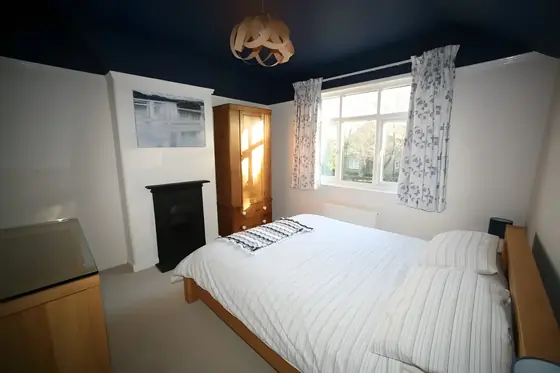
It is most often needed in older houses. In two Victorian bedrooms in Histon with their original sand and stone plaster, the walls were stripped and lined with lining paper where needed, then finished with two coats of Khaki Mist emulsion. The Histon bedrooms case study has the full specification.
Lining under paint and lining under wallpaper
The same roll can do two different jobs, and they are hung differently.
Lining for a painted finish
When the lining paper is the finished surface, it is usually hung vertically, like ordinary wallpaper, with tight butt joins. Once dry, any fine gaps at the joins and edges are filled or caulked and sanded smooth, then the paper is sealed with a diluted first coat before the emulsion. Done well, you can't tell the wall has been lined. Done badly, every join shows through the paint as a faint line.
Cross lining under wallpaper
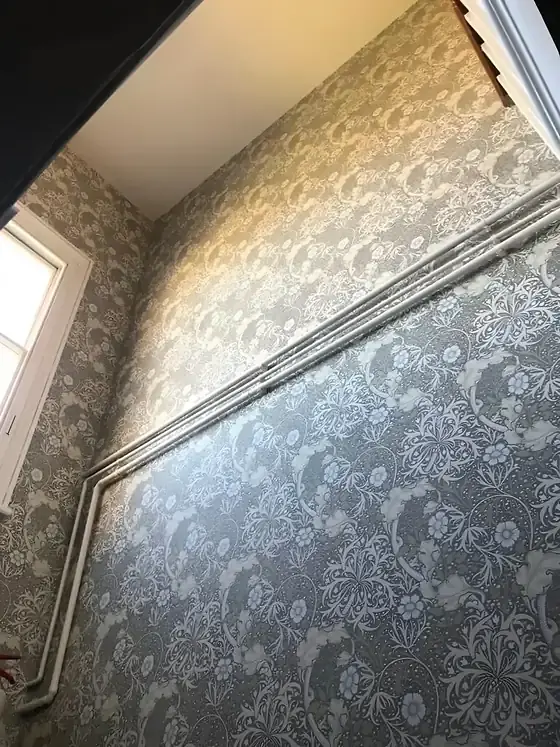
Cross lining means hanging the lining horizontally, so its joins run at right angles to the drops of the finish paper. That way the two sets of joins never sit on top of each other, which is where seams tend to open and lift. Cross lining is the standard preparation for heavy, expensive or hand-printed papers, and it's what we'd recommend under a designer or William Morris paper on an older wall.
Choosing a grade
Lining paper is sold by grade, with a higher number meaning a thicker paper. Lighter grades suit walls that are already fairly smooth and just need a uniform surface. Heavier grades hide more, so they are often chosen for walls with fine crazing or old, slightly rough plaster, though they are stiffer to hang around corners and window reveals. We pick the grade to match the wall and what's going on top, and we'll explain the choice at the visit.
Lining paper on ceilings
Lining a ceiling is a common way to hide a network of hairline cracks, particularly on older lath-and-plaster ceilings where the cracks keep coming back through paint. It is hung across the room, usually parallel to the main window so the joins don't catch the light, and needs two people and safe access to support the long folded lengths.
It only works on a ceiling that's sound. If the plaster sags, sounds hollow or moves when you press it, paper won't hold it up and can hide a problem that's getting worse. A ceiling like that needs repairing or skimming first, which our plasterers handle through our ceiling skimming and repair service.
When lining is the right answer, and when it isn't
Lining paper is a good fix for:
- Fine cracks and crazing that keep reappearing through paint
- Walls covered in old filler patches that show through emulsion
- Original lime or sand and stone plaster that is sound but uneven
- Walls where you want a better base for an expensive wallpaper
It won't solve these
Damp, blown or crumbling plaster, large dips and bulges, and structural cracks that are still moving. Paper over damp will stain and peel, and paper over blown plaster just hides it for a while. In those cases the wall needs a plasterer, and possibly the cause fixing first. On a sound but rough wall, Graham will compare lining with a full skim and tell you which he thinks is better value for that room.
How we hang it
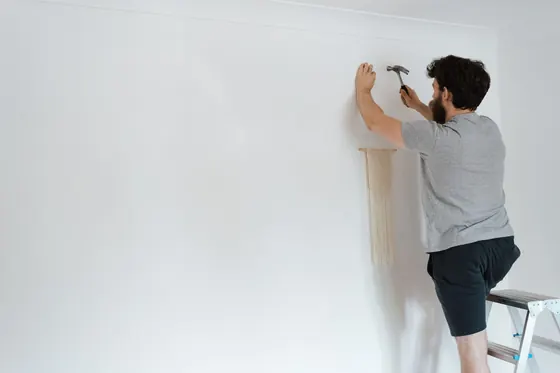
The wall is stripped, washed free of old paste, filled and sanded first. On absorbent or patchy plaster we size or prime so the paste doesn't soak in unevenly. Each length is pasted and left to soak for the time on the label, so it has finished expanding before it goes up and doesn't shrink back to leave gaps.
Freshly hung lining paper sometimes shows small bubbles. Most flatten as it dries, so we leave it to dry fully before judging, rather than piercing them early. Painting too soon, or wetting it heavily with the first coat, can bring them back, which is why the first coat goes on thin.
What changes the cost
The things that make most difference are the area and the shape of the room, whether it's walls or a ceiling, how much stripping and filling comes first, the grade of paper, and whether the lining will be painted (filling and sealing the joins takes extra time) or followed by wallpaper. All of it is listed in the written quotation.
Booking a visit
Graham will look at the walls and ceilings in good light, tap any suspect areas and tell you honestly whether lining, plastering or simply filling is the right approach. Your quotation arrives in writing, usually by email. We tidy each day, walk the finished rooms with you, and you don't pay until you're happy. You can see the full range of what we hang on our wallpapering page, and we work across Cambridge and villages such as Chesterton.