
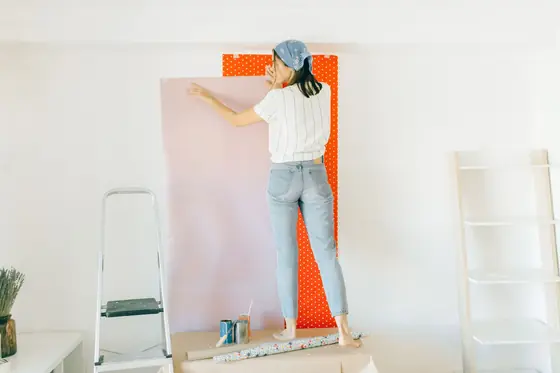
Papering Saffron Walden's older walls
Council Tax records list about 1,070 homes in the parish from before 1900, and another 120 from the years up to 1918. Walls of that age are rarely flat or true, and stripping old paper often brings loose plaster with it. We fill and make good, then hang lining paper so the finish paper dries flat and the pattern lines up at every join.
Where the plaster is past lining, our plasterers can skim it as part of the same job, and Graham agrees any extra cost with you first.
Listed homes and heritage patterns
Saffron Walden has 373 listed buildings, ten of them Grade I. Owners of listed houses often choose heritage papers, which can be hand-printed and expensive, so we check batch numbers, plan where the pattern falls and set out from a plumb line before cutting. Our William Morris hall, stairs and landing in Cambridge shows that kind of work. If your home is listed, ask Uttlesford District Council before removing anything original.
Newer homes in the town, including around 1,560 built since 2009, take paper well and suit bold feature walls.
Saffron Walden at a glance
- 25 milesby road from our Landbeach base, about 33 minutesOSRM routing
- 14%of properties were built before 1919VOA Council Tax stock
- 6%date from 1919 to 1939VOA Council Tax stock
- 7,388householdsCensus 2021
- 373listed buildingsHistoric England
- 65%of homes are owner-occupiedCensus 2021
How we approach wallpapering
In an older Saffron Walden room we strip existing layers, wash off old paste and check the plaster for hollow areas. Cracks are filled, loose patches skimmed if needed, and lining paper hung on uneven walls. The surface is sized where the paper maker recommends it, the repeat is planned so the main motif sits centrally, and each drop is checked with a plumb line. The full method, products and FAQs are on our wallpapering page.