
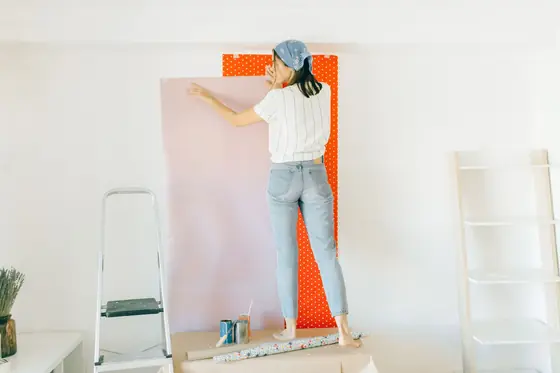
Wallpaper hanging on Linton's older walls
Walls in old houses are rarely flat or plumb. Stripping layers of paper can expose patched plaster, so we wash off old paste, fill, and hang lining paper where the surface needs it. Every drop is then hung to a plumb line, because lining up against an out-of-true corner carries the error across the room.
If a wall turns out to be loose plaster under the paper, our plasterers can skim it, and the extra is agreed before we carry on.
Heritage papers and listed interiors
Heritage designs suit period houses well. Our wallpaper specialist Simon hung William Morris paper through three floors of a Cambridge hall and stairs, after we protected an existing Morris paper while a ceiling was replastered. The full story is in our William Morris case study.
With 125 listed buildings in the parish, check whether your home is one before changing historic wall finishes. Linton's newer homes, the large majority built since 1945, generally take feature walls and murals with much less preparation.
Linton at a glance
- 20 milesby road from our Landbeach base, about 26 minutesOSRM routing
- 15%of properties were built before 1919VOA Council Tax stock
- 4%date from 1919 to 1939VOA Council Tax stock
- 1,881householdsCensus 2021
- 125listed buildingsHistoric England
- 70%of homes are owner-occupiedCensus 2021
How we approach wallpapering
We strip and wash down, fill cracks, then line older Linton walls and let the lining dry before the finish paper. Batch numbers are checked, the repeat is planned so the least visible join falls in a corner, and every drop goes up to a plumb line. Wall-paste and table-paste papers are each handled to the maker's instructions. The full method, products and FAQs are on our wallpapering page.