
Plastering in Linton's post-war houses
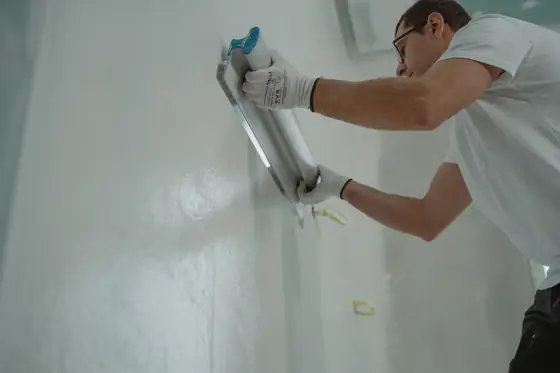
Since the 1960s Linton has grown as a dormitory village of Cambridge, and the houses from that expansion are where Artex is most likely. Skimming covers the texture without taking the ceiling down. Lewis or our master plasterer does the skim once fittings are down and floors protected.
On a whole-house renovation, two of our plasterers skimmed Artex while decorators hung coving and prepared walls in other rooms, which kept the programme short.
Older walls and stubborn cracks
Linton's 340 or so pre-1919 houses can have lath and plaster hiding under old paper. Graham decides at the visit whether a wall needs skimming or whether filling and lining paper will do, so you only pay for the plastering the room needs.
Repeat cracks can mean movement or a leak, and we'll tell you rather than cover the problem. Coving can be hung once the skim is done, in a profile to suit the age of the house.
Linton at a glance
- 20 milesby road from our Landbeach base, about 26 minutesOSRM routing
- 16%were built 1945 to 1964VOA Council Tax stock
- 34%were built 1965 to 1982VOA Council Tax stock
- 15%of properties were built before 1919VOA Council Tax stock
- 1,881householdsCensus 2021
- 4%date from 1919 to 1939VOA Council Tax stock
How we approach plastering
After the skim, plaster dries fully before decorating. We sand nibs and trowel marks with Mirka dust-free sanders, apply a mist coat of thinned emulsion to seal the surface and show imperfections, fill and spot-sand, then apply two coats. Water-stained ceilings in older Linton houses get a Zinsser stain block first. The full method, products and FAQs are on our plastering page.