
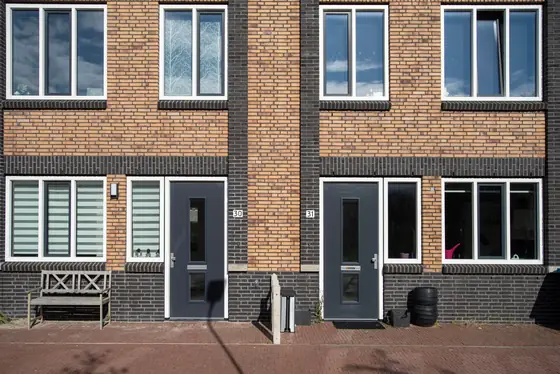
The houses of St Ives
Council Tax records date 39.7% of St Ives properties to between 1965 and 1982, and another 27.4% to 1983 to 1999. That makes the town's housing unusually consistent: about two-thirds of it comes from those four decades. Semi-detached houses are the largest group in the 2021 Census at 32.3%, followed by detached homes at 29.5%.
Homes from that era tend to raise the same questions: textured ceilings, white uPVC windows going chalky, and fitted kitchens that are solid but dated. Our pages on skimming Artex ceilings and respraying uPVC frames explain how we deal with each.
The older town by the river
Only around 7% of St Ives homes predate 1919, but that older part matters. The town has a Grade I listed stone bridge dating from the 1420s, the Grade II* Manor House and New Bridges, and 147 buildings listed at Grade II. There is also a conservation area, so exterior colour changes are worth checking with Huntingdonshire District Council first.
In older buildings we take the slower route: lining paper on uneven walls, careful sanding of old paintwork, and primers matched to the timber underneath.
Owners, landlords and how we work
Two-thirds of St Ives households own their home, and 21.4% rent privately, about 1,600 households in all. So our work here would be a mix of family houses decorated for the long term and rented homes refreshed between tenants.
Graham visits every job before quoting, and the written quotation sets out each room or surface. Belinda organises the work and keeps you up to date, our 12 decorators are all City & Guilds or NVQ qualified, and nothing is paid until you're happy with the finished St Ives job.
St Ives in numbers
- 18 milesby road from our Landbeach base, about 24 minutesOSRM routing
- 7,522householdsCensus 2021
- 67%of homes are owner-occupiedCensus 2021
- 21%of homes are privately rentedCensus 2021
- 7%of properties were built before 1919VOA Council Tax stock
- 152listed buildingsHistoric England