
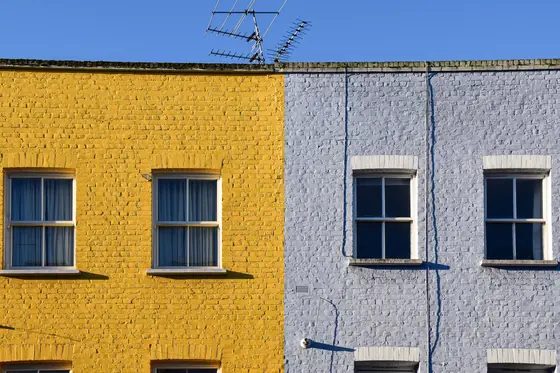
Houses from the 60s, 70s and 80s
Most St Ives houses were built between 1965 and 1999. Exteriors of that era often combine brick with rendered panels and painted timber fascias. Graham checks each surface on his walk-round, noting cracked render and soft timber so the repairs are priced into the quotation.
Algae on shaded render is washed off with an anti-fungal solution and the wall left to dry. A breathable masonry paint then goes on, and soffits and fascias are sanded, primed where bare and repainted. You can see a similar mould treatment in our exterior restoration case study.
Painting in the St Ives conservation area
St Ives has a designated conservation area and 152 listed buildings, including the Grade I bridge. If your house is in the conservation area or listed, ask Huntingdonshire District Council about colour before we start. We paint a test patch on a quiet part of the wall so you can see the shade in daylight.
St Ives at a glance
- 18 milesby road from our Landbeach base, about 24 minutesOSRM routing
- 85%are houses rather than flatsCensus 2021
- 30%of homes are detachedCensus 2021
- 7%of properties were built before 1919VOA Council Tax stock
- 1conservation arealocal council
- 11%were built 1945 to 1964VOA Council Tax stock
How we approach exterior painting
We survey, then jet wash with anti-fungal wash and let the walls dry. On a St Ives semi we scrape back flaking paint, fill cracked render with exterior filler and prime any bare fascia timber. Windows, paths and plants are masked, masonry gets two coats of breathable paint and woodwork an undercoat and top coat. Gutters and downpipes are usually done on the same ladder run. The full method, products and FAQs are on our exterior painting page.