
A market town that grew quickly
Most of Haverhill's historic buildings were lost in a great fire on 14 June 1667. The Tudor-era Anne of Cleves House survived, and today it stands alongside many Victorian buildings. Stour Brook runs through the town and joins the River Stour just outside it.
Council Tax records show how much the town has grown since. The biggest single building period is 1965 to 1972, with about 2,370 homes, and roughly 4,280 more were added between 1973 and 1999. Recent expansion has pushed the western edge out to take in the hamlet of Hanchet End.
Homes and households in Haverhill
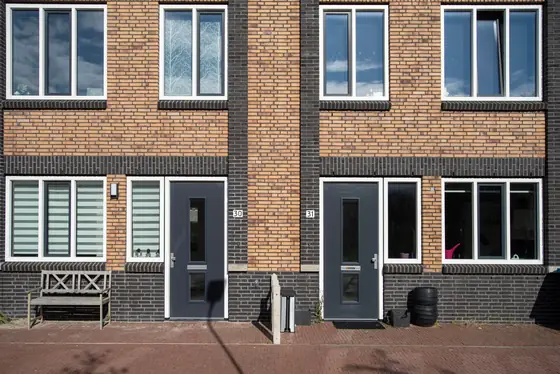
The 2021 Census counted 11,055 households. Terraced houses are the most common type at 36%, followed by semis at 27% and detached homes at 25%, with flats around 12%. Three-bedroom homes make up 47% of the total.
About 60% of households own their home. Social renting accounts for 21.5% and private renting 17.4%, so close to four in ten homes here are looked after by a landlord. Our pages on landlord and commercial decorating in Haverhill and exterior house painting in the town cover the two jobs that brings up most.
Heritage, planning and how we work
Haverhill has 36 listed buildings, three of them Grade II*, including Anne of Cleves House and the Old Independent Church. There are two conservation areas, Haverhill Hamlet Road and Haverhill Queen Street, and planning falls to West Suffolk Council.
Graham visits in person before quoting, and you get a written quotation, usually by email. Belinda books the dates and keeps you up to date while our team, all City & Guilds or NVQ qualified, does the work. We are Dulux Select Decorators and hold £5 million public liability insurance.
Haverhill in numbers
- 21 milesby road from our Landbeach base, about 37 minutesOSRM routing
- 11,055householdsCensus 2021
- 60%of homes are owner-occupiedCensus 2021
- 17%of homes are privately rentedCensus 2021
- 6%of properties were built before 1919VOA Council Tax stock
- 36listed buildingsHistoric England