Shed, fence and gate painting across Cambridge
Garden timber has a hard life. It sits in the rain, bakes in the sun and gets covered in algae on the shady side. After a few years a shed that was honey-coloured turns silver-grey, fence panels go patchy and gates start to split where the finish has worn through.
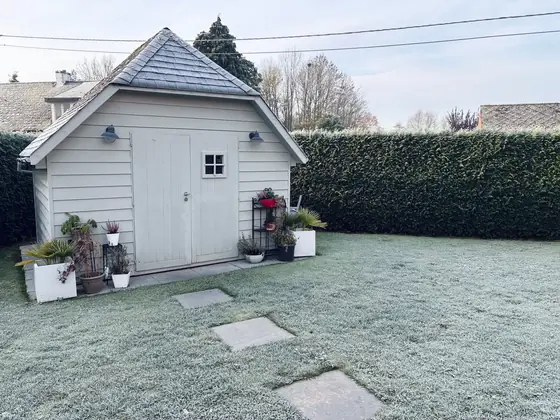
Our shed, fence and gate painting service puts that right. It's the same care we bring to houses: proper preparation, products suited to the timber and the job done in the right weather. One of our customers, John Dunn in Cambridge, wrote to say, “We are both delighted with the way the shed has come out. Please tell Denes so.” You can read more like that on our customer reviews page.
Getting garden timber ready for a new finish
Paint and stain only last if they go onto clean, sound, dry wood. Green algae, dirt, cobwebs and loose fibres all stop a finish from soaking in or sticking, so we deal with them first.
Where it suits the timber, we clean with a jet wash and an anti-fungal wash, the same method we used to treat a mould-affected house exterior in Cambridge before repainting it. Rough-sawn fence panels are softer than painted house walls, so on those we use a gentler approach. Either way, the wood is left to dry out thoroughly before anything is applied.
- Moss, algae and dirt cleaned off
- Flaking paint scraped and sanded back on sheds and gates
- Loose splinters and raised fibres sanded down
- Plants, paving and anything nearby protected
- Rotten boards or posts flagged before we start
Paint, stain or treatment for your sheds and fences
There isn't one right product for all garden timber, and Graham will recommend what suits yours at the visit. The choice mainly comes down to how much of the wood you want to see.
Opaque garden paints
Solid colour hides the grain and is the best way to make a shed or summerhouse a feature of the garden. Soft greens, greys and deep blue-blacks are popular, and the colour stays even across boards that have weathered differently.
Wood stains
A stain colours the timber while letting the grain show through. It suits fences and gates where you want a natural look, and it's often easier to recoat later because there is less of a surface film to flake.
Treating new or bare timber
New sheds and untreated panels benefit from a protective treatment before or as part of the colour coats. If yours is brand new, check what the manufacturer has already applied, as some timber leaves the factory pre-treated.
Sheds, gates and fences each need something different
A shed is closer to a small building than a fence. The cladding, door, window frames, corner trims and barge boards all need doing, and the bottom boards nearest the ground usually need the most attention because they sit in splashback from rain. We paint the door edges and the underside of the window frames too, as those are where water gets in first. Roof felt isn't something we replace, but we'll mention it if it's letting water into the timber we're painting.
Gates take a lot of handling and swing in all weathers. We remove or mask the latch and hinges, then finish every face, including the top and bottom edges, where bare end grain soaks up water and starts to rot.
Metal hinges and latches on older gates are often rusty. We clean off loose rust before painting around them, and if a gate has dropped on its hinges so it drags on the path, it's worth having it adjusted before we decorate, as a scraping gate soon wears through a fresh finish.
Fences are mostly about volume. A long run of panels and posts takes time, and it's the posts and the gravel boards at the base that tend to fail first, so we make sure they get a proper coat rather than a quick pass.
Picking colours for the garden
A garden colour has to sit with the house, the paving and the planting, and it changes a lot between a grey February and July sunshine. We'll paint small test patches on a discreet part of the shed or fence so you can live with them for a few days before choosing.
Darker colours tend to make a fence recede into the planting, which can make a small garden feel bigger, while paler shades bounce light into a shady corner. A shed painted to match the house trim or front door ties the garden to the building. If you have colours in mind from a magazine or a neighbour's garden, show Graham at the visit and he'll suggest products that come in something similar.
It's also worth thinking about boundaries. We can only paint fences that are yours, or the neighbour's side with their agreement, so it helps to check which fences belong to you before the visit.
Timing the work around the weather
Exterior finishes need dry timber and a few dry hours after application. Rain on wet paint, frost overnight or wood that is still damp from yesterday's shower will all spoil the result, however carefully it's applied. Late spring to early autumn is usually the best window, though dry spells at other times of year can work too.
We watch the forecast closely for outdoor jobs. If the weather turns, we'll let you know and move the day rather than paint on wet wood. On long runs of fencing we may use our Graco cordless airless sprayer, but only when overspray onto plants, cars and next door's property can be properly controlled; otherwise it's brush work.
Part of a wider exterior job
Garden timber is often done at the same time as the house. If your soffits, fascias, doors or walls need attention too, our exterior house painting service covers them, and the same preparation and weather planning apply. Staining interior doors and stairs is covered separately under woodwork staining and varnishing.
If a shed has rotten floorboards or a fence post has gone, we can involve our carpenter or master builder before the painting. We work from Landbeach and paint garden timber for homes across the area, including Milton, Girton and the villages to the south such as Great Shelford.