
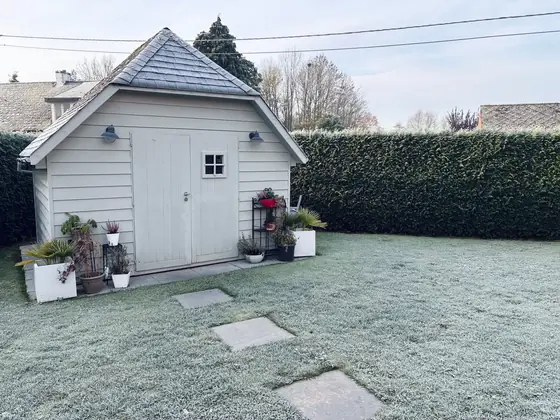
Garden timber around detached and semi-detached homes
Fences fail first at the bottom, where rain splashes back off the ground, and sheds let water in round their doors and windows. We give those areas more attention than a quick coat would, and flag rotten posts or boards for our carpenter before painting.
Cleaning comes first: a jet wash with anti-fungal wash on sound boards, or a gentler scrub on soft, rough-sawn panels. The timber then dries thoroughly before any colour goes on.
Paint, stain and the right weather
For a shed, solid-colour paint hides weathered and mismatched boards. Fences are often better stained, because the grain still shows and next year's recoat is quicker. Graham will suggest a product and we'll do test patches first.
Late spring to early autumn gives the dry spells the timber needs. If the house needs work too, exterior painting can be done on the same visit, and decks have their own page on decking staining and oiling.
Haddenham at a glance
- 10 milesby road from our Landbeach base, about 16 minutesOSRM routing
- 92%are houses rather than flatsCensus 2021
- 51%of homes are detachedCensus 2021
- 31%are semi-detachedCensus 2021
- 74%of homes are owner-occupiedCensus 2021
- 1,457householdsCensus 2021
How we approach shed, fence & gate painting
We protect paving, plants and anything stored against the fence, then clean off algae and dirt. Any flaking coating on shed walls and gates is scraped back and sanded. Gates are painted on every face, including the top and bottom edges where water sits. Two coats go on in dry weather, and on long runs our Graco sprayer is used only where overspray can be controlled. The full method, products and FAQs are on our shed, fence & gate painting page.