
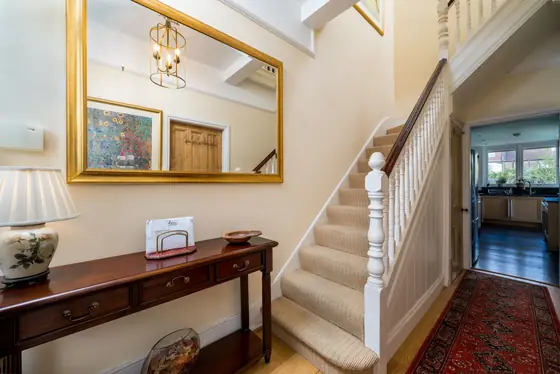
Staircases and doors in the parish
In houses built from 1965 to 1999, close to half the parish, softwood stairs and doors often wear an old varnish that has turned orange. We clean, key and sand them so a new finish holds, then either restain and varnish or prime and paint. A clear route up and down is agreed while each part dries.
Older cottages, about 16% of homes, may have pine doors and joinery painted many times over. Stripping that back is slow, and on one of the 16 listed buildings it's worth checking with the council first, so repainting in eggshell is often the better route.
Stain, varnish or a painted finish
Stain changes the colour of the timber, and varnish seals it under a hard, clear coat that suits handrails. Paint covers mismatched wood and patched repairs. Each needs different preparation, and Graham will explain the trade-offs when he visits. Our staircase sanding and varnishing page shows the process.
In Fordham, Mrs M Turner singled out the staining Valter and Denes did on her staircase and doors. Her comments, and plenty of others, are on our reviews page.
Haddenham at a glance
- 10 milesby road from our Landbeach base, about 16 minutesOSRM routing
- 16%of properties were built before 1919VOA Council Tax stock
- 7%date from 1919 to 1939VOA Council Tax stock
- 92%are houses rather than flatsCensus 2021
- 16listed buildingsHistoric England
- 74%of homes are owner-occupiedCensus 2021
How we approach woodwork staining & varnishing
On a Haddenham staircase we sheet the hall floor, wash off polish and grime, and sand treads, spindles and handrail evenly. Stain colour is tested on a hidden spot before anything else. Varnished areas get extra coats where hands and feet wear them most. Painted woodwork is primed with Zinsser over knots, undercoated and finished in satin or eggshell. The full method, products and FAQs are on our woodwork staining & varnishing page.