
Hanging paper on Haddenham's older walls
Old plaster is often patched, hollow in places and out of plumb. We tap walls to find loose areas, fill and make good, and hang lining paper first wherever the surface would show through. Every drop is set from a plumb line rather than the corner, because an old corner is rarely true.
Sixteen buildings in the parish are listed, including 57 High Street and 68 Hill Row. Owners of those should speak to East Cambridgeshire District Council before taking off anything original. An old paper worth saving can be sheeted and protected while work goes on around it, which we did for a William Morris paper in a Cambridge house.
Papers chosen by owners who plan to stay
With 633 households owning outright and another 449 paying a mortgage, most rooms we'd paper here belong to people choosing for themselves rather than for a tenant. That often means designer or heritage papers, so batch numbers are checked and the pattern planned before anything is cut. Simon, our wallpaper specialist, hung the three-storey William Morris stairwell in Cambridge.
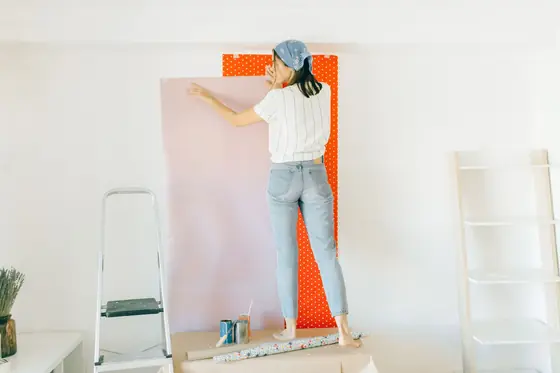
In the two-thirds of homes built from 1965 onwards, walls are flatter, and a single feature wall is often where people start.
Haddenham at a glance
- 10 milesby road from our Landbeach base, about 16 minutesOSRM routing
- 16%of properties were built before 1919VOA Council Tax stock
- 7%date from 1919 to 1939VOA Council Tax stock
- 1,457householdsCensus 2021
- 16listed buildingsHistoric England
- 74%of homes are owner-occupiedCensus 2021
How we approach wallpapering
We strip old paper with care and wash off the paste. Loose plaster is cut back and filled, and on uneven older walls we hang lining paper horizontally so the finish paper dries flat. Pattern repeats are measured, the first drop goes up from a plumb line, and we follow the maker's instructions on pasting the paper or the wall. The full method, products and FAQs are on our wallpapering page.