
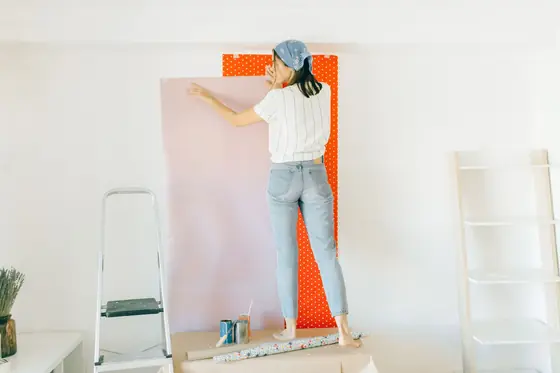
Papering older Ely walls
In Council Tax data, 920 Ely properties date from before 1900. Walls of that age have often been patched many times, and a fine pattern will show every bump. We strip any old layers, fill and size the wall, then cross-line it so the finish paper has a flat, even surface to dry onto.
If a house is listed, ask East Cambridgeshire District Council before altering historic wall finishes. Hanging new paper over sound lining is usually simple, but stripping early papers or plaster in a listed interior can need consent.
Feature walls in the newer half of the city
Most of Ely is much younger. With 38% of homes built since 2000, plenty of owners start with a single feature wall in a lounge or behind a bed. Modern non-woven papers are hung by pasting the wall, which suits smooth new plaster, and Simon, our wallpaper specialist, takes on the trickier patterns.
Roughly 64% of Ely households own their home, and owners tend to pick papers for the long term. Through the hall, stairs and landing of a central Cambridge house we hung William Morris paper over three floors, described in our William Morris staircase project.
Ely at a glance
- 12 milesby road from our Landbeach base, about 18 minutesOSRM routing
- 12%of properties were built before 1919VOA Council Tax stock
- 7%date from 1919 to 1939VOA Council Tax stock
- 8,965householdsCensus 2021
- 199listed buildingsHistoric England
- 64%of homes are owner-occupiedCensus 2021
How we approach wallpapering
We set out from the wall you see first, plan the repeat so a full motif sits at eye level, and check batch numbers before cutting. Older Ely plaster gets a lining paper first, hung horizontally where the finish runs vertically. Joins are rolled, paste is wiped from the face straight away, and switch plates go back once the paper has dried. The full method, products and FAQs are on our wallpapering page.