Staircases and doors, old and new
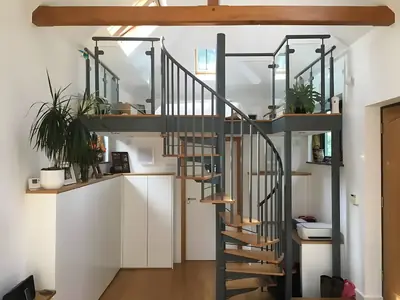
A stained staircase is often the first thing a visitor sees. Treads, spindles and handrails are sanded evenly so the stain takes without going blotchy, and a clear protective coat goes over the parts that wear. We test the colour on a hidden spot first, such as the underside of a tread.
In Fordham, Valter and Denes stained a staircase and doors for Mrs M Turner, who thanked us for the amazing transformation. More of that kind of work is on our staining and varnishing page.
Skirtings and doors in newer Ely homes
With most of Ely built since the 1980s, much of the woodwork here is plain softwood skirting and doors under old gloss. Many owners now prefer satin or eggshell, which shows fewer imperfections. Bare pine is primed with Zinsser first so knots don't bleed resin through the finish.
Grade II joinery and everyday staircases in Ely
Most of Ely's listed buildings are Grade II: 166 of the 199 entries on Historic England's list, ranging from Lavender House to the Congregational Chapel, which was listed in 1950. If your house is one of them, decisions about old doors, panelling or a staircase are worth talking through with the council before anything is stripped.
Stripping is the decision that changes most. A painted staircase or door taken back to bare wood so it can be stained looks different for good, and how the bare timber will look can't be known until a test area is done. So we strip and stain a small hidden patch first, such as the back of a door, before you commit to the rest.
Stairs also have to stay usable. At the 2021 Census, 19.6% of Ely residents were aged 65 or over, against 18.4% across England, and a staircase someone relies on every day can't simply be shut for a day while stain and varnish dry. We'll plan the order of work with you so the stairs can still be used safely between coats.
Figures from 2021 Census (ONS); Valuation Office Agency Council Tax stock by build period; Historic England's National Heritage List. Source: Office for National Statistics licensed under the Open Government Licence v.3.0. Contains public sector information licensed under the Open Government Licence v3.0. © Crown Copyright 2026. Contains Ordnance Survey data © Crown copyright and database right 2026. Released under OGL.
Ely at a glance
- 10 milesfrom our Landbeach base in a straight line, about 18 minutes by roadOSRM routing
- 12%of properties were built before 1919VOA Council Tax stock
- 7%date from 1919 to 1939VOA Council Tax stock
- 86%are houses rather than flatsCensus 2021
- 199listed buildingsHistoric England
- 64%of homes are owner-occupiedCensus 2021
Sources: Census 2021 for Ely parish (ONS); Council Tax: stock of properties, 2026; Historic England listed buildings; road distance by OSRM.
Listed buildings and conservation areas in Ely
- Bishop's Palace (the Palace School)Grade I listed
- Prior's House (Boarding House of the Kings School)Grade I listed
- Oliver Cromwell's HouseGrade II* listed
- ElyConservation area
Sources: Historic England listed buildings; Historic England conservation areas.
Listed buildings: check before changing original woodwork
Original joinery in a listed Ely home is worth discussing with East Cambridgeshire District Council before it's stripped, replaced or given a different finish. According to its listed buildings page, exact like-for-like repairs using traditional materials normally don't need consent, and stripping paint so a staircase can be stained goes beyond that.
Listed and historic buildings (East Cambridgeshire District Council)
How we approach woodwork staining & varnishing
For woodwork in an Ely house, Graham first sorts the job into what stays natural and what is painted, and for a listed house flags anything that would mean stripping original joinery. Stairs are done in stages agreed with you so there's a usable route between coats. Natural timber is sanded evenly and stain-tested on a hidden area; bare pine is primed with Zinsser so knots don't bleed resin; and a clear protective coat goes on treads and handrails.
Doors, skirtings and banisters painted before the 1960s can carry layers of lead paint. A test before sanding settles it, and lead paint is only prepared wet or with low-dust methods, never sanded dry or burnt off.