
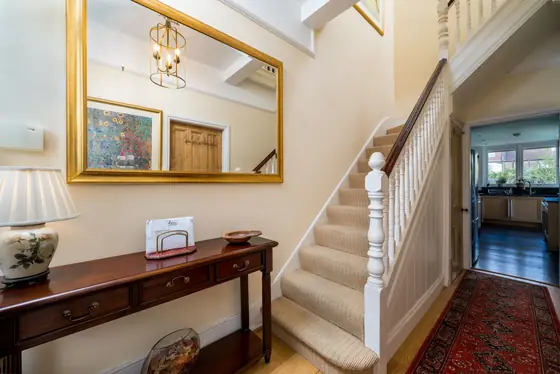
Period joinery, carefully prepared
Old woodwork usually has drips, runs and open joints from decades of earlier coats. We sand those back, fill dents and gaps, and prime any bare timber, sealing knotty pine with Zinsser so resin doesn't bleed through later. In the town's 49 listed buildings, original joinery is part of the building's character, so check before stripping or replacing it.
In a Victorian house in Histon, we made good and repainted picture rails, cupboard doors and skirtings in white around Khaki Mist walls. Soham's older homes often need the same patient preparation.
Natural timber: stain, varnish or oil
Not all woodwork wants paint. A staircase can be sanded and stained so the grain shows, then varnished on the treads and handrail where it takes wear. Beams and worktops suit Osmo oil, which soaks in and can be topped up later. We test stain on a hidden spot first.
Newer homes, more than a third of the town, usually just need their woodwork cleaned, keyed and repainted, often in satin or eggshell rather than high gloss.
Soham at a glance
- 15 milesby road from our Landbeach base, about 23 minutesOSRM routing
- 15%of properties were built before 1919VOA Council Tax stock
- 6%date from 1919 to 1939VOA Council Tax stock
- 87%are houses rather than flatsCensus 2021
- 49listed buildingsHistoric England
- 60%of homes are owner-occupiedCensus 2021
How we approach woodwork staining & varnishing
We start by cleaning grease from door edges and handles, then key old gloss so new coats grip. Natural timber is sanded evenly to avoid pale patches under stain. Between coats we sand lightly, and on staircases we keep a route open. Mirka dust-free sanders keep the rest of the house clean throughout. The full method, products and FAQs are on our woodwork staining & varnishing page.