Staining staircases and doors in Waterbeach
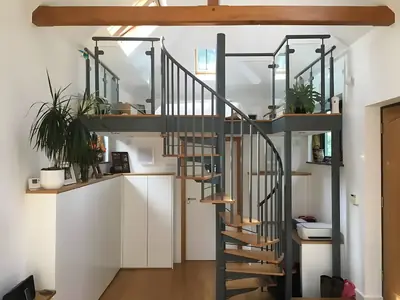
Mrs M Turner in Fordham had Valter and Denes stain her staircase and doors, and when she wrote to us afterwards it was the staining she picked out. We follow the same approach on stairs in Waterbeach: treads, handrails and spindles sanded evenly so the colour takes without blotches, then a clear protective coat where hands and feet wear it.
Panelled doors are stained panels first, then rails and stiles, so there are no dark overlaps where wet edges meet.
Older joinery and painted woodwork
Denny Abbey and its refectory, both Grade I, and the Grade II* Church of St John are among the 21 listed buildings in the parish. The village's 170 or so pre-1900 houses can still have deep skirtings and panelled doors buried under layers of gloss.
We sand back old runs, fill opened joints and finish in gloss, satin or eggshell. Bare pine is primed with Zinsser first so knots don't bleed through, as we did on the frames in this Farrow & Ball redecoration. See our staining and varnishing page for beams and oiled timber.
Picture rails, cupboard doors and lead checks: woodwork near Waterbeach
Lead is the first question on old joinery. About one Waterbeach property in six, 16.9% on Council Tax records, went up before 1965, so doors, skirtings and stairs in those houses can carry pre-1960s paint under the newer coats. A test settles it: if lead is found, sanding and burning are off the table, and the old paint is rubbed down wet or removed with low-dust methods before the area is cleaned.
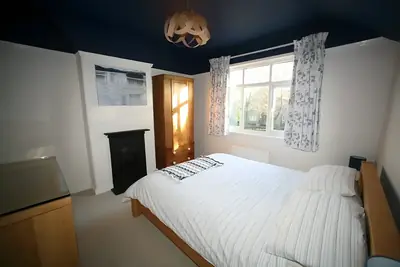
Histon, about 3.8 miles off in a straight line, has the closest documented woodwork to Waterbeach. In two bedrooms of a Victorian house there, every picture rail, cupboard door, frame and skirting was repaired first, then primed and undercoated, and only after that given its white top coat, which is the order old painted joinery needs if the finish is to sit evenly.
In the village's later houses, woodwork is more often about the finish than the age. Dark stained doors can be painted, orange varnish can be stripped or painted out, and white gloss can be changed to eggshell or satin, but each needs keying and the right primer first, or the new coat won't grip.
Figures from Valuation Office Agency Council Tax stock by build period. Contains public sector information licensed under the Open Government Licence v3.0.
Waterbeach at a glance
- 1 milefrom our Landbeach base in a straight line, about 2 minutes by roadOSRM routing
- 8%of properties were built before 1919VOA Council Tax stock
- 4%date from 1919 to 1939VOA Council Tax stock
- 86%are houses rather than flatsCensus 2021
- 21listed buildingsHistoric England
- 64%of homes are owner-occupiedCensus 2021
Sources: Census 2021 for Waterbeach parish (ONS); Council Tax: stock of properties, 2026; Historic England listed buildings; road distance by OSRM.
Listed buildings and conservation areas in Waterbeach
- Denny AbbeyGrade I listed
- Denny Abbey RefectoryGrade I listed
- Church of St JohnGrade II* listed
- WaterbeachConservation area
Sources: Historic England listed buildings; Historic England conservation areas.
Listed buildings: check before changing original woodwork
Original doors, panelling and staircases count towards a listed building's character, so in a listed Waterbeach house, stripping or replacing them may need listed building consent from South Cambridgeshire District Council. Ask Greater Cambridge Shared Planning before the work is booked; the council's Listed Buildings SPD explains its approach in more detail.
Council guidance on listed buildings · Listed Buildings SPD (PDF)
How we approach woodwork staining & varnishing
For woodwork in a Waterbeach house, Graham lists every door, frame, skirting and stair part included and flags anything that may need a lead test. Old gloss and varnish are degreased and keyed with Mirka dust-free sanders, splits and dents are filled, and bare pine is sealed with Zinsser so knots can't bleed through. A colour for stained work is tried on a hidden spot first, painted woodwork gets an undercoat and two finish coats, and a way up and down the stairs is kept clear.
Where woodwork predates the 1960s, the lower layers of paint may contain lead: it is tested first, and if it is positive it is wet-abraded or removed by low-dust methods rather than sanded dry or burnt off.