
Which Waterbeach floors suit sanding
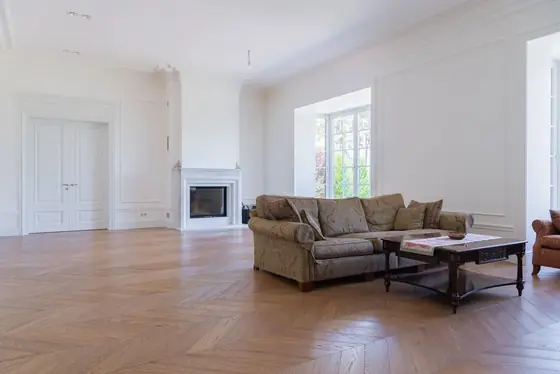
Solid boards in pre-war houses are the classic candidates, and solid hardwood laid in a newer home can be sanded too. Engineered boards have a thin wear layer that may allow one light sanding or none, and laminate can't be sanded at all.
Our wooden floor specialist, Chris, inspects the floor first, and only then do we put a figure on it. With a third of the village built after 2000, he'll often be telling people honestly that their floor isn't a sanding job, and suggesting what is.
How a restored floor comes together
In a house in Haddenham, near Ely, Chris belt-sanded and edge-sanded the dining and living room boards, filled the gaps with sawdust and Induro Morrells Mix & Fill, and finished them in Osmo Polyx tint oil in Gold. The Haddenham floor restoration has photos of each stage.
A clear oil keeps the timber close to its freshly sanded colour if you'd rather not tint it. The 2021 Census counted 548 terraced homes in Waterbeach, and in a narrow hallway we plan the work so you can still get in and out.
Waterbeach at a glance
- 1 milesby road from our Landbeach base, about 2 minutesOSRM routing
- 8%of properties were built before 1919VOA Council Tax stock
- 4%date from 1919 to 1939VOA Council Tax stock
- 23%are terracedCensus 2021
- 21listed buildingsHistoric England
- 2,411householdsCensus 2021
How we approach floor sanding
The room is emptied and doorways sealed. Chris secures loose boards and punches down proud nails, then works through grades of paper on a belt sander, with an edging sander along the skirtings. Gaps are filled with the floor's own sawdust mixed with Mix & Fill, the surface is finished with a Mirka dust-free sander, and Osmo goes on in thin coats. The full method, products and FAQs are on our floor sanding page.