Artex removal in Cambridge: why we skim rather than strip
When people ask us about Artex removal, what they want is a flat, modern ceiling where the swirls or stipple used to be. We get there by skimming over the Artex with new plaster, which buries the texture under a smooth surface. We don't scrape, steam or chemically strip it off.
Stripping Artex is slow and messy, and on older coatings it's risky, because it breaks the material up and puts dust in the air. Skimming leaves the original coating where it is and covers it. The plastering is done by Lewis, our plasterer, or the master plasterer we work with, while our decorators prepare the room beforehand and paint it afterwards.
Test for asbestos before anyone touches it
The Health and Safety Executive says textured coatings such as Artex in buildings built or refurbished before 2000 may contain asbestos. You can't tell by looking. Before anyone sands, scrapes or drills an Artex ceiling or wall, a sample should be taken and tested by an accredited laboratory.
If the result is clear, the ceiling can be prepared and skimmed in the normal way. If asbestos is found, any work that would disturb it, including knocking back the sharp peaks before a skim, is a job for an asbestos specialist. We don't remove asbestos. Graham will raise the question at the visit if your house is old enough for it to matter, and the result needs to be back before any preparation starts.
Until then, leave the ceiling alone. Taking down a pendant light, fixing a new smoke alarm or drilling for downlights all disturb the coating too.
How skimming over Artex is done
Once the ceiling is known to be safe to work on, the usual sequence is:
- Room cleared, or furniture grouped and sheeted, with floors covered
- Light fittings and smoke alarms taken down (by an electrician where needed) so the plaster can run past them
- Sharp peaks of texture knocked back so the plaster can cover them
- A bonding primer applied so the new plaster grips the old painted surface
- On deep textures, a first coat to fill the pattern, then a finishing skim
- The finish trowelled smooth and left to dry before decorating
Light stipple or heavy swirl
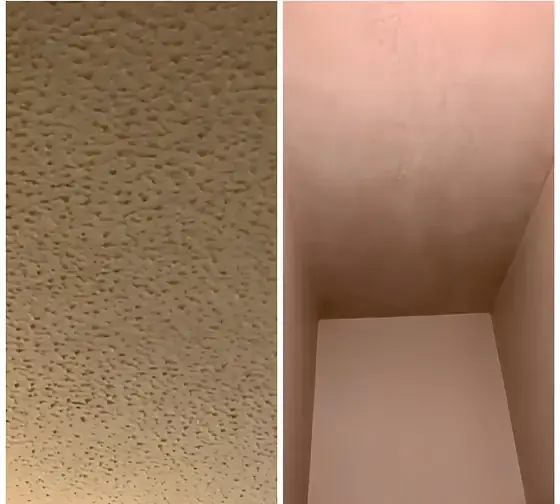
A deep swirl or a heavy combed pattern takes far more plaster to bury than a light stipple, and that's usually where extra time goes. Graham will look closely at the depth of the texture before quoting.
When skimming isn't the right answer
Skimming relies on a sound ceiling underneath. If an old ceiling is sagging, cracked right through or pulling away from the joists, a skim on top only adds weight to something already failing. The usual options then are overboarding with plasterboard and skimming that, or taking the ceiling down, and the second brings the asbestos question straight back. Graham will tell you which he thinks it needs.
Artex on walls can be skimmed in the same way. Walls take more knocks and have sockets, switches and skirtings to work round, so they need more preparation per square metre than a ceiling.
Artex ceilings we've skimmed in and around Cambridge
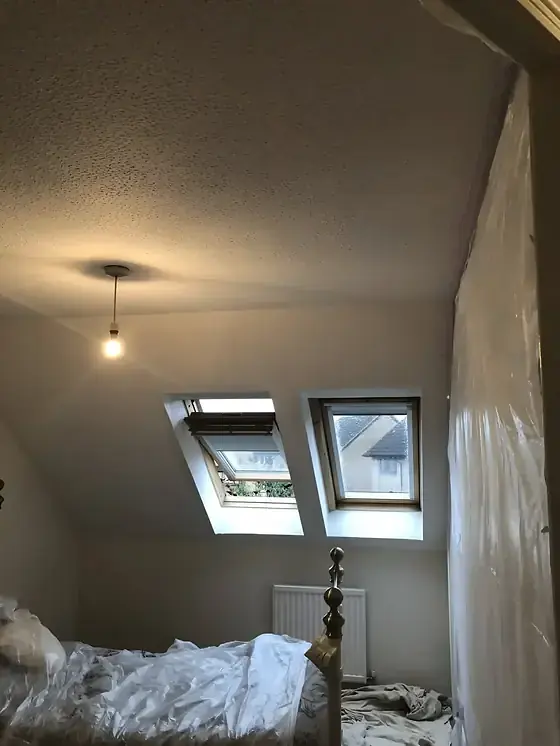
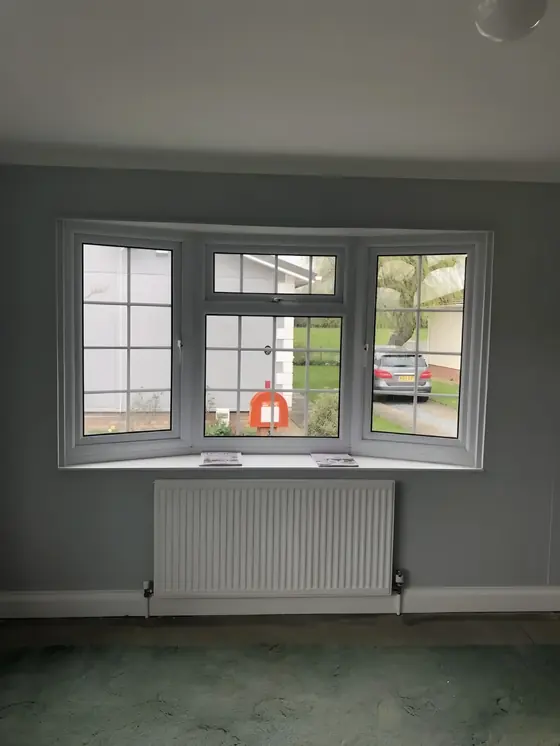
The photos from a Cambridge Artex job show ceilings Lewis skimmed for a client who'd had enough of the dated texture. What they remarked on afterwards was how tidy he'd left the house.
On a bigger whole-house renovation, two of our plasterers covered the Artex ceilings while the decorators worked elsewhere, so each room could move on to coving and paint as soon as its plaster had dried.
A Checkatrade customer who had Artex over-skimmed in their living room and dining room wrote: "Before the job contact with Graham was very efficient and polite. Graham and John did a great job and were really tidy. The quality of the plastering was first class."
What affects the cost of covering an Artex ceiling
The cost of skimming over Artex depends mostly on:
- Ceiling area, and how many rooms are done together
- Depth of the texture
- Height and access, such as stairwells
- Condition of the ceiling underneath, and whether overboarding is needed
- Light fittings, alarms and downlights to work round
- Whether decorating follows on, with a mist coat and finish coats
Testing is separate
If your house needs an asbestos test, that's a separate cost from the plastering. Graham's written quotation sets out the plastering and decorating so you can see both parts clearly.
Next steps for an Artex ceiling
You're welcome to send a photo of the ceiling first. Graham will then visit to look at the texture, the state of the ceiling and the room, and ask when the house was built or last refurbished so the asbestos question is settled before anything else. The quotation usually follows by email, and you only pay once you're happy with the smooth ceiling and the decorating.
Fresh plaster needs to dry and take a mist coat before colour, and our ceiling skimming page explains that stage. For everything else our plasterers do, see the main plastering page.