
Skimming Artex in 1970s Hardwick homes
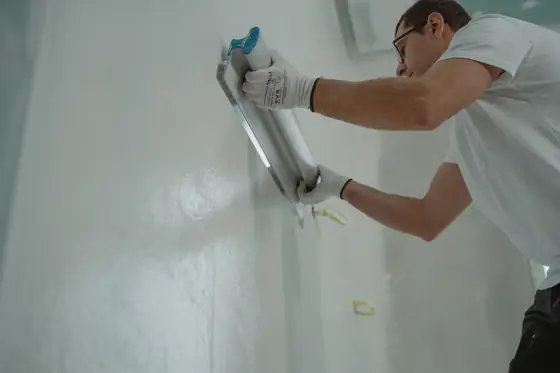
Lewis, our plasterer, and the master plasterer we work with skim textured ceilings with a fresh smooth coat, which is usually quicker and less disruptive than taking a ceiling down. We clear or cover the room, take down light fittings and smoke alarms, and protect the floors before the plastering starts.
Once the plaster has dried, we sand it lightly with Mirka dust-free sanders and apply a mist coat, which soaks in and shows any small dips before the finish coats. Our interior decorating team then paints the room, so you aren't left coordinating two firms.
Cracks, newer homes and older cottages
More than a quarter of Hardwick's homes are from 2000 onwards, and fine cracks in newer plaster can usually be filled and painted. If one keeps returning, Graham will say so rather than simply filling it again, because it can point to movement or a leak above.
The village has only around 20 homes from before 1900, so lath and plaster is uncommon here. Where we do find it under old paper, it's assessed wall by wall, and lining paper is sometimes a better answer than a full skim.
Hardwick at a glance
- 11 milesby road from our Landbeach base, about 15 minutesOSRM routing
- 2%were built 1945 to 1964VOA Council Tax stock
- 44%were built 1965 to 1982VOA Council Tax stock
- 2%of properties were built before 1919VOA Council Tax stock
- 1,083householdsCensus 2021
- 5%date from 1919 to 1939VOA Council Tax stock
How we approach plastering
Our sequence for a Hardwick ceiling rarely changes: cover the room, remove fittings, prepare the Artex so the new plaster bonds, skim, then leave it to dry fully. A thinned mist coat follows, any marks it reveals are filled and spot-sanded, and two full coats of your colour finish the job. Coving can be hung before the final coats. The full method, products and FAQs are on our plastering page.