
Artex ceilings in Girton's postwar homes
Council Tax records place roughly 370 Girton properties in 1945 to 1964 and another 410 in 1965 to 1982. Not every one still has its textured ceilings, but many do, often under several coats of white emulsion that make the swirls look heavier.
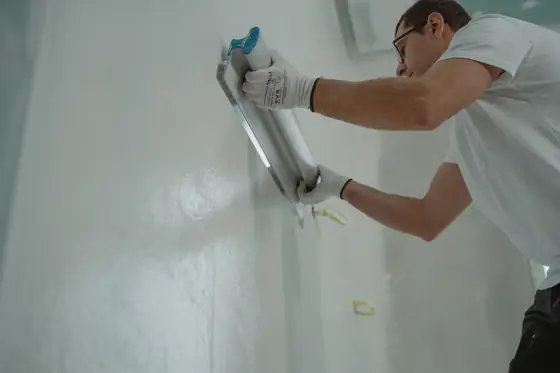
Lewis, our plasterer, skims over the texture to give a flat surface ready for paint. The room is cleared or sheeted, light fittings and smoke alarms are taken down, and the ceiling is prepared so the new plaster bonds. Our decorators then mist coat and paint, so you deal with one firm throughout. The Artex skimming case study shows a finished Cambridge ceiling.
A plasterer for cracks in Girton's interwar and older houses
Girton's 1930s houses, about 340 of them, have had ninety years to settle. Cracks along joist lines and where walls meet ceilings are common. Hairlines are filled by our decorators, while deeper or recurring cracks may need cutting out and patching, or a full skim.
The handful of pre-1919 properties may still have lath and plaster. Stripping paper from those walls can bring loose areas to light, and Graham will show you what's needed and agree the cost before any plastering starts. More on the service is on our plastering page.
Girton at a glance
- 8 milesby road from our Landbeach base, about 18 minutesOSRM routing
- 16%were built 1945 to 1964VOA Council Tax stock
- 17%were built 1965 to 1982VOA Council Tax stock
- 5%of properties were built before 1919VOA Council Tax stock
- 1,747householdsCensus 2021
- 18%date from 1919 to 1939VOA Council Tax stock
How we approach plastering
We sheet floors and furniture, remove fittings and prepare the old surface so the new plaster grips. Lewis skims, the plaster dries fully, then we sand dust-free and apply a mist coat, which shows up any small imperfections before the finish coats. In a Girton postwar semi, new coving can go up at the same time to neaten the line between wall and ceiling. The full method, products and FAQs are on our plastering page.