
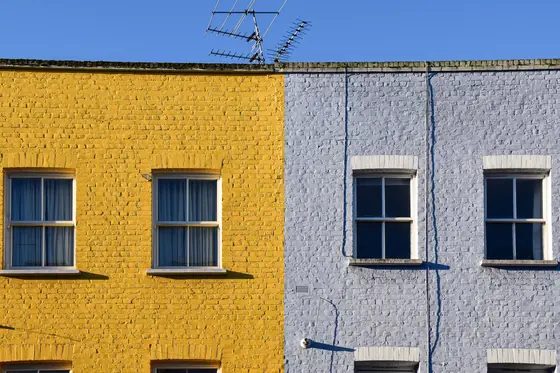
Exterior painting for Girton's detached and semi-detached houses
The figures are 42% detached and 36% semi-detached, with terraces under one in ten. A detached house has no shared walls to shelter it, so every elevation takes rain, sun and wind at some point in the year. The shaded side tends to grow algae, the sunny side fades and chalks, and gable ends take the full force of the wind.
Before quoting, Graham walks every elevation. He notes cracked masonry, blown render, soft timber on sills and fascias, and anywhere water is getting behind the paint. Repairs go in the written quotation as separate items, and our carpenter or master builder deals with anything beyond filling.
Brick, render and timber from several eras
Girton's stock spans 1930s semis, postwar and 1970s houses, and a large share of homes from 2000 onwards. Older painted masonry often has layers of paint that have lost their grip, so we scrape back to a sound edge and stabilise powdery areas before recoating with a breathable product.
Historic England's dataset shows no conservation area mainly within Girton, which leaves most owners freer over exterior colours. Listed buildings are the exception, and there are 12 in the parish. More on our survey and preparation is on the exterior painting page.
Girton at a glance
- 8 milesby road from our Landbeach base, about 18 minutesOSRM routing
- 87%are houses rather than flatsCensus 2021
- 42%of homes are detachedCensus 2021
- 5%of properties were built before 1919VOA Council Tax stock
- 16%were built 1945 to 1964VOA Council Tax stock
How we approach exterior painting
We begin with an anti-fungal jet wash on the shaded elevations, then let the walls dry properly. Loose paint is scraped, cracks filled with exterior filler and bare timber primed. Fascias, soffits, gutters and downpipes are done on the same access run as the walls, so a detached Girton house is finished elevation by elevation rather than in scattered visits. The full method, products and FAQs are on our exterior painting page.