
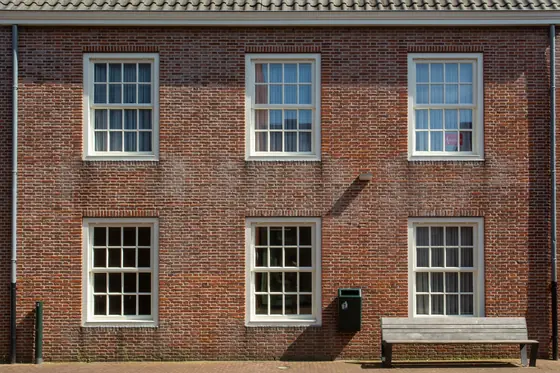
Fewer period homes, but windows worth keeping
Most of Girton was built from the 1930s onwards, so period sashes are found on a small share of homes. The parish has 12 listed buildings, among them 102, High Street, listed at Grade II, and owners of listed homes should check with South Cambridgeshire District Council before changing windows or their colour.
If you have timber sashes on a later house, the same care applies. Scraping back, filling and repainting them is far less disruptive than replacing them, and it keeps the look the house was built with.
What our sash window restoration covers
Our side of the job is decorative: flaking paint scraped to a sound edge, the surface sanded with Mirka dust-free sanders (older paint can contain lead, so dust control matters), cracks and open joints filled, bare timber primed, and the sashes repainted so they still slide.
Broken cords, rotten timber and sashes that need new sections are carpentry. Our carpenter handles those before we paint, so the repair and the finish are planned as one job. Our sash window painting page has the detail, and woodwork staining and glossing covers doors and skirtings in period rooms.
Girton at a glance
- 8 milesby road from our Landbeach base, about 18 minutesOSRM routing
- 5%of properties were built before 1919VOA Council Tax stock
- 12listed buildingsHistoric England
- 10%are terracedCensus 2021
- 18%date from 1919 to 1939VOA Council Tax stock
How we approach sash window restoration
We work each window individually, scraping back, sanding dust-free and filling sills and bottom rails with extra care. Bare wood is primed, then undercoated and finished in eggshell or satin. Sashes are run up and down as we go so the runners don't fill with paint, and they're eased before we leave each evening so nothing sets shut overnight. The full method, products and FAQs are on our sash window restoration page.