
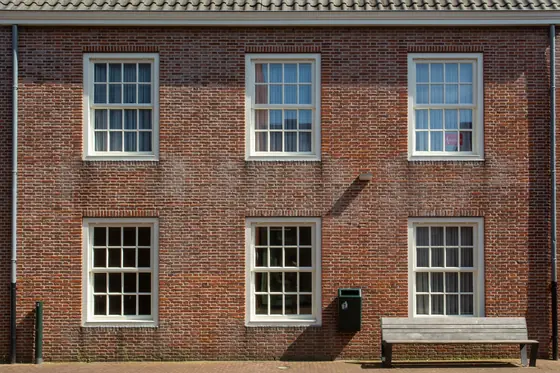
Where period windows survive in Milton
Historic England lists Milton House and the Parish Church of All Saints at Grade II* and Milton Hall at Grade II, along with 13 other listed buildings in the parish. There is also a Milton conservation area. Homes in either category may have rules about replacing or altering windows, which makes keeping the originals painted and sound all the more worthwhile.
Our part is decorative: scraping, sanding, filling, priming and painting so water stays out of the timber. Where a sash needs new cords or rotten wood replaced, our carpenter handles it before we paint.
Painting sashes so they keep sliding
We work the sashes up and down as we go so every face is coated, while keeping paint thin on the surfaces that slide past each other. A fine line of paint onto the glass seals the putty. Older windows can carry layers of lead-based paint, so we sand with Mirka dust-free sanders to keep dust out of the room.
Our sash window restoration page has more on finishes, and we can combine the outside faces with exterior painting of the house.
Milton at a glance
- 2 milesby road from our Landbeach base, about 4 minutesOSRM routing
- 3%of properties were built before 1919VOA Council Tax stock
- 16listed buildingsHistoric England
- 1conservation arealocal council
- 15%are terracedCensus 2021
- 3%date from 1919 to 1939VOA Council Tax stock
How we approach sash window restoration
Graham lists each window and its condition in the quotation, so you can see which need attention first. We scrape to a sound edge, fill open joints and sills, prime bare timber, then apply undercoat and eggshell or satin, sanding lightly between coats. Before we leave each day, every newly painted sash is slid open and shut so it can't set fast. The full method, products and FAQs are on our sash window restoration page.