
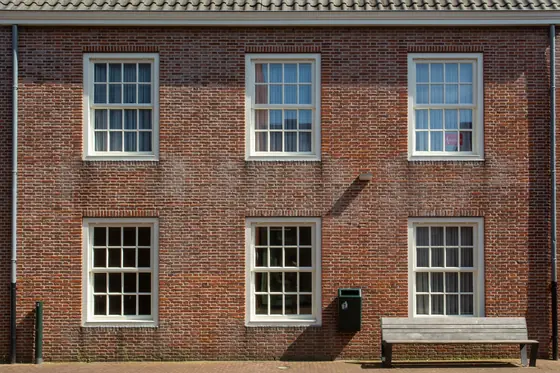
Where original sashes survive
Pre-1919 homes make up roughly 10% of the local stock, a modest share, and most houses here are later, with casements or uPVC. Where a Victorian or Edwardian house still has its sashes, though, they're usually worth looking after, and the windows facing the weather tend to need the most work.
Our part is the decorative side: scraping back, sanding with Mirka dust-free sanders, filling open joints, priming bare timber and finishing in eggshell or satin. Where a sash needs new cords or replacement timber, our carpenter deals with it before we paint.
Listed homes and the conservation areas
If your house is listed or falls within the Histon and Impington or Impington St Andrew's conservation areas, check with South Cambridgeshire District Council before changing the exterior window colour. Repainting like for like is the simplest route in those cases.
On a Farrow & Ball job in Cambridge, bare pine frames were primed with Zinsser before an eggshell undercoat and two coats of Elephant's Breath. Stripped sashes here would get the same sequence.
Histon & Impington at a glance
- 5 milesby road from our Landbeach base, about 10 minutesOSRM routing
- 10%of properties were built before 1919VOA Council Tax stock
- 38listed buildingsHistoric England
- 2conservation areaslocal council
- 15%are terracedCensus 2021
- 14%date from 1919 to 1939VOA Council Tax stock
How we approach sash window restoration
We work each sash up and down so every face gets painted, keeping paint thin on the edges that slide. Sills and bottom rails get extra filling and primer because they hold water. Older layers may contain lead, so dust-free sanding matters. Outside faces need exterior-grade paint and a settled dry spell. The full method, products and FAQs are on our sash window restoration page.