
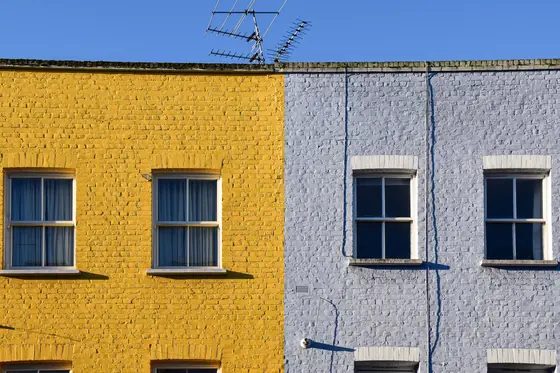
More walls to cover on detached and semi-detached houses
With 34.9% of homes detached and 40% semi-detached, the typical exterior job here involves at least three elevations. Side walls and rear gables are often in the worst condition, because nobody looks at them. Graham walks round every side at the visit and notes cracked render, blown patches and soft timber at the roofline.
Where walls are green or black with growth, we jet wash with an anti-fungal wash and let them dry thoroughly before painting. We did exactly that on a mould-affected house in Cambridge, and the same method suits shaded walls here.
Colour choices in the two conservation areas
Two conservation areas cover parts of the parishes: Histon and Impington, and Impington St Andrew's. If your house sits in one, check with South Cambridgeshire District Council before a bold change of exterior colour, particularly on a front elevation. Test patches let you judge a shade against the houses next door.
Bare brick that has never been painted is a bigger decision than repainting render. Graham will talk through whether painting it suits your house before it goes anywhere near the quotation.
Histon & Impington at a glance
- 5 milesby road from our Landbeach base, about 10 minutesOSRM routing
- 90%are houses rather than flatsCensus 2021
- 35%of homes are detachedCensus 2021
- 10%of properties were built before 1919VOA Council Tax stock
- 2conservation areaslocal council
- 14%were built 1945 to 1964VOA Council Tax stock
How we approach exterior painting
On a 1970s semi we'd survey first, then jet wash, scrape loose paint, fill masonry cracks and repair render. Fascias and soffits are sanded and primed where bare, with gutters done from the same ladder run. Breathable masonry paint goes on only in dry, mild weather, so the forecast decides which days we work outside. The full method, products and FAQs are on our exterior painting page.