
Exteriors from the 1960s onwards
The plan for Bar Hill was approved in 1964, and the houses went up over a fairly short span afterwards. Council Tax records place around 47% of properties between 1965 and 1982 and most of the rest in the following two decades. On homes of this era, fascias, soffits, bargeboards and any timber boarding usually need the most attention, along with painted render.
Graham walks round before quoting and notes failed paint, cracked render, soft timber and gaps around frames. Those repairs go into the written quotation so you can see them before work starts.
Colour choices without heritage rules
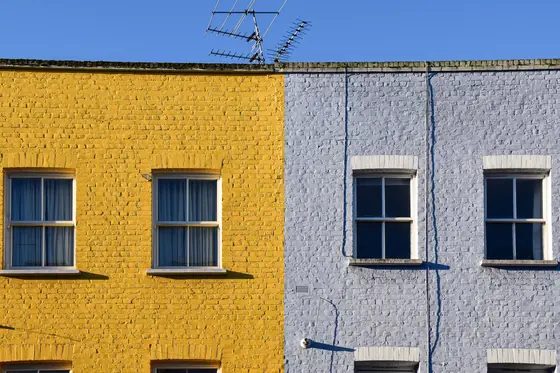
Historic England's records show no conservation area and no listed buildings inside the parish, so a new colour doesn't need the heritage checks that apply in some older villages. Because the village was laid out in closes, though, houses often sit close together, and it's worth thinking about how a shade will look beside your neighbours. We paint test patches so you can see them in daylight.
Shaded walls can grow algae. We treat those with an anti-fungal jet wash, as on a mould-affected Cambridge exterior, and let the masonry dry before painting.
Bar Hill at a glance
- 10 milesby road from our Landbeach base, about 14 minutesOSRM routing
- 96%are houses rather than flatsCensus 2021
- 34%of homes are detachedCensus 2021
- 4%of properties were built before 1919VOA Council Tax stock
- 5%were built 1945 to 1964VOA Council Tax stock
How we approach exterior painting
We jet wash with an anti-fungal solution, scrape and sand loose paint, then repair cracks in render with exterior filler. Bare timber on fascias and boarding is primed and undercoated before two top coats. Masonry gets a breathable paint, and windows, doors and plants are masked. Work is booked for drier months and paused if rain is forecast. The full method, products and FAQs are on our exterior painting page.