
What we look at on a Hardwick exterior
Graham walks round each house before quoting. On homes built in the 1970s and early 80s, the biggest single group in the village, that usually means checking fascias, soffits, bargeboards and any rendered panels or timber cladding, along with the front door and window sills.
Where walls are green on the shaded side, we jet wash with an anti-fungal wash and let them dry thoroughly before scraping, filling and priming. Masonry paint has to let the wall breathe, so we choose the product for each surface rather than using one tin for everything.
Colours inside the conservation area
Part of Hardwick is a conservation area, and the Parish Church of St Mary is listed at Grade II*. If your house sits within it, a change of exterior colour may need more thought than in the newer streets. We can paint test patches on a discreet wall, and it's worth checking with South Cambridgeshire District Council before committing.
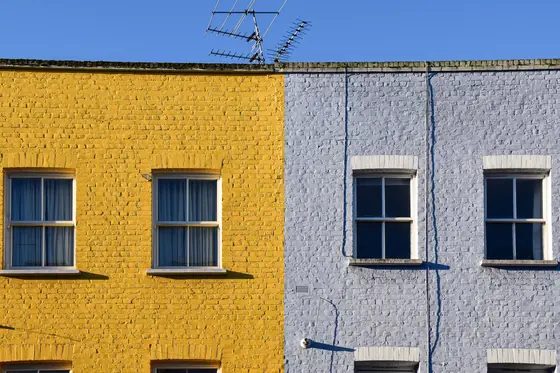
Elsewhere in the village, the decision is mostly about your neighbours and your brick. A semi shares a roofline with the house next door, so many owners choose a shade that sits comfortably alongside it.
Hardwick at a glance
- 11 milesby road from our Landbeach base, about 15 minutesOSRM routing
- 97%are houses rather than flatsCensus 2021
- 36%of homes are detachedCensus 2021
- 2%of properties were built before 1919VOA Council Tax stock
- 1conservation arealocal council
- 2%were built 1945 to 1964VOA Council Tax stock
How we approach exterior painting
For a typical Hardwick semi or detached house we start with a survey and a list of repairs, then anti-fungal jet washing and drying time. Loose paint is scraped back, timber sanded and primed, and masonry cracks filled with exterior filler. Fascias, soffits and gutters are done in one run so access is only paid for once, and we watch the forecast throughout. The full method, products and FAQs are on our exterior painting page.