
Plastering for Northstowe's new houses
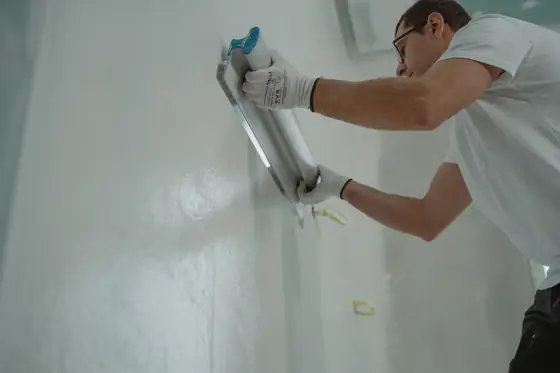
With most homes built since 2017, the plastering we're asked to do here is mostly repair. Cracks along ceiling joints, around door frames and at the junction of wall and ceiling are typical as a new building dries out. Shallow ones are filled by our decorators. Deeper or recurring cracks go to Lewis, our plasterer, or the master plasterer we work with.
Making good after alterations is the other common job: patches where a wall has been opened up for wiring or a fitting moved, and edges that need feathering in so the paint hides them.
When a crack needs more than filler
A crack that reopens soon after filling can point to movement or a leak above, and in a new house that's often a matter for the builder's own warranty. We'd rather say so than paint over it. Water marks are sealed with Zinsser stain block before repainting.
If a few of the older homes in the parish have Artex, our Artex skimming case study shows how we deal with it. Our plastering page covers coving too.
Northstowe at a glance
- 13 milesby road from our Landbeach base, about 18 minutesOSRM routing
- 4%were built 1945 to 1964VOA Council Tax stock
- 0%were built 1965 to 1982VOA Council Tax stock
- 1%of properties were built before 1919VOA Council Tax stock
- 1,019householdsCensus 2021
- 0%date from 1919 to 1939VOA Council Tax stock
How we approach plastering
Cracks are raked out, filled or patched with fresh plaster, and left to dry fully. Repaired areas are sanded with Mirka dust-free sanders and given a mist coat of thinned emulsion, which seals new plaster and shows up any dips. Those are filled and spot-sanded before two full coats go on the whole wall or ceiling. The full method, products and FAQs are on our plastering page.