
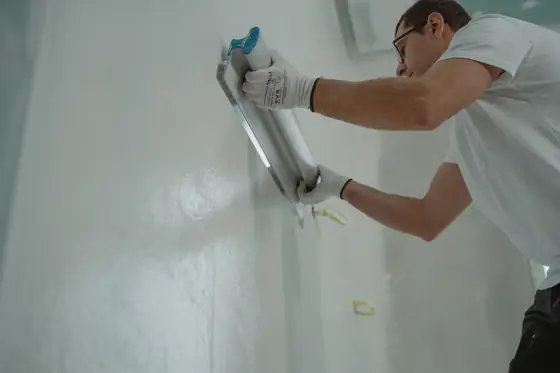
Smoothing post-war ceilings
Skimming covers Artex and similar textures with a smooth coat of plaster, and it's usually quicker and much less disruptive than taking the ceiling down. Lewis, our plasterer, or the master plasterer we work with, does the work once the room is covered and fittings removed.
Once dry, the ceiling is sanded with Mirka dust-free sanders and given a mist coat to seal it and show any dips. Then our decorators finish the room under the same quotation. The Artex skimming case study from Cambridge shows how a finished ceiling looks.
Lath and plaster in older Baldock houses
In the 430 or so homes built before 1919, and in many interwar ones, stripping wallpaper can reveal tired plaster the paper was holding together. We show you what we find and agree the cost before any skimming starts.
Not every old wall needs a skim. In a Victorian house in Histon we lined the original sand and stone plaster instead, and Graham's survey is where that decision is made, so you only pay for the plastering the room needs.
Baldock at a glance
- 30 milesby road from our Landbeach base, about 40 minutesOSRM routing
- 14%were built 1945 to 1964VOA Council Tax stock
- 18%were built 1965 to 1982VOA Council Tax stock
- 9%of properties were built before 1919VOA Council Tax stock
- 4,680householdsCensus 2021
- 16%date from 1919 to 1939VOA Council Tax stock
How we approach plastering
On a Baldock job, floors and furniture are sheeted before the plasterer starts and light fittings come down. The old surface is prepared so the new plaster bonds, then skimmed and left to dry right through. A thinned mist coat goes on, marks are filled and spot-sanded, and two coats of colour finish it. New coving can be hung before those final coats. The full method, products and FAQs are on our plastering page.