
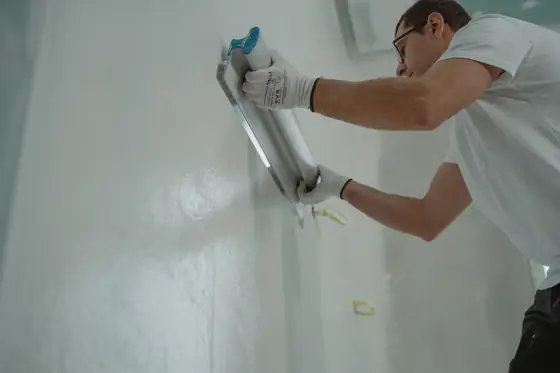
Skimming Artex in Sandy's 1970s houses
Add the 450 homes from 1945–1964 and more than 2,100 Sandy properties fall in the decades when textured ceilings were popular. Skimming puts a new smooth plaster surface over the texture, usually far less disruptive than taking the ceiling down. Fittings and smoke alarms come down, the room is cleared or sheeted, and the surface is prepared so the skim bonds.
Lewis, our plasterer, or our master plasterer does the work, and our decorators carry straight on afterwards. Our Artex case study shows a finished example.
Old walls and cracked ceilings
Sandy's pre-1919 homes can have lath and plaster that comes away when paper is stripped. Graham decides whether a wall needs skimming or whether filling and lining will do.
Hairline cracks can be filled by a decorator, but deeper or recurring ones may point to movement or a leak, and we'll tell you if so. Water stains get a Zinsser stain block before paint.
Sandy at a glance
- 28 milesby road from our Landbeach base, about 44 minutesOSRM routing
- 9%were built 1945 to 1964VOA Council Tax stock
- 33%were built 1965 to 1982VOA Council Tax stock
- 13%of properties were built before 1919VOA Council Tax stock
- 5,010householdsCensus 2021
- 5%date from 1919 to 1939VOA Council Tax stock
How we approach plastering
After skimming, the plaster is left to dry out before anything goes on. We sand nibs with Mirka dust-free sanders, apply a mist coat of thinned emulsion, fill whatever it reveals, then apply two full coats. In Sandy's 1970s rooms, new coving can be hung after the skim to tidy the line where wall meets ceiling. The full method, products and FAQs are on our plastering page.