
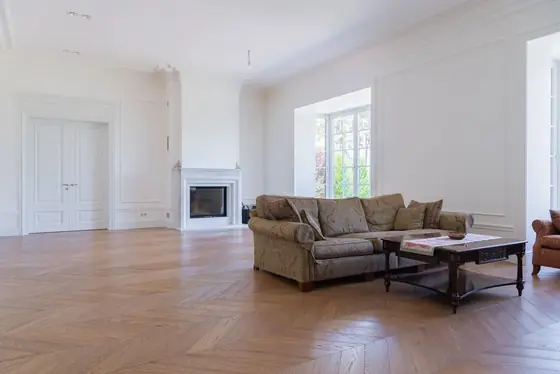
Pre-war boards worth uncovering
Council Tax records count about 560 homes from the 1930s and 230 from the 1920s, plus some 430 from before 1919. Pine boards from those eras can usually be sanded back to clean timber, repaired and refinished. Solid hardwood in later homes can be too.
Engineered boards, laminate and vinyl are another matter. Chris, the wooden floor specialist we work with, checks what you have before anything is quoted and will tell you honestly if sanding isn't right.
Sanding, filling and oiling
Chris secures loose boards and sinks proud nails, then works through coarse to fine grades with a belt sander, using an edging sander along the skirtings. Gaps are filled with the floor's own sawdust mixed with Induro Morrells Mix & Fill, and a Mirka dust-free sander does the final smoothing.
Osmo Polyx oil soaks into the timber and hardens, so worn patches can be re-oiled without sanding the whole room. Booking alongside interior decorating means scuffs on the skirtings get touched in afterwards.
Baldock at a glance
- 30 milesby road from our Landbeach base, about 40 minutesOSRM routing
- 9%of properties were built before 1919VOA Council Tax stock
- 16%date from 1919 to 1939VOA Council Tax stock
- 28%are terracedCensus 2021
- 104listed buildingsHistoric England
- 4,680householdsCensus 2021
How we approach floor sanding
For a Baldock terrace we'd sand the floors before the final decorating coats, so dust never settles on finished walls. The room is cleared, doorways sealed, and the boards checked. After sanding, filling and a dust-free final pass, oil is applied thinly, each coat left to dry, and the room checked with you before furniture returns. The full method, products and FAQs are on our floor sanding page.