
Skimming Artex in post-war Burwell houses
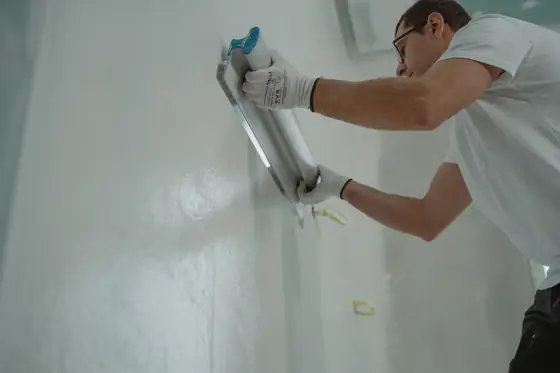
The late 1960s were especially busy, with about 430 homes built between 1965 and 1972 alone. Skimming lays a smooth new plaster coat over a textured ceiling, so it doesn't have to come down. We clear or sheet the room, take down light fittings and smoke alarms, and prepare the surface so the new plaster bonds before Lewis, our plasterer, starts.
Our Artex removal and skimming page covers what to expect, and the Cambridge Artex case study shows a finished ceiling.
Older walls and cracks that come back
About 350 of Burwell's homes predate 1919, and many older village houses were built of clunch. Plaster on walls that age has usually been patched more than once, and stripping paper can expose loose areas. Sometimes a skim is right and sometimes filling and lining paper will do; Graham decides at the survey which a wall needs.
If a crack reopens after filling, something may be moving, or water may be getting in from above. If we think that's happening, we'll tell you rather than simply paint over it. Old water marks get a coat of Zinsser stain block so they can't ghost through.
Burwell at a glance
- 13 milesby road from our Landbeach base, about 22 minutesOSRM routing
- 16%were built 1945 to 1964VOA Council Tax stock
- 20%were built 1965 to 1982VOA Council Tax stock
- 12%of properties were built before 1919VOA Council Tax stock
- 2,766householdsCensus 2021
- 6%date from 1919 to 1939VOA Council Tax stock
How we approach plastering
We'd move or sheet furniture, protect floors and take down fittings before Lewis or our master plasterer skims. The new plaster dries out fully, is sanded with a Mirka dust-free sander and given a mist coat of thinned emulsion, which shows up any dips. Two full coats follow, with coving hung before the last one if you want it. The full method, products and FAQs are on our plastering page.