Lath and plaster in Soham's oldest homes
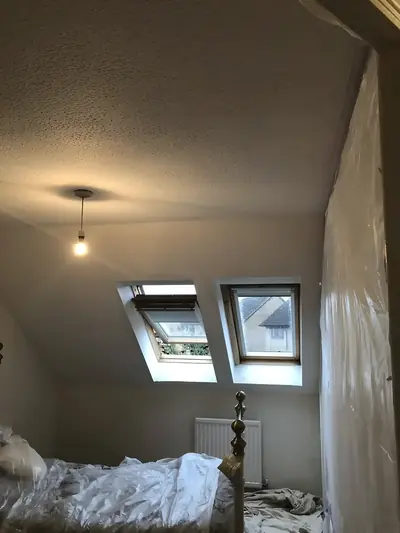
Council Tax records date around 880 homes before 1919. When old wallpaper comes off in houses of that age, the plaster underneath is sometimes loose or patched, and the paper was holding it together. Lewis, our plasterer, can re-skim affected walls so we can decorate, as happened in a Cambridge bedroom we stripped and skimmed.
Not every older wall needs a skim. Sometimes filling and lining paper is the better answer, and Graham decides that at the survey so you don't pay for plastering you don't need.
Artex ceilings and newer cracks
About a quarter of Soham's homes were built between 1945 and 1982, the decades when textured ceilings were common. Skimming covers the texture with a smooth new surface, and it's far less disruptive than taking a ceiling down.
In homes built since 2000, we're more often filling cracks where plasterboard joints and new timber have moved. Cracks that keep returning can signal a leak or movement, and we'll say so rather than painting over them.
Testing textured ceilings, lime repairs and dented corners in Soham homes
About 1,460 Soham homes date from 1945 to 1982 on Council Tax records, and 64.9% of the town's properties went up before 2000. That date is the one the HSE gives for textured coatings: Artex and similar finishes in buildings built or refurbished before 2000 may contain asbestos. A sample is tested in a laboratory before anyone sands, scrapes or drills a ceiling like that, our plasterers skim only once it's clear, and any positive result is a specialist's job.
The oldest houses need a different repair. In the 880 or so homes from before 1919, walls are often lime plaster on brick or on timber laths, and patching them in modern gypsum can trap moisture, so repairs are matched to what's there. If your house is listed, any change to historic plaster is a question for the council first, and the planning note on this page explains why.
In newer houses, the usual plastering is small but fiddly: a dented corner where furniture has been moved, or a chipped edge by a door. Corners are cut back to sound plaster and rebuilt so the line is straight again, which matters more than you'd think once fresh paint catches the light.
Figures from Valuation Office Agency Council Tax stock by build period. Contains public sector information licensed under the Open Government Licence v3.0.
Soham at a glance
- 9 milesfrom our Landbeach base in a straight line, about 23 minutes by roadOSRM routing
- 8%were built 1945 to 1964VOA Council Tax stock
- 16%were built 1965 to 1982VOA Council Tax stock
- 15%of properties were built before 1919VOA Council Tax stock
- 5,236householdsCensus 2021
- 6%date from 1919 to 1939VOA Council Tax stock
Sources: Census 2021 for Soham parish (ONS); Council Tax: stock of properties, 2026; road distance by OSRM.
Listed buildings: check before plastering
For a listed Soham house, work that affects the building's character may need listed building consent from East Cambridgeshire District Council, and that can include replacing historic plaster. The council says repairs on an exact like-for-like basis with traditional materials normally won't need consent, but check with it before the plasterer is booked.
Listed and historic buildings, East Cambridgeshire · Soham Conservation Area Appraisal (PDF)
How we approach plastering
Before a Soham ceiling is touched, any textured coating on it needs a clear test result. Floors and furniture are then sheeted, light fittings taken down, and damaged corners and loose patches cut back; on old walls, repairs use materials that suit the plaster already there. When the new plaster has turned an even pale colour, it gets a light rub with Mirka dust-free sanders and a thinned mist coat, any dips the mist coat reveals are filled, and two finish coats complete the room. The full method, products and FAQs are on our plastering page.