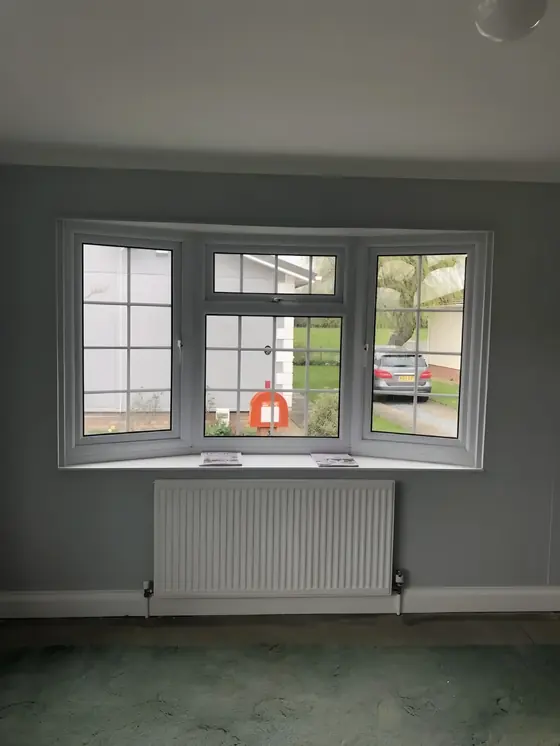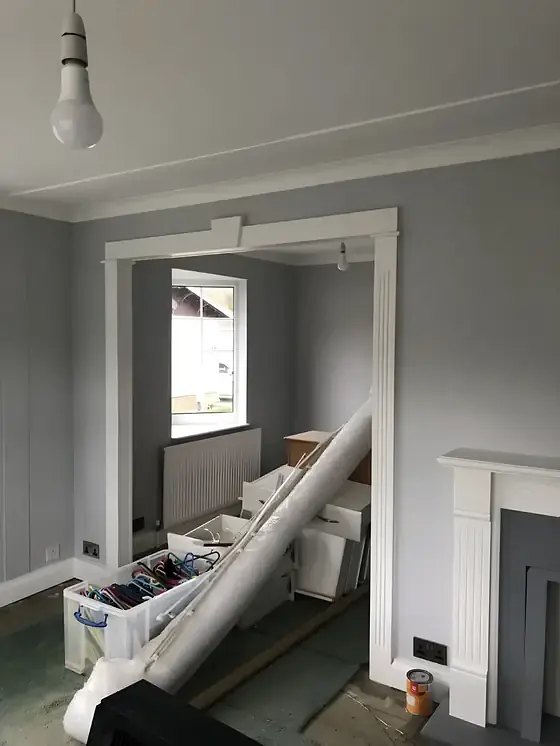
Coving installation as part of a redecoration
Coving installation is usually something we do while a room is being redecorated anyway. Our decorators hang the new coving after any ceiling plastering is finished and before the final coats, so coving, ceiling and walls are painted together and the joins disappear under the same paint.
That was the order of work on a whole-house renovation in Cambridgeshire. The old Artex ceilings were skimmed first, the decorators stain-blocked the walls and hung new coving, the carpenter fitted new skirtings, and only then did the colour go on.
Choosing a coving profile and material
Coving comes in several materials, and each behaves differently once it's up:
- Plaster (gypsum) coving: the traditional choice, crisp and easy to paint, but heavier and more brittle to cut
- Polyurethane coving: lighter and slightly flexible, so it copes better with walls that aren't straight, and available in detailed profiles
- Polystyrene coving: light and inexpensive, but it dents easily and looks it up close
Getting the size right
Size matters as much as shape. A deep, ornate profile can overwhelm a low-ceilinged modern room, while a narrow cove looks lost in a tall Victorian front room. Holding a short sample length up in the corner tells you more than a picture in a brochure.
In a period house the aim is usually a profile in keeping with its age. If the rest of the house still has its original cornice, matching it exactly is a job for a specialist, as explained below.
How new coving is fitted
The order of work matters more than most people expect:
- Any old coving taken down and the line made good
- Wall and ceiling marked so the coving sits at a consistent depth all the way round
- Loose paint scraped back so the adhesive bonds to sound plaster
- Internal and external corners mitred to suit the actual angle of each corner
- Lengths fixed with coving adhesive and supported while it grabs
- Joints, mitres and gaps filled, then a fine bead of decorator's caulk along both edges
- Coving painted with the ceiling
Corners show the quality
Walls in older houses are rarely square, so a mitre cut at a nominal 45 degrees often leaves a gap. Cutting to the real angle and filling what remains is what makes the line read as continuous once it's painted.
Fitting coving to uneven walls and ceilings
Coving is a good way to hide a wavering line where wall meets ceiling, which is common in older houses and around chimney breasts. It won't hide everything, though. A big dip in the ceiling still shows along the top edge, and if the ceiling is in poor shape it's better to have it skimmed by our plasterers first and fit the coving afterwards.
Coving can't be fixed neatly against textured Artex, and old Artex may contain asbestos, so it has to be tested before anyone scrapes along the edge. Our Artex skimming page explains the safe order of work.
Ornate cornice and ceiling roses
We should be clear about what we don't take on. Repairing or recreating ornate run-in plaster cornice, the kind found in some Victorian and Georgian rooms, is specialist fibrous plaster work. If you have damaged original cornice, Graham will tell you honestly at the visit, and it may need a cornice specialist.
Painting existing coving and cornice is ordinary decorating, and it's done with care so the paint doesn't clog the detail. If you'd like a plain ceiling rose as well, ask about it at the visit. Roses go up with adhesive much like coving, but the light fitting has to be taken down and refitted by an electrician.
What sets the price of fitting coving
The quotation depends on the length of coving round the room, the number of corners and chimney breasts (each one adds mitres), the material and profile you choose, whether old coving has to come off first, the ceiling height, and whether the room is being decorated at the same time.
Fitting coving during a full redecoration is the most efficient way to do it, because the room is already cleared and protected, and the painting is happening anyway.
Planning coving with Graham
Graham will measure up, look at the line between wall and ceiling and talk through profiles that suit the room. If the ceiling needs work first, he'll say so and include it, so the plastering, coving and decorating sit on one written quotation, usually sent by email. As with all our work, you don't pay until you're happy with the finished room.
Coving often goes up as part of a bigger job, such as living room decorating or decorating a period home. For the rest of the work our plasterers do, see the plastering page.