Living room decorating in Cambridge, planned around the room
The living room is where most people spend their evenings, so it's looked at more closely than any other room in the house. Our decorators paint the ceiling, walls and woodwork, hang paper on a feature wall if you want one, and paint fitted shelving and fire surrounds. Living room decorating is part of our wider interior decorating work, and Graham visits before anything is priced.
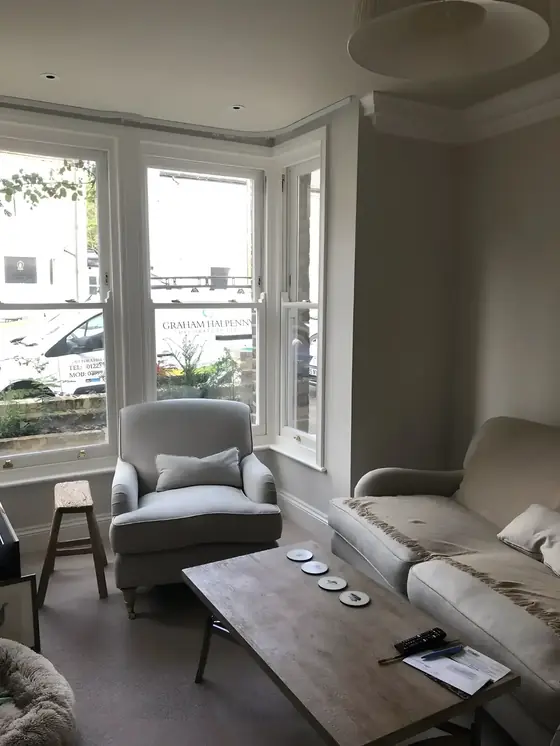
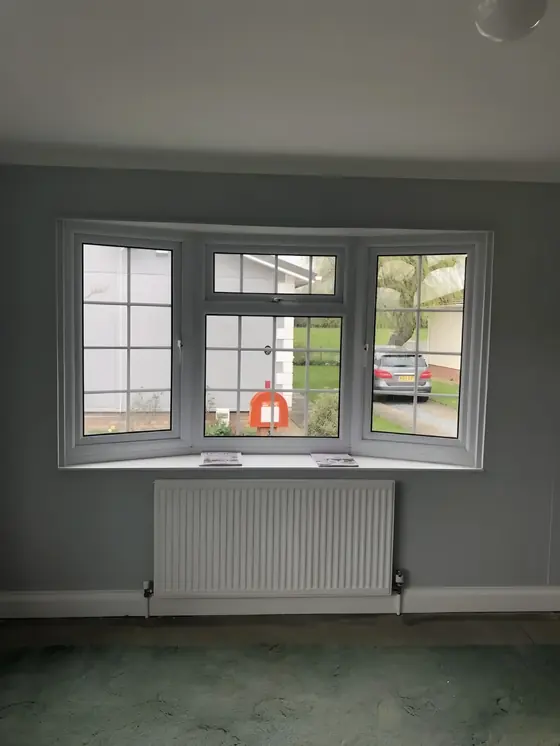
Lounges also tend to have the most going on: a chimney breast, two alcoves, a bay window, perhaps a knocked-through wall where two rooms became one. Each needs planning before the first coat, and the order of work matters because it's the room most households want back quickest.
Picking colours in the light your room actually gets
Colour causes more hesitation in sitting rooms than anywhere else, and the light is usually the reason. A north-facing room makes cool greys look cold. A south-facing one can bleach a pale shade at midday and turn it warm by evening. A paint chart can't show you any of that.
So we paint tester pots in several places: beside the window, on the darkest wall, behind the sofa and down near the floor. Leave them for a few days and look at them in daylight and under lamps before choosing. A colour also tends to read stronger across four walls than on a small patch, so a shade slightly lighter than the one you first liked is often the right one.
Farrow & Ball and Little Greene are both popular choices for living rooms, and our hallways and living spaces project blended the two through a Cambridge family home. If you've already settled on Farrow & Ball, our page for a Farrow & Ball decorator covers their finishes in more detail.
Feature walls and chimney breasts
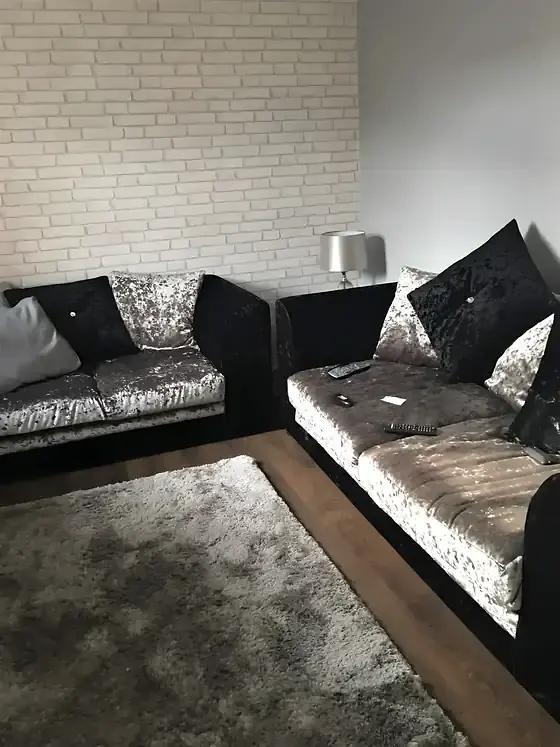
A feature wall works best on a wall that already draws the eye: the chimney breast, the wall behind the sofa, or the end of a long knocked-through room. Paint is the simplest version and easy to change later. Wallpaper adds pattern and texture, as in an open-plan room in Cambridge where we removed a stud wall, then decorated and wallpapered the new space.
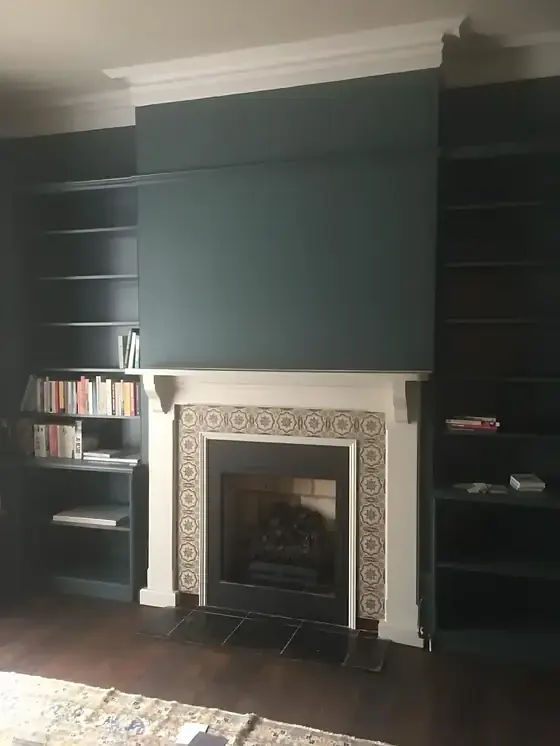
A deeper colour on the chimney breast with lighter alcoves is a common choice. The reverse works too, with dark alcoves that make shelving and books stand out. Paint keeps the decision reversible: on one return visit to a customer in CB22, the job included repainting their living room feature wall in a different colour.
Alcoves, built-in bookshelves and cupboards
Alcove shelving is slow to paint well. Every shelf has a top, a front edge and an underside, and the underside is what you see from the sofa. We clean the shelves, fill splits at the joints, sand, prime bare timber and finish in a hard-wearing eggshell or satin.
Shelves need longer than walls before anything goes back on them. Paint that feels dry can stay slightly soft for a while, and heavy books left on it too soon can stick or leave marks. Built-in bookshelves and alcove cupboards are on our list of services, and we'll tell you at the end of the job when it's safe to load them again.
Fireplaces, coving and woodwork
The fire surround is usually the focal point, and it's rarely in good order: drips from past coats, chipped corners, discolouring near the opening. We clean and sand it back and fill chips before painting. Close to a working fire or stove, ordinary paint can discolour, so the area nearest the opening may need a heat-resistant product. On a whole-house renovation the fireplace was finished in Little Greene white and Mid Lead 114, a mid grey.
Coving, skirtings, door frames and window boards finish the room. If coving is cracked or missing, our plasterers can fit new coving before we paint. One Cambridge customer had Lucy decorate their lounge walls, ceiling, coving, skirting boards, doors and window sill, and wrote on Checkatrade: "She cleaned up after everyday so we could still use the room which was appreciated."
What changes the cost of living room painting
Living rooms vary more than most in what they need. The quotation reflects:
- Floor area and ceiling height, including bays and knocked-through rooms
- How many alcoves, shelves and cupboards there are to paint
- Fireplace work, such as stripping, filling or heat-resistant paint
- Old painted wallpaper, cracks or water stains on the walls
- Strong colour changes, especially light over dark
- A feature wall in paper rather than paint
- Coving repairs or new coving
From first visit to a finished room
Graham comes round, sees the room in its own light and talks through colours and finishes with you. If you're torn between shades, say so then: tester pots are easy to arrange before the job starts. Afterwards you get a written quotation, usually by email.
Belinda agrees dates with you. During the work, floors and furniture are sheeted, the room is cleared at the end of each day, and at the finish we walk round it together. You don't pay until you're happy with the finished work. We cover living rooms across Cambridge and the villages, including Comberton, where several of the finished living rooms in our gallery are.