
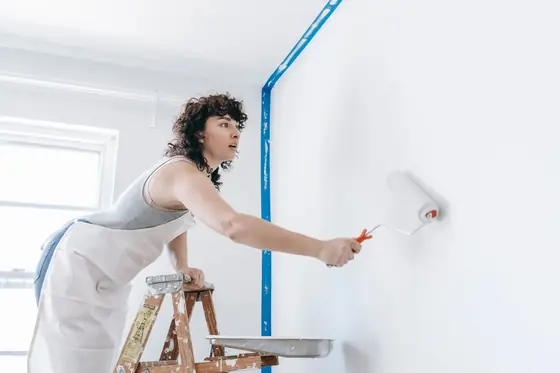
Bigger houses, longer landings
Willingham is mostly houses. Detached and semi-detached homes together account for about three quarters of the village, and flats only around one in sixteen. That usually means stairwells, landings and hallways that take more planning than a flat would, and plenty of skirtings and doors to bring up to the same standard as the walls.
Around 69% of households own their home, a little over a third outright. Many owners decorate in stages, a couple of rooms one year and the hall the next, and we're happy to work that way. The written quotation lists each room separately so you can choose where to start.
Interior decorating for newer homes and older ones
Close to a third of Willingham properties were built in 2000 or later, according to Council Tax records. Newer plasterboard walls can show nail pops and hairline cracks at the joints as the house settles, so we fill and sand those before any colour goes on. Older homes, about 15% of the stock, need a slower approach, sometimes with lining paper over tired plaster.
For family rooms we often suggest Little Greene Intelligent Matt Emulsion, which is washable and touches up well. You can see how a full scheme came together in our Farrow & Ball case study.
Willingham at a glance
- 8 milesby road from our Landbeach base, about 14 minutesOSRM routing
- 1,844householdsCensus 2021
- 70%of homes are owner-occupiedCensus 2021
- 11%of homes are privately rentedCensus 2021
- 15%of properties were built before 1919VOA Council Tax stock
- 6%are flatsCensus 2021
How we approach interior decorating
In a Willingham house we start with ceilings, then walls, then woodwork. Cracks and settlement gaps are filled, bare timber is primed with Zinsser, and dust is kept down with Mirka dust-free sanders. We paint tester pots in several spots so you can judge each colour in your own light before committing to it. The full method, products and FAQs are on our interior decorating page.