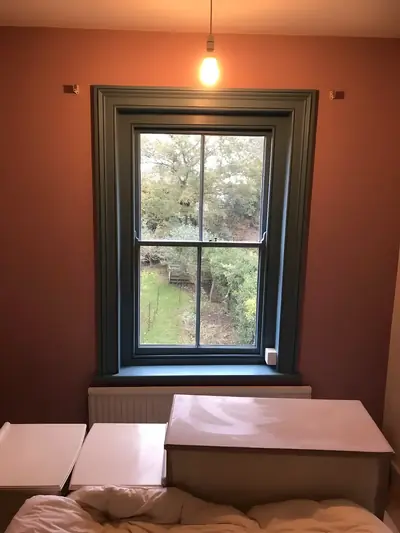
Sashes in listed and conservation-area homes
The parish has 32 listed buildings and a designated conservation area. Original windows often matter to the character of an old building and the street it stands on.
Our work is the decorative side: scraping back, filling, priming and painting so the timber stays protected. Rotten sections, broken cords or a replacement sash are jobs for our carpenter, and we plan them alongside the paintwork.
How we paint a sash window so it still slides
Paint that builds up in the runners makes a sash stick within weeks. We work the sashes up and down as we go, keep paint thin on sliding faces, and run a neat line just onto the glass to seal the putty. At the end of each day we ease every freshly painted sash so none sets shut overnight.
Doors, skirtings and other period joinery are covered under woodwork staining and varnishing.
Keeping Willingham's old sashes working: repair first, paint second
If your house is one of Willingham's listed buildings, the windows are part of what the listing protects, so the default is to repair and repaint them rather than replace them. George Street has three entries named by house number, including 1, George Street and 8, George Street, and others such as Osborne House are listed by name, so check the list before any window work is planned.
The parts of an old sash that usually suffer first are the sill, the bottom rail and the lower part of the box, where rain sits longest. Our carpenter can splice in new timber there, renew broken cords and free sticking sashes, and we then fill, prime and paint so the repair is sealed. A sash that is sound apart from those parts is usually worth keeping; only the carpenter can judge whether one has gone too far.
Old paint on sashes needs testing before it's sanded. On houses built before the 1960s the lower layers may contain lead; if a test is positive, the paint is never sanded dry, and wet or dust-free methods are used, with the room sheeted and cleaned thoroughly afterwards. Graham will point out anything that needs testing at the visit, and our page on exterior window painting covers the outside faces.
Figures from Met Office 1991-2020 climate averages; Historic England's National Heritage List. Contains public sector information licensed under the Open Government Licence v3.0. © Crown Copyright 2026. Contains Ordnance Survey data © Crown copyright and database right 2026. Released under OGL.
Willingham at a glance
- 6 milesfrom our Landbeach base in a straight line, about 14 minutes by roadOSRM routing
- 15%of properties were built before 1919VOA Council Tax stock
- 32listed buildingsHistoric England
- 1conservation areaHistoric England
- 17%are terracedCensus 2021
- 7%date from 1919 to 1939VOA Council Tax stock
Sources: Census 2021 for Willingham parish (ONS); Council Tax: stock of properties, 2026; Historic England listed buildings; Historic England conservation areas; road distance by OSRM.
Listed buildings and conservation areas in Willingham
- Cattell's MillGrade II* listed
- Church of St Mary and All the SaintsGrade I listed
- 27, Berrycroft RoadGrade II listed
- WillinghamConservation area
Sources: Historic England listed buildings; Historic England conservation areas.
Planning: check before you change a window
Changing a window on a listed Willingham house, whether that's the glazing, the timber or the way it opens, needs listed building consent first, because South Cambridgeshire District Council requires consent for any work that affects a listed building's character. Inside the conservation area, check with Greater Cambridge Shared Planning before replacing timber sashes with another material. The council's listed buildings leaflet is a useful place to start.
Listed buildings leaflet (PDF) · Council guidance on listed buildings · Willingham conservation area boundary map (PDF)
How we approach sash window restoration
On a Willingham sash, the room is sheeted and curtains or blinds taken down before any preparation starts. Once any lead test is clear, or the right precautions are in place, loose paint is scraped back to a sound edge and the frame sanded with Mirka dust-free sanders. Our carpenter deals with rotten timber, cords and sticking sashes, cracked putty is cut out and renewed, and bare wood is primed. Two finish coats follow in eggshell or satin, with a light sand between them. Each step and the products we use are explained on our sash window restoration page, with answers to common questions.
Best time of year for the work
Outside faces of sashes need a dry spell, and time for the paint to harden before the weather turns. At the Met Office's Cambridge NIAB station, about 5 miles south of Willingham, September averages 47.6 mm of rain on the 1991-2020 figures and October 58.7 mm, the wettest month of the year, so we aim to have outside sash work finished by the end of September.