
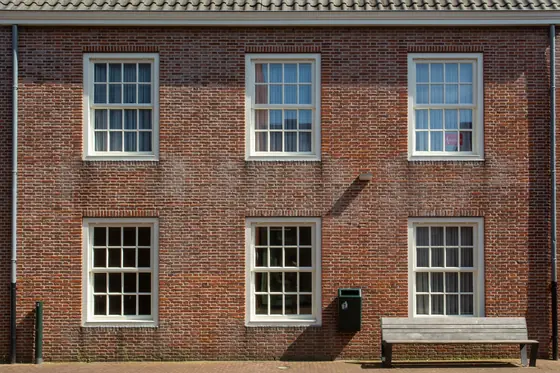
Sash window restoration on Cottenham's period homes
Most of the village's houses line the High Street between Church End and Green End, and some sit in the Cottenham conservation area. In a listed building, replacing original windows normally needs consent, so keeping the existing sashes in good order is often the practical choice.
We handle the decorative work: scraping, sanding, filling, priming and painting so water can't get into the timber. Sash cords, rotten sections and new timber go to our carpenter, scheduled as part of the same job. Our sash window restoration page describes the process.
Paint that protects without sticking
Sills and bottom rails take the most water, so they get extra filling and primer. Paint stays thin on the beads and runners so the sashes still slide, and a fine bead of paint onto the glass keeps rain off the putty. Old layers may contain lead, which is why we sand with Mirka dust-free equipment.
Cottenham at a glance
- 3 milesby road from our Landbeach base, about 6 minutesOSRM routing
- 15%of properties were built before 1919VOA Council Tax stock
- 66listed buildingsHistoric England
- 1conservation arealocal council
- 19%are terracedCensus 2021
- 6%date from 1919 to 1939VOA Council Tax stock
How we approach sash window restoration
Graham notes each window's condition separately in the quotation, and the carpenter's repairs are done before painting starts. On site we scrape to a sound edge, fill cracked joints and sills, and prime bare wood with Zinsser. Undercoat and eggshell or satin follow, sanded lightly between coats, and every fresh sash is opened and closed before we leave. The full method, products and FAQs are on our sash window restoration page.